But What about the Weather?

web-to-ranking30nw1

Image from The Economist


Dear Fayyaz, my adopted Pakistani son since the 80s when he studied at RPI, sent me this news yesterday!   Wow, Toronto looks amazing but what about   the cold, and snow, and ice, and wind. . . .  Thanks Fayyaz who now is a PhD and married and father of 4   living in Toronto, of course!   This one is for you !

What is the best city in which to live, in your opinion? 


Posted in awards, Travel, Uncategorized | Tagged , , , , | 2 Comments

Indian Muslims

TAB1

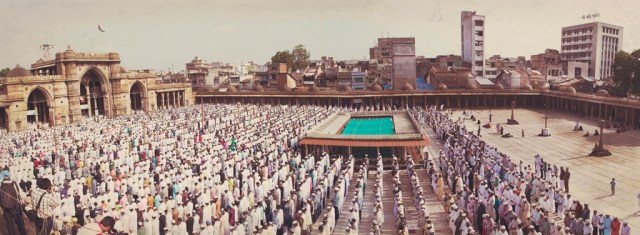
Photo: Jama Masjid Ahmedabad Jay Thakkar Heritage Photo

Jama Masjid means Friday Mosque and it the mosque where Muslims pray on Friday, their holy day.  There is a Jama Masjid in each city and is obviously large and special to the faithful.  This mosque is in the Pols or Old Town of Ahmedabad  and was built in 1424.

Op-Talk – Opinions From All Over  New York Times

Search Op-Talk

SEARCH
Why India’s Muslims Haven’t Radicalized
By JAKE FLANAGIN OCTOBER 16, 2014 3:38 PM October 16, 2014 3:38 pm 124

Though Muslims make up only 14.4 percent of India’s total population, the country maintains “the world’s second-largest Muslim population in raw numbers (roughly 176 million),” according to a 2013 report by the Pew Research Center. That’s a little more than 11 percent of the world’s total Muslim population, according to another report from Pew’s Religion and Public Life Project.

Despite the enormity of India’s Muslim community, one finds little mention of them in Western media reports on modern Islam. Perhaps because, in the wake of Sept. 11 and in the midst of the war on terror, the West’s chief concern with the global Muslim community has been its capacity for fostering extremism — and India’s Muslims remain largely un-radicalized.

“A combination of factors explains it,” reads an editorial in The Economist. Religious intermingling has roots that run deep in India: “Islam in South Asia has a long history, over 1,000 years, but was long dominated by Sufis who integrated closely with non-Muslim Hindus, sharing many cultural practices.” The Taj Mahal, arguably the most globally recognizable structure in India, was built by the Muslim Mughal emperor Shah Jahan, in memory of Mumtaz Mahal, his beloved wife who died in childbirth. Shah Jahan was himself the son of a Muslim father and a Hindu mother, the Emperor Jahangir and his wife, the Rajput princess Taj Bibi Bilqis Makani.

Back in 2009, the New York Times columnist Thomas Friedman reported on a growing trend among Indian Muslims wherein community members refused to bury the bodies of suicide bombers. “That’s why India’s Muslims, who are the second-largest Muslim community in the world after Indonesia’s, and the one with the deepest democratic tradition, do a great service to Islam by delegitimizing suicide-murderers by refusing to bury their bodies. It won’t stop this trend overnight, but it can help over time,” he wrote.

“The fact that Indian Muslims have stood up in this way is surely due, in part, to the fact that they live in, are the product of and feel empowered by a democratic and pluralistic society,” Mr. Friedman explained. “They are not intimidated by extremist religious leaders and are not afraid to speak out against religious extremism in their midst. It is why so few, if any, Indian Muslims are known to have joined Al Qaeda.”

But there are others that say such pluralistic themes are wearing thin. In the same year The Times published Mr. Friedman’s column, the editors of Room for Debate reported on widespread protests against screenings of the 2008 Oscar-winning film “Slumdog Millionaire” across India. Amresh Sinha, a professor of global film and media studies at New York University and the School of Visual Arts in New York, labeled the demonstrations “a cause for Hindu extremists.”

“I think these protests are pre-emptive measures to deflect and avert attempts to recall the communal violence in which Hindu fascists killed hundreds of Muslims in Mumbai in 1992 and 1993,” he wrote, referring to an opening scene in the film in which the protagonist’s Muslim neighborhood comes under attack by machete-wielding men, presumably Hindu nationalists.

Conditions for India’s Muslims appear to have only worsened since. “No serious official effort has been made to assess the lot of India’s Muslims since the publication in 2006 of a study ordered by the prime minister, Manmohan Singh,” according to a report compiled by The Economist. “Called the Sachar report, it broadly showed Muslims to be stuck at the bottom of almost every economic or social heap. Though heavily urban, Muslims had a particularly low share of public (or any formal) jobs, school and university places, and seats in politics. They earned less than other groups, were more excluded from banks and other finance, spent fewer years in school and had lower literacy rates. Pitifully few entered the army or the police force.”

This points to “a more prosaic and less ideological explanation” for India’s un-radicalized Muslims. “Indian Muslims have many of their own problems to deal with, largely stemming from the swift decay of democracy and pluralism,” writes Pankaj Mishra for Bloomberg View.

The recent election of Prime Minister Narendra Modi, a Hindu nationalist, has put a significant portion of India’s Muslim community on edge. There are concerns that Mr. Modi’s personal devotions to Hindu identity may undermine New Delhi’s commitment to the national ideology of pluralism. “But his promise to treat the secular constitution as his ‘bible’ helps to put a limit on anxiety,” according to The Economist.

Still, the “swift decay” of Indian pluralism is palpable to some. Mr. Mishra claims this is attributable to a fantasy of “disloyal Muslims” some harbor in New Delhi — stemming from the country’s fraught relationship with its neighbor to the west, the majority-Muslim Pakistan, and its long simmering conflict with Muslim separatists in the northern region of Kashmir.

“One can only hope that its squalid fantasy about traitorous Indian Muslims doesn’t prove to be self-fulfilling,” Mr. Mishra writes, “for the radicalization of even a tiny fraction of 180 million Muslims would not only fatally undermine India’s increasingly unconvincing claims to democracy and secularism. The not-so-reluctant fundamentalists would make the country seem as ungovernable as its neighbor.”

The country’s Muslim community is not a resource to be squandered — for reasons that have impact beyond India’s borders. Though, in terms of coverage, a fractional, violent minority garners most American and European headlines, India’s large and growing community of moderate Muslims should stand as evidence of Islam’s moderate, un-radicalized majority. And in a time where South Asians of all creeds are often stereotyped and discriminated against, and even killed, because of the actions of that radical few, India’s Muslims are a 180 million-strong rebuttal.

Here is a post about Muslims in Gujurat who  have joined Mr. Modi’s BJP because of the economic benefits it has brought to  the state. India is a largely successful  pluralistic  country, but it is  quite complicated in cultures and  religions. 

In our travels in the south, we had a Christian guide who  was very respectful of his Hindu neighbors as he entered  their  temples in the proper ritualistic way as well as guiding the tourists.

https://talesalongtheway.com/2015/12/06/muslim-candidates-of-bjp-party-win-in-gujurat/

Posted in India, Religions of the World, Travel, Uncategorized | Tagged , , , , , | Leave a comment

Music Monday Josh Groban Sings Trump’s Tweets!

josh-groban-sings-donald-trump-tweets

I hope  this brings a smile to your face on this dreary January Monday!


Posted in Uncategorized, USA | Tagged , , , , , , | Leave a comment

Spotlight

spotlight-S_070416_rgb

Definition of Spotlight : A lamp projecting a narrow intense beam of light onto  a place or person especially a performer on stage.

Spotlight is the perfect title for this historical drama about a group of journalist from the Boston Globe as they uncovered the clergy sex scandal.  This group had the freedom of choosing their expose topic , researching it, and then writing  pretty much on their own timeline. This  topic was a startling and brave one  as this was the beginning of the world wide  discovery of  clergy misconduct with children.  Boston was a Catholic City and most of the journalists were either Catholic or recovering Catholics.

The film has the feel of a documentary or even a play as the audience is  ever present throughout the film. It is as All the President’s Men , a film of digging for the truth, and old fashioned journalist of interviews, walking the streets, and knocking on doors.

Since I really enjoy getting to know characters, I would have liked to have liked  more information about the characters and their histories, especially faith and family,  but  this is a film completely dedicated to focus on the systemic cover-up of pedophilia, and very well done.

The overarching theme, it seemed to me, was that  we are complicit in evil   if we know, yet remain silent.  It is thought provoking.


Posted in film, Uncategorized, USA | Tagged , , , , | Leave a comment

Making a Murderer. . . . Netflix

3456

Steven Avery ‘s mug shots from Google public domain

This is a very current conversation in the States. . . . the 10 episode  documentary produced by Netflix about the wrongly convicted Steven Avery.  This has been discussed on mainstream TV and there is a petition to President  Obama!   Steven Avery is wrongly convicted  of a rape and is incarcerated for 18 years.  That is not the end of Avery’s contact with the law.  This is not a spoiler so watch the trailer to get a feel for this chilling story.

From the beginning , shoddy police work is evident,possibly prejudice to a person with limited IQ, who is poor, uneducated , and a  owner of a wrecked care “Estate”.  There is also distrust in an unsympathetic sheriff.  It is a conspiracy event right on our home TVs!

By the way, this is not Netflix’ first rodeo in the world of documentaries.  It has been criticized in previous work on Nina Simone and Amy Winehouse by the families of these women.

“Documentaries present narrative with a point of view.”    Netflix

I dare say that if you watch, you will see how easily a person can be convicted of a crime either by producing or leaving out pertinent evidence. Chilling.

The link below was used in my post and is a spoiler of the story. I think reading it after you have watched the Nexflix documentary  would be allow you to make-up your own mind.


http://www.vox.com/2016/1/8/10734268/netflix-making-a-murderer-avery

Posted in film, Uncategorized, USA | Tagged , , , , , , , , , , , | Leave a comment

Inside a Jahadi University

4221396001_4686653913001_4686607245001-vs

This video rings true to me for several reasons.  First is the intellectual capacity of the   terrorists. . . . doctors, engineers, and other STEM educated people.  I have no doubt that there are people capable of this work.  This very morning, there was news of the discovery of a similar bomb factory in Brussels where it is thought the weapons were made for the Paris attack.

Both of these stories were aired by Sky News a  most reliable network from London.

Posted in Uncategorized | Tagged , , , , , | 4 Comments

A Sad Farewell

A brave special lady!

Posted in Uncategorized | 1 Comment

New York Times End of Life Series

images (1)

photo from google public domain

This is a powerful , insightful essay about a subject we all will face sooner or later. . . . end of life issues.  If you have time, I highly recommend that you read it. This young doctor is an exquisite writer who shares herself during the process of life and death  with her husband. 

My Marriage Didn’t End When I Became a Widow

By LUCY KALANITHI JANUARY 6, 2016 6:45 AM January 6, 2016 6:45 am Comment

The End is a series about end-of-life issues.

When my husband died from cancer last March at age 37, I was so grief-stricken I could barely sleep. One afternoon, I visited his grave — in a field high in the Santa Cruz Mountains, overlooking the Pacific Ocean — and lay on top of it. I slept more soundly than I had in weeks. It wasn’t the vista that calmed my restless body; it was Paul, just there, under the earth. His body was so easy to conjure — limbs that had linked with mine at night, soft hands that I had grasped during the birth of our daughter, eyes that had remained piercing even as cancer thinned his face — and yet, impossible to hold. I lay on the grass instead, my cheek against the ground.

I had loved Paul since we met in 2003 as first-year medical students. He was the kind of person who makes truly funny people laugh (as an undergraduate, he visited London in a full gorilla suit — posing by the gates at Buckingham Palace, riding the tube). But he was also deeply intellectual. He considered following his master’s degree in English literature with a Ph.D., but entered medical school instead, yearning, as he later wrote, “to find answers that are not in books … to keep following the question of what makes human life meaningful, even in the face of death and decay.”

We married on the shores of the Long Island Sound before driving across the country to start our residencies. In the hospital, we worked 80-hour weeks; outside of it, we hiked the winding trails near our California home, holding hands and planning our future.
Then, 10 years after we met, while we were finishing our final years of training at Stanford, Paul’s health began to falter. After a battery of tests, we learned that his back pain and weight loss were not symptoms of exhaustion, but metastatic lung cancer. It was now our turn to face mortality and, more than ever, to follow the question of what makes human life meaningful.

We had always planned to return to Portugal, where we spent our honeymoon, for our 20th anniversary; instead, in the wake of Paul’s diagnosis, we made plans to go immediately. We savored the sweet wine and the time together. Back home, we continued our work as physicians as long as Paul’s health allowed. We talked honestly about his prognosis. To ease his burden, I managed his 15-plus medications, slipping anti-nausea pills into his pockets when we kissed goodbye each morning. When pain wracked his body, I drew hot baths, kneaded his muscles, and offered anti-inflammatories, music and the simple act of witnessing.

We found new depths of trust and confidence in each other — as husband and now patient, wife and now caregiver and, soon, as new parents to a baby girl. We joyfully welcomed our daughter into the world three days after Paul came home from a weekslong hospitalization.

And Paul began to write. First, an essay — about training as a neurosurgeon and then learning that he had only a year or two to live — which led to a book proposal. When chemotherapy ravaged his skin, even typing became painful. I found silver-threaded, conductive gloves that protected his cracked fingertips while still allowing him to use his laptop’s trackpad as he lay in bed.

FROM THE ARCHIVES
How Long Have I Got Left?

Paul Kalanithi, the author’s husband, wrote in January 2014 about confronting his mortality.
By the time he had become too sick to continue working in the operating room, he was writing furiously about his struggles — as a physician, a lover of literature and a terminally ill patient — to continuously seek and live his values. Returning to writing kept him serving others and helped him to live well. I believe he died fulfilled — not feeling he was leaving everything he wanted, but having everything he wanted.

I held Paul during his last hours, lying with him in his hospital bed, comforting and singing softly to him until he died. The last one in the room, I cupped his head in my hands and kissed him. It wasn’t until I closed the curtain that I suddenly began to keen.

“I can’t leave him alone,” I cried to my sister-in-law.

“He’s not here,” she repeated over and over, “you’re not leaving him,” as she coaxed me down the hallway and out into the night.

The transition from married to bereaved was disorienting. At first I could scarcely grasp what widowhood meant; I was too busy looking for ways to comfort Paul even after he died. When the funeral home asked me to bring a set of clothes for Paul to be buried in, I wore them first, thinking I will make these clothes warm and redolent of us. I put a pair of our daughter’s socks in his pants pocket. On the day of the burial, I stepped out from the procession and moved ahead of the pallbearers, compelled to lead his coffin down the hill. I can’t take your hand, but I will guide you; you will not go alone. For several months, I slept with my head on the pillow he had died on, left his medications in their drawer, wore his clothes to bed. Still today, months after his death, I go and sit at his grave, absent-mindedly stroking the grass as if it were his hair, talking to him using nicknames only he would understand.

One night recently, alone in bed, I read “A Grief Observed” by C.­S. Lewis, and I came across the observation that “bereavement is not the truncation of married love but one of its regular phases.” He writes that “what we want is to live our marriage well and faithfully through that phase, too.” Yes, I breathed. Bereavement is more than learning to separate from a spouse. Though I can no longer comfort Paul, the other vows I made on our wedding day — to love Paul, to honor and keep him — stretch well beyond death. The commitment and loyalty, my desire to do right by him, especially as I raise our daughter, will never end. And I am keeping another final promise.

Before he died, Paul asked me to shepherd the manuscript of his book to publication. Doing so, over the past months, I have felt I am continuing to help Paul live out his life, and to give this gift to our daughter.

And now, as I prepare to watch Paul’s work take on a life of its own, I begin to take on a life of my own. Our home is now a home for our daughter and me. I have kept Paul’s favorite clothes and books, but he no longer has a sock drawer or his own bookcase. I bought a new bed. I have gone back to work. Six months after Paul died, I removed my wedding ring because it felt right to do so in that moment; only minutes before, I had not yet considered it. I’ve learned that the timing of bereavement — perhaps like the initial stages of falling in love — is utterly unpredictable.

As a child, I was always told that a grave should be stepped around, not onto, that only flowers should touch it. With Paul, the rules feel reversed. Just as it felt right to lie with him, finally restful on that spring afternoon a few weeks after his death, it feels right to bring friends there now, to watch the sunset and pour a beer out for him. And it feels right for our bright-eyed 1-year-old daughter to crawl among the flowers I’ve placed on the grave. We are making this place ours, and his.

Lucy Kalanithi is an internist at Stanford University’s Clinical Excellence Research Center. She wrote the epilogue to her late husband Paul Kalanithi’s forthcoming book, “When Breath Becomes Air.”

Dr. Kalanithi’s Sunday Review essay from January 2014.


Posted in Uncategorized, USA | Tagged , , , , , , | Leave a comment

Who Were the Black Irish?

Ireland Calling
Ireland Calling Store

Back to Irish history

The term ‘Black Irish’ is one that most people will have heard at some point, although it is more commonly used in the US, Britain and Australia than it is in Ireland. But exactly what or who does it refer to?
Who were the Black Irish?
The history of the term ‘Black Irish’ is not clear, although there are numerous theories as to how the term originated.

One explanation is that it’s a description for Irish people with darker features than the pale skinned national stereotype. These would be people with black hair, brown eyes and a darker skin tone.

Ship wrecked Spanish army

It has been suggested that these features arrived in Ireland when members of the Spanish army were shipwrecked on the coast of Ireland in 1588. If they stayed on the island and began families then their genes could have been spread down throughout the generations. However, most historians believe that the majority of these Spanish soldiers were handed over to the British authorities and executed, so it’s unlikely that any did survive could’ve made much of an impact on the country’s gene pool.

Vikings were known as the ‘dark invaders’

Besides which, as an island on the edge of Europe, Ireland has been subject to numerous invasions from several different countries throughout history. The darker genes had probably already been on the island for centuries. When the Vikings invaded Ireland in the 8th and 9th centuries, they were known as the ‘dark invaders’ or ‘black foreigners’.

Who were the Black Irish?

See our series of BITESIZE articles on the Vikings

Irish rebels were transported to the Caribbean

Another possible theory for the definition of Black Irish is people from Ireland, or of Irish origin, who are black. Thousands of Irish rebels were transported to the Caribbean to work as labourers on new British settlements in the 17th century. This was at the same time that people were being taken from Africa and sold to work as slaves on these same settlements. Over time, the two communities integrated and the dark skinned children were of Irish and African origin. Many people from the Caribbean today will have Irish heritage.

British may have used ‘Black’ as a derogatory term

There is a different theory for the origin of the term Black Irish, which has nothing to do with physical appearance. During the 1800s, the relationship between Ireland and Britain was at an all-time low. The ‘Great Famine’ in Ireland caused millions to emigrate or starve, with the British government failing to do enough to help. The tensions were high and this led to a mistrust between the two countries. The term could have been born out of this tension, with the British labelling the Irish ‘Black’ as a description of their supposed sinister and underhand characteristics.

Who were the Black Irish?
See our series of BITESIZE articles on Irish Potato Famine – Ireland’s holocaust

They are a few of several potential origins but there is no universally accepted definition for the term Black Irish. Different people around the world use it in different ways with slightly different meanings

Any of you Black Irish or know people who are?  Gosh. . . I guess this is not politically correct but I think  history is interesting and should not be rewritten to leave out the parts that we might find politically incorrect at another time.   My paternal grandmother was Kate O’Donnell from Ireland but she was light skinned and red haired with blue eyes. My oldest granddaughter has dark hair and big blue eyes.  She has Irish blood on both sides and I heard someone call her black Irish.  I would love to hear your stories! 

Posted in Travel, Uncategorized | Tagged , , , , , , , | 2 Comments

Star Wars, The Force Awakens

star-wars-force-awakens-character-posters

We took the half of the family who had not seen the new Star Wars movie to see it a day or two ago.  I was trying to have a good attitude and be enthusiastic  for family unity.  I was not a fan entering the theater.   Surprise, surprise I really enjoyed it and almost cried with the relationships and story.   I love the collaboration of the former charters with the introduction of the new generation. Loved the dramatic  shots in the desert.  I didn’t get bogged down in the strange alien costumes. . . just remembered  Chris’ hours of playing with  his action figures and huge millennium falcon which I saved and passed to his son, Parker.

There is a quote in the trailer which I think sums it up the central theme,  at least for me. .

“Hope is not lost today. . . . . . . .It is found!”

Today in the dark of winter, I  think people are searching for light and hope in spite of hearing the news of wars and terrorists and people  in misery all over the world.  In our journey . . . . .we are all searching for hope, even if it is found in a fantasy film!

I remember my Indian filmmaker friend Chandresh telling me that the Bollywood films are so popular with the masses as “escape” films from the challenge just surviving in India can be!  https://talesalongtheway.com/2013/06/14/california-dreaming-with-a-young-indian-filmmaker-chandresh-bhatt/ They are going to love this new Star Wars film in India, too!

Posted in film, Uncategorized, USA | Tagged , , , , , | Leave a comment