Same Old Question

  Image

Last week, I was pretty much focused on the situation in Cairo and the millions of people demonstrating for freedom.  Ironically, it was also the 150 year anniversary  of  the Battle of Gettysburg. This was a time in the history of the United States when there was a war for freedom waged between the north and the south. Three days in July 1863 in rural Pennsylvania near the site of a small town Gettysburg became one of the most important battles of that war.LincolnMcC

President Lincoln meeting with his generals.
sept21tenreg

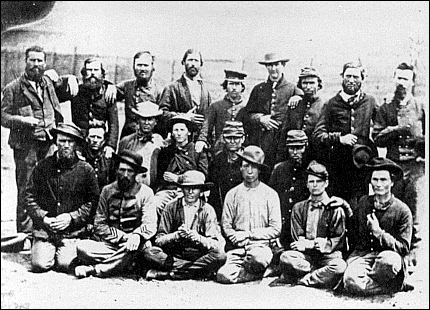
Here is a photograph of a regiment of Confederate soldiers.

This is the first war documented with  photography.  The South had lead a ferocious war and if it had not been for several mistakes made by General Lee at Gettysburg, the outcome of the war might have been different.  He let his men influence  him against his better judgement not to pursue  the Northern troops as they retreated, and he ordered the fateful Picket’s Charge on day 3 when 1/2 of Picket’s men of 12, 500 were either killed or wounded.  Lee had to retreat and was never to invade the Northern territory again. Later, it was obvious that these three days of battle were the major turning point of the war.

What was the  cause of the Civil War?  President Lincoln said it was to preserve the Union of the United States after the Southern states succeeded. The South said the war was about their rights or States’ Rights to determine their own laws and way of life.  The South was mostly agrarian with large plantations and many acres that were manned by slaves. The North was mainly urban and much more industrial.  Well, the Southern way of life and livelihood would not survive without the slaves . Many plantation owners were unable to live within their means and if the “free” labor given by slaves was taken away, the Southern way of life would be over.  This was the heart of the matter, the future of slavery in our country both in new territories and ultimately in the South.  The question was the  future of cheap or free labor in the South.

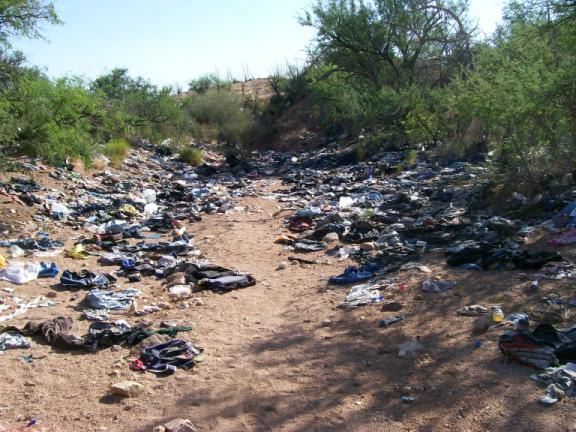
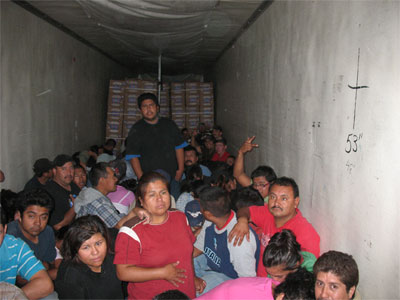
Jump  ahead 150 years and guess what?  In the United States the same question of cheap labor is taking place, but in the Capitol in Washington DC.  This time , the question is not slavery but the cheap labor provided by  immigrants from Mexico.  Many of these people are so desperate for  a better life that they risk life and limb to enter our country. At this very time, the House and Senate are presenting bills to  determine the policy for these people who are already here,and came illegally. What should be done about them, their families and what is the policy for undocumented people in the future? It is a complicated, expensive, and difficult question but it all boils down to  the question of providing the country with cheap labor for jobs Americans seem not to want to do.

Some tough questions stay the same in different context and time.

The desert in Southern Arizona littered by immigrants’ trash while entering the United States on foot.
illegal_alien_crossing538

illegal aliens 2

Vans of workers who often  pay  their life’s savings to the “mule” or driver  who brings them in hot paneled trucks into Arizona or Texas.

Mexican_Children

Mexican children celebrating Cinco de Mayo, their victory over the French.

“Life, liberty, and the pursuit of happiness” and “freedom and justice for all ” are very strong magnets pulling on the human spirit of  slaves,  Egyptians, Mexicans, or people everywhere.

Posted in Uncategorized | Tagged , , , , , , , , | 1 Comment

Liebster Award

I am grateful to Sangeeta of lifeisavacation.wordpress.com   for nominating me for the Liebster Award. She has also been appreciating my posts over the weeks, is very encouraging, and is one of my new Indian friends. I am very grateful, and happy to beable to encourage other terrific blogs with my nominations.

I like the changes that Sangeeta included in the rules and will keep them for my nominations.

Here are the simpler rules for  the Liebster: (Note that the award has gone through various permutations over the years.)

  • Thank your Liebster Blog Award presenter on your blog.
  • Link back to the blogger who awarded you.
  • Copy & paste the blog award on your blog.
  • Let your nominees  know you chose them by posting on their blog.

This year’s rules add several items:

  • Tell 11 things about yourself.
  • Answer 11 questions that your tagger has asked.
  • Choose 11 people and link them in your post.
  • Ask 11 questions for the bloggers you nominate.

I will keep it simple for myself and many of  my nominees ( who are  quite new to the blogosphere).  I will  write a few lines about myself , leaving it to the readers’ imagination to figure out the 11 things included in my paragraph.

My 11 nominees are:

1. helobiae.com

2. outofmymindimages.com

3. dnamto.wordpress.com

4. wheelsonourfeet.wordpress.com

5.paulfurbey.wordpress.com

6. cindyknoke.com

7.gakeing.com

8. afashionableindian.com

9.bizzareness.wordpress.com

10. nirbhayasindia.wordpress.com

11. clanmother.com

12. usmanhashmi.wordpress.com

I am a retired elementary teacher  who has had two big adventures. I got my master’s degree late in  my teaching career and got a job in Arizona while my husband continued to teach in New York.  We visited back and forth for seven years like the young couples do!  And last January, I went to India for four  fabulous months. Everyone can and should be a lifelong learner.  I have also learned to blog and I  am really hooked on the whole process. I now have friends I speak to daily all across the world!   Namaste. . .

Posted on by annetbell | 14 Comments

Skaneateles

287px-28_-_42_East_Genesee_Street_Skaneateles               images (17)

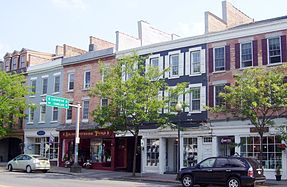
Now for my “English as a Second Language ” readers the title must be quite a shock!  The Dutch settled in New York, maybe it is Dutch. Nope, it is Onondaga Native American meaning “long lake.”  ( skin-e-at-less)  It is  in the wonderful central part of the state where the five finger lakes are and  nestled around them , are the  New York vineyards,  which  it seems, are on every hill.  We spent the weekend for our son’s birthday. Chris moved there for a job while we were in India.  Now he is three hours from our home instead of  the 3000 when he was working in Phoenix.  It is wonderful to be able to celebrate birthdays and holidays together as a family.

Skaneateles is a village of 2,700 residents who live  in this famous “summer destination resort!” The lake is filled with clean, pure water which provides unfiltered drinking water for 250,000 people. After testing, this lake has the distinction of being declared the cleanest lake in the country.

skaneateles-water-small

There are lots of very large fish ready to be caught and eaten, and the guys tried but with no luck.  In the summer, there are many duck and geese vacationers , too, before they fly  south in the fall. The downtown is filled with shops and local restaurants. There is not a McDonald’s or Starbucks to be found. There are inns, and B&Bs, hotels and motels. Great restored buildings and houses line the streets and there are  trees  and flowers  everywhere you look.

9901646-large                  101802-krebs1jpg-33806df15568c7a0_largecn_image_0.size.mirbeau-inn-spa-skaneateles-skaneatles-new-york-104513-1

But my favorite time in the whole weekend was time with my five perfect grandchildren.

67818_10151512640062135_598384043_n

Here the girls, Grace, Alice, and Violet, are posing in front of t heir  Duck Commander  “friends” at Bass Pro Shop!

If you don’t know that show, it is a riot! Check it out.

942679_10151512641727135_856844844_n

Henry and Parker were trying out the boats. . . . . on dry land. . . .

1005740_10151512650467135_959070092_n

Here are my darlings enjoying a  seat  by the lake. Notice no one is playing with anything electronic?

It was a perfect weekend to LIVE, LAUGH,LOVE  in Skaneateles!

sunset_from_shore1

Posted in India | Tagged , , , , , , , , , | 5 Comments

I’m thinking for you.

Today, I am thinking of both India and Egypt. Honestly, I had no idea that President Obama had written this. Namaste

Posted in India, Uncategorized | Leave a comment

In a Garden?

Image

A garden is a peaceful place for relaxation, rest, and contemplation.  It can also be a meeting place.  Such it was in a garden, Jallianwala Bagh,  in Amritsar, Punjab on Sunday, April 15, 1919. The day was one of the Punjab’s largest religious festivals. During this historical period, there was a time of unrest and protest against the British rule and Indian people were not free to move around or meet in groups.This, too, was the case of slaves in the South before the Civil War. Plantation owners feared revolt. Slaves were not taught to read or write and could only congregate on Sundays at church. But these pronouncements in India  were published only in English, unread by the many non-English speaking or  reading  Indians.  The group of men, women, and children numbering thousands were meeting to plan a protest of the unjust British laws as well as celebrate the festival.  The crowd was peacefully sitting and listening to speakers and no one in the garden was armed.

Without warning, 50 British soldiers walked in through the only entrance to the garden, blocking any means of escape. The soldiers stood in execution lines. General Dyer gave the order to “Fire until all the ammunition is exhausted.” The soldiers shot over 1600 rounds of ammunition into unarmed, defenseless men, women, and children. Desperately trying to escape, people fought to climb the surrounding walls, and locked gates.  Still the bullets kept coming.  There is a large well in the center and many fleeing people decided to throw themselves and their children into the well to a death by drowning rather than be shot.  I thought of the poor people on 9/11 in New York, at the World Trade Center,  who decided a quick death by jumping was preferable to waiting to be burned alive.  They faced the same death decision as these Indians so many years ago. The well is dry today, and is named the Martyr’s Well.  The following is a reenactment of the massacre on YouTube and  is a chilling picture of the event.

http://www.youtube.com/watch?v=XE9_zB8k_lk

There is a picture of this” killing field”  in the garden and when seeing it,  I was reminded of  Picasso’s Guiernica, a painting  showing the horrors of war.  General Dyer was later relieved of his command, but until this day no British leader has apologized for this their bloodiest act in India.  Last year David Cameron, the Prime Minister voiced regret, but stopped just short of an apology.

This date in Indian history may well mark the beginning of their  long  journey for independence from Britain.  And on this  date, Jallianwala Bagh once known as a peaceful garden, became known as hallowed ground and now a place  to remember this  merciless massacre.

Guernica, 1937 by Pablo Picasso
.Guernica by Pablo Picasso    Madrid, Spain
Posted in India | Tagged , , , , , , , | 13 Comments

Mark Twain’s India

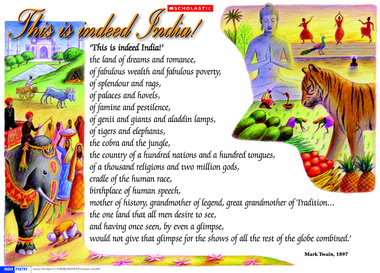
ndia-pos-447418“This is indeed India, the land of dreams and romance, of fabulous wealth and fabulous poverty, of splendor and rags, of palaces and hovels, of tigers and elephants, the cobra and the jungle, the country of a hundred tongues, of many religions and many gods, cradle of the human race, birthplace of human speech, mother of history, grandmother of legend, great-grandmother of tradition, whose yesterdays bear date with the moldering antiquities of the rest of the nations — the one sole country under the sun that is endowed with an imperishable interest for the inner self consciousness, for lettered and ignorant, wise and fool, rich and poor, the one land that all men desire to see, and having seen once, by even a glimpse, would not give that glimpse for the shows of all the rest of the globe combined. Even now, after the lapse of a year, the delirium of those days in Bombay has not left me, and I hope never will.”

Mark Twain, from Following the Equator (1897), Ch. XXXVIII

Thanks to my friend and follow blogger Dhruv Sachdev for sharing this quote.

Mark Twain surely could get to the heart of the matter.   Wish I had written that description, but am thankful I have shared in his experiences!

Namaste. . . .. T I I . . . . .Anne

Posted in India | Tagged , , , , , , | 8 Comments

Life, Fortune, and Sacred Honor

THE DECLARATION OF INDEPENDENCE

THE SIGNERS

Gary Hildrith

Have you ever wondered what happened to the fifty-six men who signed the Declaration of Independence? This is the price they paid:Five signers were captured by the British as traitors, and tortured before they died. Twelve had their homes ransacked and burned. Two lost their sons in the revolutionary army, another had two sons captured. Nine of the fifty-six fought and died from wounds or hardships resulting from the Revolutionary War.These men signed, and they pledged their lives, their fortunes, and their sacred honor!

What kind of men were they? Twenty-four were lawyers and jurists. Eleven were merchants. Nine were farmers and large plantation owners. All were men of means, well educated. But they signed the Declaration of Independence knowing full well that the penalty could be death if they were captured.

Carter Braxton of Virginia, a wealthy planter and trader, saw his ships swept from the seas by the British navy. He sold his home and properties to pay his debts, and died in rags.

Thomas McKeam was so hounded by the British that he was forced to move his family almost constantly. He served in the Congress without pay, and his family was kept in hiding. His possessions were taken from him, and poverty was his reward.

Vandals or soldiers or both, looted the properties of Ellery, Clymer, Hall, Walton, Gwinnett, Heyward, Ruttledge, and Middleton.

Perhaps one of the most inspiring examples of “undaunted resolution” was at the Battle of Yorktown. Thomas Nelson, Jr. was returning from Philadelphia to become Governor of Virginia and joined General Washington just outside of Yorktown. He then noted that British General Cornwallis had taken over the Nelson home for his headqurt, but that the patriot’s were directing their artillery fire all over the town except for the vicinity of his own beautiful home. Nelson asked why they were not firing in that direction, and the soldiers replied, “Out of respect to you, Sir.” Nelson quietly urged General Washington to open fire, and stepping forward to the nearest cannon, aimed at his own house and fired. The other guns joined in, and the Nelson home was destroyed. Nelson died bankrupt.

Francis Lewis’s Long Island home was looted and gutted, his home and properties destroyed. His wife was thrown into a damp dark prison cell without a bed. Health ruined, Mrs. Lewis soon died from the effects of the confinement. The Lewis’s son would later die in British captivity, also.

“Honest John” Hart was driven from his wife’s bedside as she lay dying, when British and Hessian troops invaded New Jersey just months after he signed the Declaration. Their thirteen children fled for their lives. His fields and his grist mill were laid to waste. All winter, and for more than a year, Hart lived in forests and caves, finally returning home to find his wife dead, his chidrvanished and his farm destroyed. Rebuilding proved too be too great a task. A few weeks later, by the spring of 1779, John Hart was dead from exhaustion and a broken heart.

Norris and Livingston suffered similar fates.

New Jersey’s Richard Stockton, after rescuing his wife and children from advancing British troops, was betrayed by a loyalist, imprisoned, beaten and nearly starved. He returned an invalid to find his home gutted, and his library and papers burned. He, too, never recovered, dying in 1781 a broken man.

William Ellery of Rhode Island, who marveled that he had seen only “undaunted resolution” in the faces of his co-signers, also had his home burned.

Only days after Lewis Morris of New York signed the Declaration, British troops ravaged his 2,000-acre estate, butchered his cattle and drove his family off the land. Three of Morris’ sons fought the British.

When the British seized the New York houses of the wealthy Philip Livingston, he sold off everything else, and gave the money to the Revolution. He died in 1778.

Arthur Middleton, Edward Rutledge and Thomas Heyward Jr. went home to South Carolin tight. In the British invasion of the South, Heyward was wounded and all three were captured. As he rotted on a prison ship in St. Augustine, Heyward’s plantation was raided, buildings burned, and his wife, who witnessed it all, died. Other Southern signers suffered the same general fate.

Among the first to sign had been John Hancock, who wrote in big, bold script so George III “could read my name without spectacles and could now double his reward for 500 pounds for my head.” If the cause of the revolution commands it, roared Hancock, “Burn Boston and make John Hancock a beggar!”

Here were men who believed in a cause far beyond themselves.

Such were the stories and sacrifices of the America revolution. These were not wild eyed, rabble-rousing ruffians. They were soft-spoken men of means and education. They had security, but they valued liberty more. Standing tall, straight, and unwavering, they pledged: “For the support of this Declaration, with firm reliance on the protection of the Divine Providence, we mutually pledge to each other, our lives, our fortunes, and our sacred honor.”


What Really Happened

Posted in Uncategorized | Tagged , , , , , , , , , | 16 Comments

The Echoes of Gettysburg by Michael Henry Dunn, July 3, 2013

Truths to ponder on Independence Day Eve

Posted in Uncategorized | Leave a comment

What Does Young Egypt Want?

what-young-india-wants-275x275-imadbbv6rqggb5hr

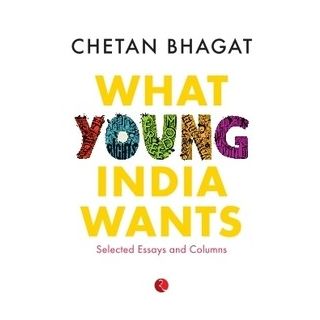
No, I didn’t make a mistake, but thought some parallels could  be drawn between the two countries’ young people. There are certain  similarities in the problems of sorting out the mixture of politics and religion.  The demographics are similar with  Egypt’s median age as 24.6 and India’s at 26.5. This is the number that divides each country into two equal groups by age. As a contrast, in the US , it is 37 and in Europe, 40 years of age. One contrast is that the Egyptian youth, in the last years, have become very energized and active in political parties for the sake of rebuilding the country. Evidence of this is all over the stories in the media.  The Indian  youth are less involved in politics as far as I have observed. Bhagat appears  to be calling them to action.  I found a book  entitled Egypt on the Brink by Tarek Osman , but I haven’t read it. From the reviews, it seems that Osman is trying to be the voice of the youth in Egypt as Bhagat is trying to articulate  the voice of young India.

In India, there was much talk of Mr. Modi being  the next Prime Minister. He is a strong leader who has zero tolerance for corruption.  Currently he is the Chief Minister of Gujurat where we lived.  There were comments in the country that Mr. Modi is not secular enough because of the trouble  in 2002 involving the Muslims in Gujarat, which thankfully  has  not happened again. Bhagat asks hard questions and demands answers while he presents solutions in simple straight forward and rather simple English.  I think this is to ensure that more Indian people will be able to read his work. The ability to read in  English is not common  throughout the country.

Chetaan Bhagat articulated  the India dream on page 179:

” I think what the Great Indian Dream should be is that every citizen should work hard, prosper and succeed through innovation and hard work and once successful, every citizen should give back to the society that made her or him what he or she is. ”

And from pages 180-181

“Things do change and so will our country. However, it will change much faster if you come on board. It will change for the better if you want to change. Let us contribute to this new direction India needs to move in. When people look back at our times, they may say this was a period of great turmoil. But let them not say it was the time when people sat around and did nothing to make things better. Just like the freedom fighters who made such sacrifices for us, let us also join hands to make India a better place. There is no Hindu India, or Muslim India. There is no Punjabi India or Tamil India. There is no upper caste India or lower caste India. There is not even a Congress India or a BJP India.  There is just one India, our country, which we all want to become a better place.  We want a nation that is rich, respected and has a good place in the world. We want a society with good values. And as long as we are on the same page for that, I will continue to have high hopes for my country.”

Presumptuous as it is, I think that the youth of Egypt could read the above paragraph and insert Egypt for  India.

“Talent is a most precious natural resource and we must nurture it.” ( Bhagat)

Dream on and do all you can, India and Egypt, to  strive for  freedom and justice for all!”

Amen, (let it be)

Posted in India, Travel | Tagged , , , , , , , | 15 Comments

Last Light

This photo is breathtaking the story is tender and touching!

Broken Light: A Photography Collective's avatarBroken Light Collective

Photo taken by contributor Uday Narayanan, a 26-year-old from New Delhi, India. Uday has an uncle who suffers from Schizophrenia. His uncle has been living with him for the last 20 years. Growing up, Uday remembers his uncle as being a loving man who would play with him every evening, but who would get extremely moody at times. As a kid, the frequent switches in his uncle’s behavior would annoy Uday. It was only after his parents explained to him about his condition that he realized how tough it is for him. In a country like India, mental illness is still a taboo. No one talks about it openly. Going to a psychiatrist or even a psychologist raises several eyebrows. It is very important that people are educated about mental illness so that they don’t shy away from seeking professional help. Uday’s uncle takes medication regularly and is leading a very healthy…

View original post 165 more words

Posted in Uncategorized | 3 Comments