
I am just enchanted with these animal/baby encounters. I hope you understand!

I am just enchanted with these animal/baby encounters. I hope you understand!

India is the largest producer of films in the world and the largest audience with 1.2 billion people who love film. It is an escape from the pressures of life. Yes, almost every Indian film has dancing and is a comic romance. Even a western we saw in India had a huge dance number. It was in the middle of a gun fight, everyone put down his gun, danced with the beautiful girls, and afterwards picked up the guns and continued shooting. The only film I remember without a dance was” 26/11″ which was about the sneak attacks in Mumbai on that date which was very somber.
Two more details about Indian cinema is that there is an intermission about half way through. The film just stops, lights blaze, people jump up and head for the doors. The line at the bathroom is every so long as is the popcorn, candy counter. This is to keep the patrons comfortable and the vendors selling snacks. Works well, but is quite startling at first.
Dev Patel, from Gujurat, I must say, is the most popular Indian star in the US with works such as “Life of Pi”, “Slumdogs Millionaire’ “The Most Exotic Marigold Hotel” and he is is this one. I can’t wait to see it when it opens in January. I don’t much like the romantic comedies, but I love the Indian films which are filmed with love and the struggles of human spirit which is what I identify with the Indians. Check out “The Lunchbox.”
One final thought is the release of films in the United States and India. Did you know that Hollywood releases the block busters in India a few days before the premier in the US. Why you might ask? B$2 which seems cheap to us but is pricey for the Indian poor! We discovered this in 2013 with the release of “American Sniper” . Half the group loved the film and when talking to family back in the US had not seen it yet as it had not been yet released Interesting?
Imagine you’re 5 years old and 1,000 miles away from home — not knowing your last name or your address. How do you find your way back? Bill Whitaker reports on one man’s powerful story of loss and love. The following is a script from “Lost,” which aired on Dec. 11, 2016. Bill Whitaker is the correspondent. Marc Lieberman, producer.
Saroo Brierley is a 35 year-old-man with a powerful story of loss and love. As a 5-year-old child in India, he became impossibly lost in Calcutta, a sprawling, chaotic city of 14 million people. He said he had no money, no one to help him, no clue how to get back home. That he survived is amazing enough. What happened next got Hollywood’s attention. His story is now a movie, called “Lion,” the English translation of his Indian name. But there would be no movie, no story without Saroo’s memories, the recollections of a terrified little boy. It’s hard to recall events from age 5, but witnesses we talked to and documents we found support almost all that he remembers. Saroo Brierley considers himself lucky to be alive. When you hear his story, we think you’ll understand why.

Saroo Brierley
Bill Whitaker: Tell me about the night you got lost. What do you remember?
Saroo Brierley: I remember it so vividly. It’s– it’s a memory that’s been within me for such a long time.
It began when Saroo Brierley was five in his village in central India. He lived in a cramped one room house made of cow dung and brick with his mother, two older brothers, and younger sister. His father had abandoned them leaving them penniless.
Bill Whitaker: Do you remember being hungry?
Saroo Brierley: We’re always hungry. We were always sort of having to sort of live a day at a time.
Bill Whitaker: You found more food at the train station than anyplace else?
Saroo Brierley: If I really wanted to sort of find food, the train station is the best place. It wasn’t just myself, there was other beggars and people at the train station too.
Bill Whitaker: Is that what you and your brothers were?
Saroo Brierley: We were beggars, yeah.
He says his mother would often leave the children for days on their own so she could earn less than a dollar a day hauling rocks at construction sites.
Saroo Brierley: When I saw her eyes as a child I know she was going through hardship.
Bill Whitaker: You remember thinking that, looking at your mother?
Saroo Brierley: Yeah. I’d see whilst I’m sort of sleeping or almost asleep next to my sister and I could see sort of tears going down her eyes as well.
One night, Guddu, his oldest brother he idolized, wanted to scavenge at the big train station down the track. Saroo says he begged to go with him. Reluctantly, his brother gave in. Saroo remembers the station had a water tower and a pedestrian walkway. He also remembers he was exhausted. When they got there, it was late at night.
Saroo Brierley: And I just wanted to go to sleep. And my brother said, “Wait here. I’ll be back.” I ended up going to sleep on the bench. I’m not too sure whether it was like 10 minutes, 20 minutes, an hour, two hours, three hours.

When he woke up, he remembers a train was there but his brother was not. Saroo thought he might be inside looking under seats for coins and food. He didn’t find him but he did find a comfortable seat and fell back to sleep. When he woke up again, as depicted in the movie, the train was careening across India for hours and hours.
Saroo Brierley: It’s a ghost train. No one’s on the train. And–
Bill Whitaker: And the train is hurtling down the tracks–
Saroo Brierley: It’s hurtling down the tracks. And I just ran up and down. Tears. I was locked in the carriage. I couldn’t open it. I’m on this carriage, on this train, all by myself locked as a prisoner. Its prisoner.
Bill Whitaker: And you’re five years old.
Saroo Brierley: And I’m five years old.
He thinks he was trapped more than a day. He ended up a thousand miles from home in the crowds and chaos of the main Calcutta train station. More than a million people pass through here every day.
Saroo Brierley: I was panicking. My heart was going triple time. I’m calling out for my brother, my sister and my mother.
Bill Whitaker: Was no one paying attention to a little– little kid in the crowd?
Saroo Brierley: No one was paying attention. No. To them it’s like you’re just another kid outside the train station. You know? A beggar out from the train station.
To make matters worse: He spoke Hindi. In Calcutta, people speak Bengali. He avoided the police because, at home, police arrested beggars. So he’d have to do what he’d learned from his brothers. Survive on his wits and scavenge in a vast, unforgiving city threatening to swallow him up. He slept alongside other street kids in the train station but there were adult predators at night.
Saroo says he barely survived perhaps for weeks before a young man helped him and brought him to the police. A judge sent him to an orphanage. While the movie heightened the action for dramatic effect, we confirmed with the director of the orphanage that Saroo told his story of being lost when they took him in. The social workers wrote his story in this log.

Saroo with his parents, John and Sue Brierley
Five-year-old Saroo didn’t know his last name, didn’t know his address, didn’t know the name of his village. They put his picture on flyers, on TV, in the paper. But no one responded. He was declared a lost child of India. The woman who ran the orphanage told Saroo a family in Australia wanted to adopt him. About six months after getting on that train, he got on a jumbo jet to Australia where he met his new mom and dad, Sue and John Brierley.
Bill Whitaker: What was that like when he gets off the plane?
Sue Brierley: (sigh) Oh.
John Brierley: Pretty incredible–
Sue Brierley: Yes.
John Brierley: Yeah–
Sue Brierley: It was just so amazing. He just had these incredible eyes. And calmness about him. He seemed a little bit cautious. But he didn’t seem fearful.
They took Saroo back to their home on the Australian island of Tasmania where he had a toy filled room as big as his house in India. His new mother put a map of India on his wall so he’d always remember where he came from.
Sue Brierley: He virtually put his life in our hands from the first moment we met.
Bill Whitaker: You could feel that.
Sue Brierley: Yes. Yes. Definitely.
Bill Whitaker: They saved you.
Saroo Brierley: They did. But they didn’t know my past and what had been. And I only told ‘em to the point of you know as much language as I had that I could describe things.
Slowly, as he learned English in school, he began to reveal his past. He remembered details of the station where he got on the train to Calcutta. The water tower. The pedestrian bridge. He remembered the dam where he would play in the river. Sue wrote it all down in this diary. Under the love and care of Sue and John, Saroo thrived. He excelled at sports. He was popular at school.
Saroo Brierley: I was happy, I was comfortable, getting the love that I—that I’ve always sort of wanted.
Bill Whitaker: With your new life, did you think about your old life often?
Saroo Brierley: Of course I did. Those memories came alive when I went to sleep.
But sometimes in his waking hours, he would search the map of India hoping to recognize something, hoping to find his mother. He said he feared she was anguished over losing him.
Bill Whitaker: How did you feel about that?
Saroo Brierley: Helpless. That’s what it was, at the end of the day. You couldn’t do anything. You think about it quite a bit. I was holding onto those memories, never to let go.
Nearly 20 years after he went missing, he discovered he could use his memories like a mental map to find his way home. His discovery? Google Earth.
Saroo Brierley: It’s just so massive. And this is what I’ve been sort of looking at.
With Google Earth, he could get a bird’s eye view of towns and landmarks. He calculated a search radius from Calcutta based on the speed of trains and the time he thought he was locked on board. Night after night, he would follow the tracks looking for anything that would match his memory of the station where he got lost.
Bill Whitaker: So out of all of India, all the train stations in all of India, you’re looking for a water tower and a walkway over the train tracks?
Saroo Brierley: Uh-huh (affirm). Basically, a needle in a haystack.
One night, frustrated by hours, years, of fruitless searching, he looked out farther than he ever imagined he could have traveled.
Saroo Brierley: All of a sudden I come to this train station here and I zoom down. It matched absolutely perfectly.
Bill Whitaker: The water tower’s right there-
Saroo Brierley: The water tower is right there.
Bill Whitaker: And the pedestrian walkway.
Saroo Brierley: The flyover bridge, the pedestrian walkway.
Farther on, he saw the dam where he played in the river. It all matched what he’d told his adoptive mother Sue years earlier, down to the map they had drawn in the diary.
Bill Whitaker: Many people don’t remember younger than five, but yet you remember in such great detail. Why do you think that is?
Saroo Brierley: I reckon what it is, is that I never went to school. So language wasn’t really in me, you know. It was all visual. My visual senses were extremely heightened.
He knew he had to go to India to try to find his mother. At the airport, Sue gave him this photo. It’s how he would have looked when his birth mother last saw him.
Saroo Brierley: And all of a sudden you know my emotions and everything just take over me, and I’m just in tears. It was almost like feeling, you know, before actually knowing, “Mum, I’m coming home to see you.”
After 25 years, 16 hours on the plane, and a four-hour drive, he was finally home. It was just as he’d remembered – the path he’d walked many times to his house. But when he got there, it was abandoned.
Bill Whitaker: Your family’s not there. What are you thinking?
Saroo Brierley: I thought “They’re dead.” I thought the worst. All the worst things that you could think of possibly was just going through my head.
Saroo, now an Aussie, stood out in the slum. He couldn’t communicate. A man approached who spoke English. Saroo said he was looking for the family that had lived in this house. The man told Saroo to come with him.
Saroo Brierley: And I walked for about 15 meters just around the corner, and the man goes, “This is your mother.” And she walked forward, and I walked towards her. We– we’re– our eyes were locked together.
Bill Whitaker: What’d you see in your birth mother’s eyes when you look in them for the first time in years?

Saroo and his birth mother, Kamla
Saroo Brierley: The tears that I saw when I used to look at her and I can see that she’s struggling but this time it was tears of joy.
We sent our cameras to his home village. His mother Kamla told us “When I saw him I knew he was my Saroo.” He’s now been back to India 14 times. He reunited with his sister and one brother who both had moved to a nearby city. But his mother never left their village.
The movie shows the love between Saroo and his oldest brother Guddu, who took him to that train platform 25 years before. Kamla told Saroo his brother was killed on the tracks the very night Saroo was lost.
Bill Whitaker: On that one night your mother lost two sons?
Saroo Brierley: Yes and I can’t think you know what she went through. It’s like one is just you know here it is he’s died but the other one he’s just disappeared.
Bill Whitaker: Why did your birth mother decide to stay there in that very village?
Saroo Brierley: Because she felt that one day the son that she had lost would come back. And it was amazing because here I am, determined to find my hometown and my family from one side of the world, oceans apart, and here’s my birth mother sitting there and waiting because she knew that one day her son would come back. And I’m so glad that she did.
Saroo is now helping his biological mother in India financially. But he considers Sue and John Brierley his mom and dad, and Australia his home.

Fast friends! For Silly Saturday !
GO ARMY , BEAT NAVY!

Pile of the white stuff in a parking lot in New Hampshire.
This week was the first snowfall in Montreal , Canada which is about 5 hours north of where I live in Upstate New York. Each year people have to remember to slow down and gently pump the breaks as the first flakes fall. Enjoy the video , and know that no one was hurt except probable pride and of course smashed vehicles. Notice that professional drivers, bus, snow plow, and police slid right down that downtown hill. Obviously there is a layer of black ice under the rather light snow. In fairness, it is very hard, nearly impossible,to drive safely on the ice. . . . . sliding with no control as you see in the video. Watch the video for a smile this wintery morning, but come back to the text below for snow report!
I remember my first visit to Montreal when I went on a tour of the city. The guide reported that so much snow falls in a season that it is necessary to fill up dump trucks with the snow and dump it in the harbor.
Buffalo, New York has always been known as the snowiest place in the United States. I am not sure how they make that claim because with research, Syracuse gets more snow. per year. And somehow I doubt that the Chamber of Commerce is fond of that statistic being out there, though there are people in this area of the country who love snow!
So where does that huge amount of snow go to clear the streets and sidewalks during the cold months where the temperature rarely, if ever, reaches 32 degrees? Since the environment is a consideration and dumping dirty snow into the harbor is not environmentally friendly, the large dump trucks take the snow to dump at “snow farms” outside of the city and put in giant piles to let it melt naturally. But when the farms become full, it is still necessary to dump in the harbor. In New York City and Boston there are huge melting machines and when the snow melts to water, it is put in the sewers. I remember hearing once that for every inch of snow in NYC, it costs $1,000,000 for this process of snow removal.
Snow per year:
New York City 24-36″
Albany 56 ”
Montreal 82.5″
Buffalo 93.4″
Syracuse 116.9 Almost 10 FEET!

Message for the weatherman written in snow in a Syracuse parking lot.
Welcome to a Central New York winter !
|
Kermit A. Tyler was on duty at Fort Shafter’s radar information center on Dec. 7, 1941.(Earnie Grafton/associated Press)
Kermit A. Tyler, 96
Pearl Harbor figure Kermit A. Tyler, 96 |
Sunday, February 28, 2010
“Don’t worry about it.” Those words, which he uttered on a peaceful Sunday morning in 1941 on the Hawaiian island of Oahu, would haunt Kermit A. Tyler for the rest of his life.
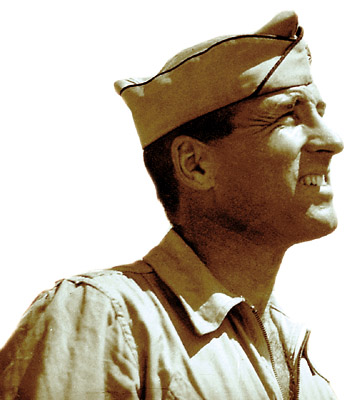
Mr. Tyler was the Army Air Forces’ first lieutenant on temporary duty at Fort Shafter’s radar information center on the morning of Dec. 7, 1941, when a radar operator on the northern tip of the island reported that he and another private were seeing an unusually large “blip” on their radar screen, indicating a large number of aircraft about 132 miles away and fast approaching.
“Don’t worry about it,” Tyler told the radar operator, thinking it was a flight of U.S. B-17 bombers that was due in from the mainland.
Instead, the blip on the radar screen was the first wave of more than 180 Japanese fighters, torpedo bombers, dive bombers and horizontal bombers whose surprise attack on Pearl Harbor and the island’s main airfields shortly before 8 a.m. plunged the United States into World War II.

“I wake up at nights sometimes and think about it,” Mr. Tyler said in a 2007 interview with the Star-Ledger of Newark, N.J. “But I don’t feel guilty. I did all I could that morning.”
Mr. Tyler, who suffered two strokes within the last two years, died Jan. 23 at his home in San Diego at age 96.
After Pearl Harbor, Mr. Tyler flew combat missions in the Pacific. He retired from the Air Force as a lieutenant colonel in 1961 and earned a degree in business from San Diego State University. He then launched a career in real estate and later became a landlord.
But there always was the memory of his role on Dec. 7, his infamous words immortalized in history books, articles, documentaries and a 1970 movie about the attack on Pearl Harbor, “Tora! Tora! Tora!” Often ridiculed and second-guessed, Mr. Tyler occasionally received angry letters blasting him for not taking action that day.

And audiences watching the Pearl Harbor documentary at the Pearl Harbor Visitor Center theater still groan when they hear Mr. Tyler’s response to the radar report.
“He’s certainly a footnote to the Pearl Harbor history and the most misunderstood actor in this drama,” said Daniel Martinez, chief historian for the National Park Service at World War II Valor in the Pacific National Monument in Pearl Harbor.
Mr. Tyler, a fighter pilot assigned to the 78th Pursuit Squadron at Wheeler Field, was working the 4 to 8 a.m. shift as the officer on duty at the Fort Shafter radar information center on Dec. 7.
“He was never trained for that job,” Martinez said. “He had a walk-through the previous Wednesday but had never spent a full day there.
No matter how professional and well trained the military is , mistakes are made. People make mistakes. I remember reading about Lt Tyler on a marker in Hawaii. Radar was a new technology at the time. It was just a tragic mistake.
Ironically, this summer, I heard of another mistake that affected many of our brave heroes of the 82nd, probably including my brother! Just before D-Day a new piece of safety equipment came to the attention of the leaders. It was a way to strap the rife and other needed equipment to the soldier’s leg for hands free jumping. The British and Aussie paratroopers had training on the proper adjustment. The Americans had no time to practice and were just instructed verbally how to to assemble and wear the equipment. Sadly , in the jump, because of inaccurate assembly, the gun and other important equipment were lost in the fall and the paratrooper had only a knife with which to protect himself.


What will you do to save the love of your life? The question might seem harmless but there have been times when people have gone to unbelievable limits for their love; sometimes, it has been not so pretty.
But this truly heartwarming act by a 72-year-old man — Swapan Sett — who uses his art in the form of music in an attempt to save his ailing wife, will surely touch your soul.
Srijan Pal Singh, author and former advisor to Dr APJ Abdul Kalam, shared a post on Facebook, that has since then gone viral. In the video shared by him, an old man can be seen ‘playing a melody of harmony and love on his violin’ at Old Coffee House in Delhi in order to raise money for his ailing wife.
When asked about what made him share this story to the world, Singh told ScoopWhoop,
I have worked with Dr. APJ Abdul Kalam and he used to always say that there is goodness in everyone and this goodness makes the world survive. Sett is an example of when the world is torn apart by demonetisation, nationalism, sexualism and everybody is hanging right in between, he is on a simple mission with his violin and that is truly inspiring.
What a wonderful gesture! Take a look for yourself.
The post has garnered over 10,000 shares in merely two days. According to reports, Mr Sett, who originally hails from Kolkata, has been travelling extensively across the country and playing music to raise money for his wife, who is being treated at a Mumbai hospital.
This man deserves respect for setting a brilliant example for the younger generation not only about how to love but also, on how one can save love. He gloriously illustrates the power of music and how far it can take us. He is, what they say, a hero without a cape. Would you disagree?

Source: MappingWalks/Wordpress
People have been sending him their support from all over the country setting an even more brilliant example of how music and love surpasses religion and status. It’s such a beautiful sight to see something so small become so special.
This is such the heart of India which is so impressive to me. Generosity , justice giving, understanding and the entrepreneurial spirit. There is no Obama Care in India. . . . and very few public assistance programs except for food. People or the poor have to figure out a way to provide for their families. Mr. Singh is sharing his music to pay for his wife’s cancer treatment because he loves her so much and doesn’t want to lose her. A universal truth and feeling of love that we all can understand. Music and love are language of the heart.

Baby boomers were brought up on Westerns. Do you remember Gun Smoke, Wagon Train, Bonanza, and Rawhide? Longmire is a crime drama but also a Neo-Western. Similarities but modernized in plots. Longmire is the local sherif who works to solve major crimes in his county. There are Native Americans but now they are Casio owners, pretty girls and one is a Deputy in the police department. There is a bar but not a saloon . There are guns, criminals, and no horses but pick-up trucks. The setting is in the West. . . . Wyoming, land of the big dramatic sky. There are stories about drugs on the” res,” gangs, organized crime. Life was so less complicated on those far away westerns we watched as kids.
The stories are quite good in part because the series is based on Craig Johns books “Walt Longmire Mysteries.” It started on A&E and was picked-up by Netflix in 2015 to to the present. No film in the theater was appealing this weekend so we have been catching up on Longmire.
Contrary to Westerns in the past, no one wears a white hat, which in the past was the signal of the “good guy”. The show has shades of gray rather than black and white much as it seems in society these days !
There are 5 seasons available. I would suggest that you start with season 1 to see if you like it. if you don’t want to do that, though, just jump in . There are characters who go in and out of the series and a continuing story line, but you will be able to follow it with little problem.

Here I am on another Saturday morning reviewing one of my favorite old films from 2008. There are several layers of story, setting and actors which which come together to entertain in “In Bruges.”
Collin Farrell and Brendon Geason star as two Dublin hitmen who are on the run and actually hold up in the medieval city of Bruges, Belgium. This wonderfully preserved Medieval city is a beautiful contrast to the British/American black comedy. Colin Farrell and Brendan Gleeson are joined later by the splendid Ralph Fiennes. Colin Farrell, who is one of my favorite actors is very convincing, I think because he is let alone be be his Irish self !
Oh the language is what to be expected of two hit men which I never like but seems to be the norm today.
So I this film still wears well after 8 years. The humor is “laugh out loud”, the fear and pain palatable, and the architecture magnificent. The film is available for free on Youtube.com Here is a question posed by Collin Farrell about climbing the tower in the center of town, one of sites for tourists:
“Why do I have to climb up there to see what is down here? I am already down here!? Good question, Ray!
Here are the funniest scenes that someone has compiled in YouTube, though for me it is the context and characters’ history which make the comedy shine~
Complete film from YouTube.
4 starts out of 5 for me. Let me know if you have seen this or do decide to check it out.

Medic, Desmond Doss, running into the battle without a gun, only his medic supplies ,to try to save lives.
This film has some of the bloodiest and authentic battlefield scenes since “Saving Private Ryan” and actually is reminiscent of the violence in Quinton Tarantino’s films. Actually , it is an ironic setting for the journey of a young soldier who is a conscientious objector who wants to serve his country but without a gun in the center of the battlefield. Private Desmond Doss was the first “conscientious objector medic” to win the highest honor of Medal of Honor.
The film is full of conflicts , war with the Japaneses at Okinawa, internal conflict of Doss in his heart and mind trying to follow God’s commands in the hellish atmosphere. There is also conflict with his fellow soldiers. All this is conflict in interpretation and practice of religion, duty to God , and the horrors of war. These are conflicts that are evident today as we struggle in our journey. . . freedom of religion in the United States.
Mel Gibson is the director of the film. He is talented but controversial in his words and behavior, but this work may be his redemption in Hollywood. To give you some anecdotal stories of the opening of Hack Saw Ridge, the audience gave the film a ten minute standing ovation after the credits in the opening in Venice, Italy. Our showing was at the Spectrum Theater in Albany. It It is the art movie theater who is selective usually in their shows to include only progressive messages. In fact, because of the star’s active faith, I was surprised that it was playing there. There are 8 small theaters and we were in one of to the larger ones. It had been out for several weeks and we were surprised that on the weekend after Thanksgiving, the theater was almost full. First surprise. Second surprise was at the end of the showing during the credits, applause broke out . Not a standing ovation but strong and sustained applause. . . in Albany, New York! Pretty surprising that one!
In my opinion. . . this is Oscar materiel for next year and I give it * * * * * * out of 6 stars!
Wait until you see how the Lord answers Doss’ prayer of , ” Let me save just one more. . .
“Hacksaw Ridge” :The Bloody, True Story of Faith in Action

I couldn’t resist this! For Karen and Liz my cat lady friends! Over 1,000, 000 hits can’t be wrong, can they?

 TalesAlongTheWay