Eyewitness Guides

Travel the World

I had an idea this morning that some of you might be interested in the guide books we have used in our travels as this is the time of you might be either planning or dreaming about a destination vacation.

This is the latest Eyewitness  guide we  used and  most of the 800 pages!  This  cover shows  you some of the reasons that the architect only buys these guides. He is all about architecture and notice the number of color photographs, detailed maps, and illustrations such as as  plans including  isometric photographs which are  important in understanding the architecture of the area.

Accuracy of information such as times that sites are open is important and often those change.  We did go to a museum in India where the actual hours it was open were different than in the  guide.  So be careful if saving money by borrowing an older guide from a friend.  Things may have changed even in an ancient culture like India.

Using these guides make it possible to plan your own itineraries as it is pretty inclusive with hotels, restaurants, region by region organization, walks, scenic routes, markets, shopping, Here is the double page as a guide to visiting the Taj Mahal

The publisher is DK publishing in London. The cost is about $30.00 a volume.  Pricey but worth it or so we thought.

To quote the New York Times:  “Each book is visual, as well as an informative feast.”

Posted in Architecture, India, Travel, Uncategorized | Tagged , , , , | 4 Comments

“Earth” . . . . film about the partition of India

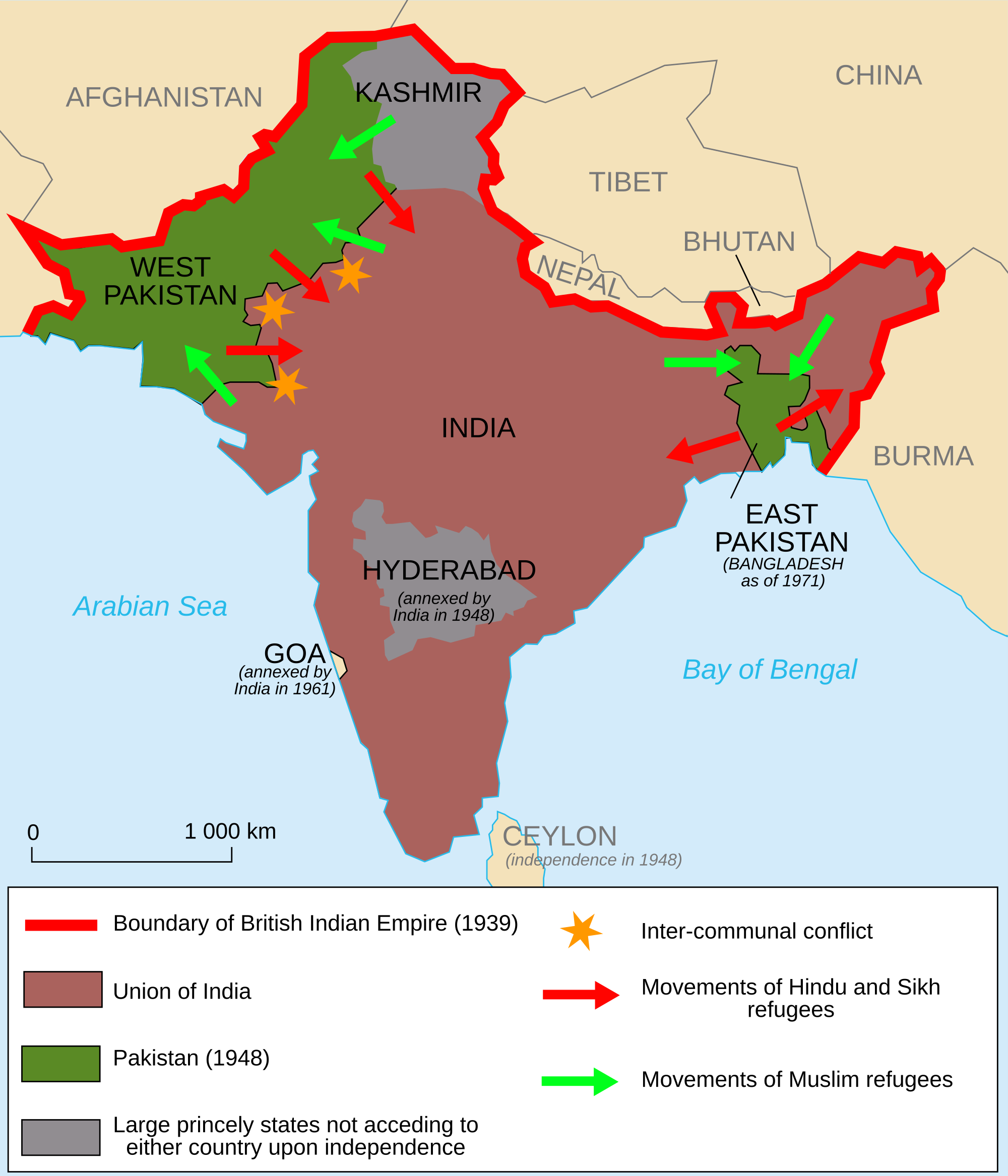
Studying this  map, it is pretty amazing to see  how much progress India and to some degree Pakistan has made in the 69 years after partition.  After 300 years, Britain finally left two independent nations of India and Pakistan in 1947.  This division or partition of the sub-continent set off one of the greatest migration of  humans in the history of the world and all  based on religion.  The Muslim people went to the east or to the west  to divided Pakistan, and the;Hindus and Sikhs went in opposite directions.

The English were in a hurry to leave due to the financial difficulties they are in because of a huge debt from WWII.  In their hurried exit, they left a mess in what was once called ” the jewel of the crown” of the English Empire.   The map maker who drew up the new boundaries never even visited to see the culture and dynamics of the people he uprooted. Many repercussions are evident even today. To give a slightly more current example, think of the on-going problems in the Middle East with the boundaries drawn up by the West after WWI.  We have  lived, suffered, and fought  with the aftermath of all these hastily drawn borders, even to  this very day !

In 1947 in the subcontinent, 15, 000,000  souls were uprooted.  1-2 million died in transit. For Indians, it was their “Holocaust.”  Sadly, Gandhi’s  vision of a peaceful non-communal India didn’t survive. Instead  two countries now remain  , one based on religion, and  the other secular. In place of  one country where all the different religions and cultures had lived together for centuries, more or less peacefully, now  cousins, friends, neighbors, and even brothers  were  turned into deadly, envious neighbors.

This film  “Earth”, is about the city of Lahore, once a center of learning and sophistication  that is turned into a place of hatred ,  distrust and anger. The characters  in the film are Parsee, Muslim, Hindu and Sikh. . . . all friends or they used to be!

It is particularly sad, that after so many years ‘in country,’ the English had so little insight into the lives of the Indians.  Or could it be that after all their  enjoyment in the subcontinent  and service from the Indian people, that  the English  just didn’t care?

Posted in India, Religions of the World, Travel, Uncategorized | Tagged , , , , , , , , , , , , , , , , | 5 Comments

Horrific News from India

 
 Thanks Judy for  showing me this story. These horrible crimes against women continue to  happen.  It is important for this news to be heard as a blight on India, the world’s largest democracy.  The Indian government needs to  make a stand against crimes against women and children and punish quickly and  severely these men who act in such evil ways. 
 

WOMEN DRAGGED OUT OF THEIR CARS AND RAPED BY JAT PROTESTERS ON NH1

The victims stated that a mob of about 30 men set vehicles on fire, women were dragged out of their cars, stripped, and raped in the nearby fields. Nearby residents of villages Hassanpur and Kurad ran over to help the terrified women who’d been laying in the fields for several hours after being brutally raped.

The villagers brought clothes for the women and provided care until further help came.

An eyewitness told the Tribune:

“Three women were taken to Amrik Sukhdev Dhaba and united with their families in the presence of senior police officers. They appeared lifeless. District officials who arrived there, instead of investigating the matter, persuaded the families to take the women home. Many were provided transport,” said an eyewitness, who did not want to be identified.

Amrik Singh of Sukhdev Dhaba learnt of the incident at around 3am when travellers heard the women crying near his place of business.

Another eyewitness responded to after police broke the blockade with a lathicharge, “They threw stones at other vehicles that had arrived there in the meantime, forcing the occupants to flee. Some women who were left behind were sexually assaulted,” the eyewitnesses said.

Nearby villagers who helped the victims are terrified because they believe the police and local officials will shield the criminals and come after them for testifying.

A nearby dhaba owner told reporters that 4 women hid inside his water tank to take refuge after several men were looking for women to rape.

He told the Tribune:

“We turned off the lights so as not to attract the attention of the goons. The hapless women remained there for hours till they were escorted out at daybreak.”

The police denied the allegations by stating them to be rumors however eyewitness accounts paint a different story.

Posted in India, Travel, Uncategorized | Tagged , , , , | 4 Comments

Ancient Roma, video simulation

                                                   www.visioninconsciousness.org

Rome, the Eternal City. The home where ancient Romans believed that no matter the empires which rose or fell, Roma would go on forever.  It was said,  “All roads lead to Rome.” Today it is still a vibrant city  and leading tourist destination in world.

We have been blessed to travel extensively due to my husband’s profession,  We have been to Rome with students for semester stays similar to the Indian Program where they studied and traveled.  I have gone three semesters, and our children, when they were younger, went twice. David has gone so many times, I have lost count.

Often people will ask what places I enjoyed most etc.  I always say if you have only one trip in your lifetime, go to Italy and of course Rome. The history, architecture, art, food, wine , and strong culture are, as a whole, the best I have seen. The food is made with  such fresh , simple ingredients and so elegantly prepared. One small surprise, the Italians keep the best wine for themselves, and export the other!   You are in a living museum all the time and of course there is St. Peter’s Cathedral, the largest church in the world and  plan an all day visit to the Vatican Museum.

Of course, ancient Rome is in ruins and it is difficult for non- spatial  people to imagine        how all the ruins fit together.  This video simulation helps answer that question.  It was a project between Khan Academy and Rome Reborn.

For all who love the Eternal City or would love to see it  !

Ciao!

Posted in Architecture, Religions of the World, Travel, Uncategorized | Tagged , , , , , , , , , , , | 2 Comments

Baby Taj

bibi-ka-maqbara-taj-mahal

Before leaving Aurangabad and the Ellora Caves,   we had more architecture to visit.  Bibi Ka Maqbara  is the main monument of the city of Aurangabad and is an imitation of the Taj Mahal , as you can see in these images.

Both were built as tombs by Moguls, Muslim  rulers; the Taj for a wife queen and the Bibi Ka Maqbara for a queen mother.

As you can see from the side by side photograph, there are similarities such as use of while marble, the approach, but the maintenance of the building is different in scale.   There were lots of locals there the morning we visited and they seemed happy to see some tourists. We were tired and underwhelmed with this site but glad to know about the second Taj.    The obvious difference was that the carved marble flowers did not house semi-precious gems. It was  very obvious that  though the son wanted to honor his mama, he had less resources to use  in construction.

Historical aside:  India has been a multi-religious country all during its history.  The main religion is signaled in the name of the city.  All the cites that end in “bad” were primarily Muslim or Mogul cites such as Aurangabad and Ahmedabad.  The cities started by the Hindus end in “pur”, Jaipur, and  Jaisalmer.  Today, of course, the different faiths  live side by side.

One personal memory of this place was the story that the day before we visited, there was a bee attack on the porch area, just to the entrance on the right. Tourists had to  visit the hospital and there was much panic.  The next day, when we were there, several guards wouldn’t let us walk around the building near the nest, letting sleeping bees lie, I guess.  Hindus  would not have killed the bees but  Muslims had no such teaching, so we have no idea if the bees were lying in wait for unsuspecting visitors.  We were glad that it wasn’t wild monkeys and not curious enough to try and sneak onto that side for a peak !

Following are three other posts I have written about the Taj.  Enjoy !

https://talesalongtheway.com/2015/03/14/a-twist-on-the-taj-mahal-story/

David says I look like Hillary dancing in the next one!

https://talesalongtheway.com/2014/12/11/dancing-harlem-shake-style-at-the-taj-mahal/

https://talesalongtheway.com/2015/03/15/security-in-india-the-taj-mahal/

Posted in Architecture, India, Religions of the World, Travel, Uncategorized | Tagged , , , , , , , , , , | 6 Comments

Real Life Hero

“First you have to learn to take them as your own child. Then you will feel the sorrow and then the strength comes out from you to protect them.”

Anuradha Koirala is the Founder and Executive Director of Maiti Nepal.

Born in Nepal and former English teacher, Ms. Koirala started Maiti Nepal in a small house in Kathmandu with her own savings.

Today she is a widely recognized activist and lecturer who has dedicated her life to combating the sexual exploitation of women and children.

http://www.asafeworldforwomen.org/global-news/asia/nepal/413-anuradha-koirala-anti-slavery-hero-in-nepal.html

Posted in awards, India, Uncategorized | Tagged , , , , , , | 3 Comments

Rock Carved Caves

This amazing architectural site was an addition to the itinerary  with  the second group.  We flew from Mumbai to arrive in the state of Maharashtra. These 34  rock cut  temples  are on the UNESCO list of important ancient sites to be preserved. The oldest are Buddhist 7-8th C.  next Hindu 7th – 9th C,  and finally Jain 9-10th C carving.   This was the chronological order of the history of these religions in India.  This was one of the very hot Indian days when we visited.  We climbed, walked , photographed, touched,  and stood in awe of these ancient temples. It is amazing to be able to experience all this in a personal way. . . . touching, following dark entrances and ancient hallways.  There were no restriction or barriers so unlike other places we have visited. We were there hours and hours in the hot sun, with no complaints. . . . just amazement!   I am going out on a limb and encouraging either Indian people or  visitors from the world to include these memorial  caves.  You won’t be disappointed.  This first video is about Ellora and the second part is the site of  Ajanta which is nearby but time pressing.  We spent the whole day at Ellora!   In the video you will see why !

Following is a post I did on Kailasa the largest and by far most spectacular of the temples at Ellora for those of you who are interested and who hadn’t seen it before.  There are people who, not being able to understand it all have a theory that ancient aliens carved these temples.

Kailasa Temple Ellora Caves, India

Posted in Architecture, India, Religions of the World, Uncategorized | Tagged , , , , , , , , , | 3 Comments

Native American Judge

Diane J. Humetewa has been confirmed  for the U.S. District Court for Arizona.

Diane Humetewa, Confirmed to Federal Bench, Makes History

With the death of Judge Scalia this week, the country is waiting for the name of his  replacement nominee from President Obama.  Diane Humetewa’s name has surfaced as possibly being on the short list. Native tribes  are a matriarchal society and have been all through their history.  Clan mothers are the ones who appoint the chiefs and also decide when the tribes were to go to war. The Iroquois Confederacy was organized on democrat principles long before the United States became a Democratic Republic.  I for one think that if women made the decision for when to enter battle, this  would ensure fewer wars in this world.  It is said that the early founding fathers of the United States, visited the Iroquois Confederacy to see how it was organized, but they rejected much of the principals because the women held too much power! 

Judge Humetewa is a  well educated, experienced judge who has served in Democrat and Republican administrations and would be a fine addition to the highest court of the land.  I did not see that she has legal published writings which may be held against her. 

After I posted this morning, my daughter-in-law Demone messaged me with her story. While living and working as an architect in Phoenix during an Indian Country event, Demone saw her speak.  Afterward, Demone approached the judge and asked to meet over coffee.  Graciously, she agreed and told Demone to call her office.  There was never a meeting, but Demone has her business card to remind her of this inspirational young Native woman. The judge was young and just starting out her career but she was  aware always of her Hopi background, her connections to her home and background.  Domone says her  accomplishments, her heart, and her work  past, present and future have prepared the judge for doing good and great things  in her career.  I agree that this would be a wonderful position for her . . . .  . being one of the nine Supreme Court Judges! 

5/15/14

The Senate voted unanimously May 14 to confirm Diane Humetewa to become a judge for the U.S. District Court for Arizona, making her the first Native American woman federal judge in U.S. history and the third Native American to ever hold such a position.

The final vote was 96 – 0 in favor of Humetewa, a citizen of the Hopi Tribe who previously worked as a U.S. attorney for Arizona under the George W. Bush administration, as well as an appellate court judge for the Hopi Tribe and as a special counsel and professor at Arizona State University.

Humetewa was nominated by President Barack Obama to the position in 2013 after his administration forced her to step down from her U.S. attorney position in 2009.

RELATED: Humetewa Close to Becoming First Female Native on Federal Bench

Native Americans have long been pushing for increased representation on the federal bench, especially in regions of the country that see high numbers of tribal- and Indian-focused legal cases.

“Let’s hope Diane’s confirmation is just the start of a slew of Native American federal judges,” said Chris Stearns (Navajo), who previously served as a counsel to the House Natural Resources Committee. “There is still a massive lack of representation of Indian judges in the federal courts.”

Upon Humetewa’s confirmation, the National Congress of American Indians (NCAI) issued a statement saying that she is “impeccably qualified” for her new role.

“NCAI greatly appreciates the efforts of the president and Senate in achieving this historic confirmation,” the organization said. “There are many qualified, talented people like Diane Humetewa in Indian country who are able and willing to serve. We eagerly anticipate many more nominations of Native people to the federal bench and other offices.”

Bert Brandenburg, executive director of the non-profit Justice at Stake organization, said in a statement that the interests of justice are best served when judges reflect the broader society.

“With the confirmation of Judge Humetewa, the Senate has taken an important step toward broadening the makeup of the federal courts,” Brandenburg said. “Increasing representation of Native Americans on the federal bench is especially important because federal courts have an outsized authority in defining what’s known as federal Indian law. As a result, Native American people and tribal entities appear as parties in federal court proceedings at far higher rates than do non-Native Americans. Given this picture, the current lack of any active federal judges who are Native Americans is absolutely appalling.”

Sen. Jon Tester (D-Montana), chairman of the Senate Committee on Indian Affairs, also applauded the confirmation.

“Diane Humetewa is an inspiration to Native people, especially Native women across Indian country,” Tester said in a statement. This is an important appointment and long overdue. I’m pleased that the Senate came together in a bipartisan way to get this done. As the only Native American in active service on the federal bench, Diane provides much-needed expertise on the complexities of federal law and Indian sovereignty.

Posted in Uncategorized, USA | Tagged , , , , , | 2 Comments

Mass Moca

The small town of North Adams, Massachusetts  has the distinction of being the largest  contemporary art museum in the the country, Massachusetts Museum of Contemporary Art and it is only an hour from where I live.

As you turn the corner from the parking lot, walking toward the entrance, you see the first hint  that this is not your usual museum. Look at the picture to see trees potted and growing upside down!

This was my destination yesterday with my daughter Katie and her two older children, Grace and Henry.  We had a lovely sandwich and then spent several hours looking at the collections of photography, sculptures, and lovely Sol LeWitt wall paintings. The majority of the time was wandering up and down, in and out the colorful, large and dramatic wall painting of LeWitt.  He was a American artist whose work included drawing, print making, photography, painting “sculptures” and the wall paintings.  His styles were varied but  he is most well known for conceptual art where the idea is more important than the finished work, and minimalism.

See this? Henry swinging his go pro on a selfie stick…in a museum. Driving me out of my ever loving mind!  ( said by his sainted Mama) But Henry had us laughing the most of the time.  There is always a party with Henry along.

This is lovely Grace who has had several water colors in a local show, and is interested in photography. She seemed enchanted with these lovely colors and simple yet complex designs. We named the  wall in the corner, “Candy-land”

What a lovely enjoyable day  and especially  the company !

Posted in Uncategorized, USA | Tagged , , , , , , , , , , | Leave a comment

Emotional Intelligence

I have always been fascinated with Emotional Intelligence.  What do you think?  I would love to hear your thoughts. 

THE INC. LIFE
Are You Emotionally Intelligent? Here’s How to Know for Sure
Emotional intelligence is a huge driver of success.

BY TRAVIS BRADBERRY
Author, ‘Emotional Intelligence 2.0’@talentsmarteq

When emotional intelligence (EQ) first appeared to the masses, it served as the missing link in a peculiar finding: people with average IQs outperform those with the highest IQs 70 percent of the time. This anomaly threw a massive wrench into the broadly held assumption that IQ was the sole source of success.

Decades of research now point to emotional intelligence as being the critical factor that sets star performers apart from the rest of the pack. The connection is so strong that 90 percent of top performers have high emotional intelligence.

Emotional intelligence is the “something” in each of us that is a bit intangible. It affects how we manage behavior, navigate social complexities, and make personal decisions to achieve positive results.

Despite the significance of EQ, its intangible nature makes it difficult to measure and to know what to do to improve it if you’re lacking. You can always take a scientifically validated test, such as the one that comes with the Emotional Intelligence 2.0 book, but unfortunately, most such tests aren’t free. So, I’ve analyzed the data from the million-plus people TalentSmart has tested in order to identify the behaviors that are the hallmarks of a high EQ. What follows are sure signs that you have a high EQ.

You have a robust emotional vocabulary.
All people experience emotions, but it is a select few who can accurately identify them as they occur. Our research shows that only 36 percent of people can do this, which is problematic because unlabeled emotions often go misunderstood, which leads to irrational choices and counterproductive actions.

People with high EQs master their emotions because they understand them, and they use an extensive vocabulary of feelings to do so. While many people might describe themselves as simply feeling “bad,” emotionally intelligent people can pinpoint whether they feel “irritable,” “frustrated,” “downtrodden,” or “anxious.” The more specific your word choice, the better insight you have into exactly how you are feeling, what caused it, and what you should do about it.

You’re curious about people.
It doesn’t matter if they’re introverted or extroverted, emotionally intelligent people are curious about everyone around them. This curiosity is the product of empathy, one of the most significant gateways to a high EQ. The more you care about other people and what they’re going through, the more curiosity you’re going to have about them.

You embrace change.
Emotionally intelligent people are flexible and are constantly adapting. They know that fear of change is paralyzing and a major threat to their success and happiness. They look for change that is lurking just around the corner, and they form a plan of action should these changes occur.

You know your strengths and weaknesses.
Emotionally intelligent people don’t just understand emotions; they know what they’re good at and what they’re terrible at. They also know who pushes their buttons and the environments (both situations and people) that enable them to succeed. Having a high EQ means you know your strengths and how to lean into and use them to your full advantage while keeping your weaknesses from holding you back.

You’re a good judge of character.
Much of emotional intelligence comes down to social awareness; the ability to read other people, know what they’re about, and understand what they’re going through. Over time, this skill makes you an exceptional judge of character. People are no mystery to you. You know what they’re all about and understand their motivations, even those that lie hidden beneath the surface.

You are difficult to offend.
If you have a firm grasp of who you are, it’s difficult for someone to say or do something that gets your goat. Emotionally intelligent people are self-confident and open-minded, which creates a pretty thick skin. You may even poke fun at yourself or let other people make jokes about you because you are able to mentally draw the line between humor and degradation.

You know how to say no (to yourself and others).
Emotional intelligence means knowing how to exert self-control. You delay gratification and avoid impulsive action. Research conducted at the University of California, San Francisco, shows that the more difficulty that you have saying no, the more likely you are to experience stress, burnout, and even depression. Saying no is a major self-control challenge for many people, but “No” is a powerful word that you should unafraid to wield. When it’s time to say no, emotionally intelligent people avoid phrases such as “I don’t think I can” or “I’m not certain.” Saying no to a new commitment honors your existing commitments and gives you the opportunity to successfully fulfill them.

You let go of mistakes.
Emotionally intelligent people distance themselves from their mistakes, but do so without forgetting them. By keeping their mistakes at a safe distance, yet still handy enough to refer to, they are able to adapt and adjust for future success. It takes refined self-awareness to walk this tightrope between dwelling and remembering. Dwelling too long on your mistakes makes you anxious and gun shy, while forgetting about them completely makes you bound to repeat them. The key to balance lies in your ability to transform failures into nuggets of improvement. This creates the tendency to get right back up every time you fall down.

You give and expect nothing in return.
When someone  gives you something spontaneously, without expecting anything in return, this leaves a powerful impression. For example, you might have an interesting conversation with someone about a book, and when you see them again a month later, you show up with the book in hand. Emotionally intelligent people build strong relationships because they are constantly thinking about others.

You don’t hold grudges.
The negative emotions that come with holding onto a grudge are actually a stress response. Just thinking about the event sends your body into fight-or-flight mode, a survival mechanism that forces you to stand up and fight or run for the hills when faced with a threat. When the threat is imminent, this reaction is essential to your survival, but when the threat is ancient history, holding onto that stress wreaks havoc on your body and can have devastating health consequences over time. In fact, researchers at Emory University have shown that holding onto stress contributes to high blood pressure and heart disease. Holding onto a grudge means you’re holding onto stress, and emotionally intelligent people know to avoid this at all costs. Letting go of a grudge not only makes you feel better now but can also improve your health.

You neutralize toxic people.
Dealing with difficult people is frustrating and exhausting for most. But high-EQ individuals control their interactions with toxic people by keeping their feelings in check. When they need to confront a toxic person, they approach the situation rationally. They identify their own emotions and don’t allow anger or frustration to fuel the chaos. They also consider the difficult person’s standpoint and are able to find solutions and common ground. Even when things completely derail, emotionally intelligent people are able to take the toxic person with a grain of salt to avoid letting him or her bring them down.

You don’t seek perfection.
Emotionally intelligent people won’t set perfection as their target because they know that it doesn’t exist. Human beings, by our very nature, are fallible. When perfection is your goal, you’re always left with a nagging sense of failure that makes you want to give up or reduce your effort. You end up spending time lamenting what you failed to accomplish and should have done differently instead of moving forward, excited about what you’ve achieved and what you will accomplish in the future.

You appreciate what you have.
Taking time to contemplate what you’re grateful for isn’t merely the right thing to do; it also improves your mood by reducing the stress hormone cortisol (in some cases by 23 percent). Research conducted at the University of California, Davis, found that people who work daily to cultivate an attitude of gratitude experience improved mood, energy, and physical well-being. It’s likely that lower levels of cortisol play a major role in this.

You disconnect.
Taking regular time off the grid is a sign of a high EQ because it helps you to keep your stress under control and to live in the moment. When you make yourself available to your work 24/7, you expose yourself to a constant barrage of stressors. Forcing yourself offline and even–gulp!–turning off your phone gives your body and mind a break. Studies have shown that something as simple as an email break can lower stress levels. Technology enables constant communication and the expectation that you should be available 24/7. It is extremely difficult to enjoy a stress-free moment outside of work when an email with the power to bring your thinking (read: stressing) back to work can drop onto your phone at any moment.

You limit your caffeine intake.
Drinking excessive amounts of caffeine triggers the release of adrenaline, which is the primary source of a fight-or-flight response. The fight-or-flight mechanism sidesteps rational thinking in favor of a faster response to ensure survival. This is great when a bear is chasing you, but not so great when you’re responding to a curt email. When caffeine puts your brain and body into this hyper-aroused state of stress, your emotions overrun your behavior. Caffeine’s long half-life ensures you stay this way as it takes its sweet time working its way out of your body. High-EQ individuals know that caffeine is trouble, and they don’t let it get the better of them.

You get enough sleep.
It’s difficult to overstate the importance of sleep to increasing your emotional intelligence and managing your stress levels. When you sleep, your brain literally recharges, shuffling through the day’s memories and storing or discarding them (which causes dreams) so that you wake up alert and clearheaded. High-EQ individuals know that their self-control, attention, and memory are all reduced when they don’t get enough–or the right kind–of sleep. So, they make sleep a top priority.

You stop negative self-talk in its tracks.
The more you ruminate on negative thoughts, the more power you give them. Most of our negative thoughts are just that–thoughts, not facts. When it feels like something always or never happens, this is just your brain’s natural tendency to perceive threats (inflating the frequency or severity of an event). Emotionally intelligent people separate their thoughts from the facts in order to escape the cycle of negativity and move toward a positive, new outlook.

You won’t let anyone limit your joy.
When your sense of pleasure and satisfaction are derived from the opinions of other people, you are no longer the master of your own happiness. When emotionally intelligent people feel good about something they’ve done, they won’t let anyone’s opinions or snide remarks take that away from them. While it’s impossible to turn off your reactions to what others think, you don’t have to compare yourself to others, and you can always take people’s opinions with a grain of salt. That way, no matter what other people are thinking or doing, your self-worth comes from within.

The opinions expressed here by Inc.com columnists are their own, not those of Inc.com.

PUBLISHED ON: MAR 24, 2015

Posted in Uncategorized | Tagged , , , , , , , , , , , , , | 2 Comments