Artist, Athlete, Scholar, and All with a Kind Heart!

f4c25635-8bc3-405d-ac59-9ce0a28d2806

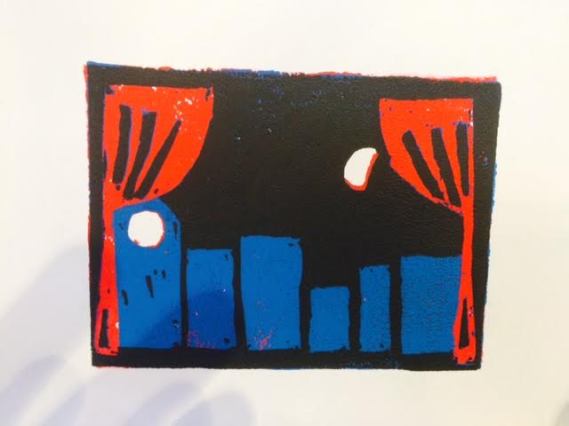
Last Friday, David and I went to the school district art exhibition to see this wood block piece done by Grace, our oldest grandchild.  This is the third piece of hers chosen for exhibition this year , her freshman year.   We loved the colors, symmetry, and composition for “The Second Star on the Right.”

Remember this day during winter break when we visited Massachusetts Museum of Contemporary Art in North Adams.  Here is Grace enjoying and photographing Sol Lewitt.

Grace has discovered volleyball and the team effort, enjoyment of  competition and using her  height for her school.  Speaking of school, Grace uses her discipline and conscientious  nature to her  academics and the honor roll.

And using her kind heart and subtle humor from her dad. . . .  . .

“Here Mom, let me get that orange juice for you!”


Posted in Uncategorized, USA | Tagged , , , , , , , , , , , | Leave a comment

The Whole Country is Glued to the Nest!

This is the majestic Bald Eagle, the national bird of the United States.  There are several sites on the net where there are 24/7 cam  cameras  where you can see the nesting process.  It is a reprieve from politicians and accusations and  threats and all the political  foolishness of the the year.  The video of the nest below is high in a tree in the Arboretum in Washington DC.  The adult eagles are Mr. President, and the First Lady.  The two eaglets have hatched now without incident.  I guess the next  anticipated pictures will  be when the babies fly from the next.

Posted in Animals, Uncategorized, USA | Tagged , , , , | Leave a comment

A Traditional Irish Blessing

Blessings are good any day and not just on March 17th!  Ireland is an amazing place, especially for your first adventure outside of the United States.  The people are warm, friendly, love Americans as well as being  funny and welcoming.  And you can see from this image my description of the Emerald Isle. . . .” I saw shades of green I had never seen before and never imaged exited!’

Blessings to you my friends!

Posted in Uncategorized | Tagged , , , , , , | Leave a comment

“Why I Love India” Pretty Much Says It All!

Namaste!

I couldn’t resist this sweet video !

Posted in India, Travel, Uncategorized | Tagged , , , , , | 7 Comments

Can Cricket Promote Peace?

Pakistan and India supporters watch the match in the stands during the fifth Pakistan v India one-day international match played at the Gadaffi Stadium on March 24, 2004 in Lahore, Pakistan.

Viewpoint: Can India-Pakistan cricket promote peace?
By Shashi Tharoor
Indian parliamentarian
16 March 2016
From the section India

Pakistan and India supporters watch the match in the stands during the fifth Pakistan v India one-day international match played at the Gadaffi Stadium on March 24, 2004 in Lahore, Pakistan.Image copyrightGetty Images
Image caption

My dear Pakistani son, Fayyez called to wish me a Happy Birthday !  He was a student at RPI years ago and we  befriended a group of Pakistani students  in their time here.  He has never forgotten me, often calling  to wish me a Happy Mother’s Day but  this year  he called for my birthday. Fayyez is an international business man  having just spent months in Lahore then  returning to his family in Canada. All this aside, he is just my friend.  During the conversation , he told me about this match on Saturday, saying it will have the largest crowd of spectators all over the world for any sporting event!   David really enjoyed watching Cricket on TV while we were in India!

The Indian Team celebrate their win with Misbah-ul-Haq looking on after the Twenty20 Championship Final match between Pakistan and India at The Wanderers Stadium on September 24, 2007 in Johannesburg, South Africa
Pakistan allowed thousands of Indians to cross the border in 2004 to watch a series between the two countries

Captain Shahid Afridi of Pakistan congratulates Sachin Tendulkar of India after India defeated Pakistan during the 2011 ICC World Cup second Semi-Final between India and Pakistan at Punjab Cricket Association (PCA) Stadium on March 30, 2011 in Mohali, India.
So India and Pakistan will play each other again on Indian soil, this time in the World Twenty20 cricket tournament.
Saturday’s match will take place in Kolkata (Calcutta), having had to be shifted from picturesque Dharamsala because the chief minister of Himachal Pradesh state felt the families of Indian soldiers from his state would not welcome a game with the “enemy”.
The Pakistanis nearly did not come at all, out of fear for their security.
The question of whether, amidst all the strife that besets the two countries’ cricketing relations, a mere sport can bring them together, is at one level easy to answer: No.
Sport can sublimate many emotions, but it cannot be a substitute for geopolitics. Cricket can be an instrument for diplomacy, not an alternative to it.
After all, six decades of cricketing ties have done little to promote good relations between the two antagonists.
Victim of politics
If anything, the game has been a victim of politics, as proved by the 18-year gap in cricketing relations between the two countries from 1960 to 1978, the dozen-year hiatus in Pakistani Test tours of India between 1987 and 1999, and the current stalemate, brought about by the 2008 Mumbai attacks and sustained by subsequent incidents.
The basic challenge to “normal” cricketing relations lies in the nature of partition, which carved a Muslim state out of India. In Pakistan, cricket is expected to bear a particularly heavy burden as the embodiment of national pride against the larger (and more powerful) neighbour from which it seceded.
The instrumentalisation of cricket in the service of a militarised nationalism, especially against India, is a feature of Pakistani cricket.
So are explicit evocations of a religious mission (as when Pakistan’s then captain, Shoaib Malik, publicly thanked “Muslims all over the world” for their presumed support for his team in the 2007 World Twenty20).
The contrast with India’s multi-religious, multi-ethnic and commercially-driven cricketing culture is striking, and significant.
The Indian Team celebrate their win with Misbah-ul-Haq looking on after the Twenty20 Championship Final match between Pakistan and India at The Wanderers Stadium on September 24, 2007 in Johannesburg, South AfricaImage copyrightGetty Images
Image caption
India have never lost to Pakistan in any World Cup
Captain Shahid Afridi of Pakistan congratulates Sachin Tendulkar of India after India defeated Pakistan during the 2011 ICC World Cup second Semi-Final between India and Pakistan at Punjab Cricket Association (PCA) Stadium on March 30, 2011 in Mohali, India.Image copyrightGetty Images
Image caption
There was a 18-year gap in cricketing relations between the two countries from 1960 to 1978
These are two countries whose soldiers have frequently shot at each other, where border tensions have erupted into war, and where the result of a cricket match can prompt a soldier to unleash a volley of celebratory or intimidatory fire on the Line of Control, the de facto border.
Above all, this is a region where the alleged fomenting of terrorism in India by Pakistan and (in Pakistani eyes) the “sufferings” of Muslims in India creates in each side a “moral obligation” to teach the perpetrators a lesson on the cricket field.
No other cricketing rivalry in the world has to contend with such a perverse mixture of elements sharpening the keen edge of competition between them.
Against such a background, it is expecting too much for cricket matches between India and Pakistan to remain mere sporting spectacles. As activist and philosopher CLR James has so memorably written, “what do they know of cricket who only cricket know?”
The two sides played each other in the 1999 World Cup in England while the Pakistani-instigated war over Kargil in Kashmir was going on: on the very day of India’s 47-run victory, six Pakistani soldiers and three Indian officers were killed.
Healing capabilities
And yet there is a good argument to be made for the healing capabilities of cricket.
When India embarked on a peace offensive with its 2003-04 tour of Pakistan, Islamabad, for the first time in five decades, allowed thousands of Indians to cross the border on “cricket visas”.
They were greeted effusively by ordinary Pakistanis: to be an Indian in Lahore or Karachi those days was to be offered free rides, discounted meals and purchases, and overwhelming hospitality.
It was said, not entirely in jest, that large numbers of Pakistanis were going about pretending to be Indians in order to avail themselves of these benefits.
But less than five years later came the horrors of the Mumbai attacks.
The first cricketing casualty (aside from the Champions League scheduled to be played in Mumbai itself the week after the attacks) was the planned Indian tour of Pakistan in January 2009.

Cricket fans hold a sign which says 'Peace Love Friendship' after the first Pakistan v India one day international match played at the National Stadium March 13, 2004 in Karachi, Pakistan.
Cricket fans hold a sign which says ‘Peace Love Friendship’ after the first Pakistan v India one day international match played at the National Stadium March 13, 2004 in Karachi, Pakistan.Image copyrightGetty Images
Image caption
‘Cricket affords one of the best ways of getting the two countries to engage with each other constructively’
: A general view as Indian fans in the crowd celebrate as a Pakistan wicket falls during the 2015 ICC Cricket World Cup match between India and Pakistan at Adelaide Oval on February 15, 2015 in Adelaide, Australia.Image copyrightGetty Images
Image caption

: A general view as Indian fans in the crowd celebrate as a Pakistan wicket falls during the 2015 ICC Cricket World Cup match between India and Pakistan at Adelaide Oval on February 15, 2015 in Adelaide, Australia.
Indian fans celebrate as a Pakistani cricket falls during last year’s World Cup game in Australia
As India’s then sports minister, MS Gill, remarked in calling off the government’s permission, “You can’t have one team coming from Pakistan to kill people in our country and another team going from India to play cricket there.”
Since then, the two countries have hardly played each other (except in international tournaments like the World Cup, a single charity game, and one solitary one-day series in 2011); and Pakistani players have not participated in subsequent editions of the Indian Premier League (IPL). Politics has clearly again trumped cricket.
So where does this leave the prospects for cricket promoting peace between these sibling nations entwined together by history with bonds of paradox?
For many years now the talk has been of war, militancy, terrorism and even of a nuclear threat. Indian politicians routinely ask how India could play cricket with a country that supports terrorism against us.
Many ruling party MPs, and the Hindu hardline Shiv Sena party, object to any sporting relations with Pakistan.
‘War by proxy’
When a thaw occurs, cricket matches will instantly follow. But there’s the rub: cricket will follow diplomacy, not precede it.
Even the warmth of 2003-04 was not a cause of better relations between the countries, but a reflection of it. And when things are unpleasant between the governments, matches that take place at times of tension, as with the World Cup encounter during Kargil, mirror the antagonism; they do not cause it.
Yet the tendency to see these matches as warfare by proxy is also unfortunate.
Cricket is a sport; a cricket team represents a country, it does not symbolise it. To ask cricket to bear a larger burden than any other national endeavour is palpably unfair.
Yet cricket is selectively being made to pay the price of Indian anger against Pakistan.
We have not imposed sanctions on that country, withdrawn ambassadors, stopped trade with them, or even banned their movie stars and singers from practising their profession in India.

Inzamam-Ul-Haq of Pakistan is run out by a country mile by Anil Kumble of India during the ICC Cricket World Cup match between India and Pakistan at the Supersport Stadium in Centurion, South Africa on M arch 1, 2003.
But the one activity being singled out for opprobrium is the playing of cricket.
Inzamam-Ul-Haq of Pakistan is run out by a country mile by Anil Kumble of India during the ICC Cricket World Cup match between India and Pakistan at the Supersport Stadium in Centurion, South Africa on M arch 1, 2003.Image copyrightGetty Images
Image caption

Wagah border

We have seen these scary military men at Wagah Border.  (Paksitani on left, Indian on the right)  Huge crowds nightly. See a portion of the Indian bleachers on the right. Both sides are waving their prosective flags and cheering for their country, much like a cricket or football match! 
Pakistan’s cricket team is popular in India
Wagah borderImage copyrightAP
Image caption
Six decades of cricketing relations have done little to promote good relations between the two antagonists
That’s unfair.
I happen to believe that we need to engage Pakistan across a variety of fronts, and I am strongly in favour of people-to-people contacts with regular Pakistanis to balance the influence of the military and the mullahs.
Cricket affords one of the best ways of getting the two countries to engage with each other constructively, and the two peoples to think about each other’s talents and not their prejudices.
Cricket has been, and can be, an instrument of policy-makers determined to send a broader message to the general public.
But the policy issues remain unresolved, and till they are, cricket remains above all a sport, not “war minus the artillery”.
So let us enjoy a good game of cricket on Saturday.
India have never lost to Pakistan in any World Cup; Pakistan have never lost to India at Kolkata’s Eden Gardens.
One way or the other history will be made, and it is just as well that it will only be of the cricketing kind. https://talesalongtheway.com/2015/03/18/wagha-border-closing/

Here is my post on the border closing! 

Posted in India, Travel, Uncategorized | Tagged , , , , , , | 3 Comments

70 Is the New 50 !

Do forgive my  self indulgence. It isn’t every day that 70 years of living is celebrated!  My family surprised me with a lovely Indian lunch on Saturday at one of my favorite restaurants , Keravili.  Here are the Alice, Henry, and Grace on the way!  Notice the bow tie that Henry tied himself.  Hmmm. . . tying bow ties must be in the DNA.

Chris and his family drove for three hours so we could all be together. That always makes me happy. A delicious lunch with quite a selection of tasty Indian dishes, lovely cards, a beautiful orchid and a Fitbit!  I am working on the 10,000 steps the doctor wants!

Here are Henry and Parker.  Katie labeled this shot as a ” An Indian food hangover!”  They were very sweet to indulge Miss Anne for her birthday !

10364106_10205620779537193_1927514875850623583_n

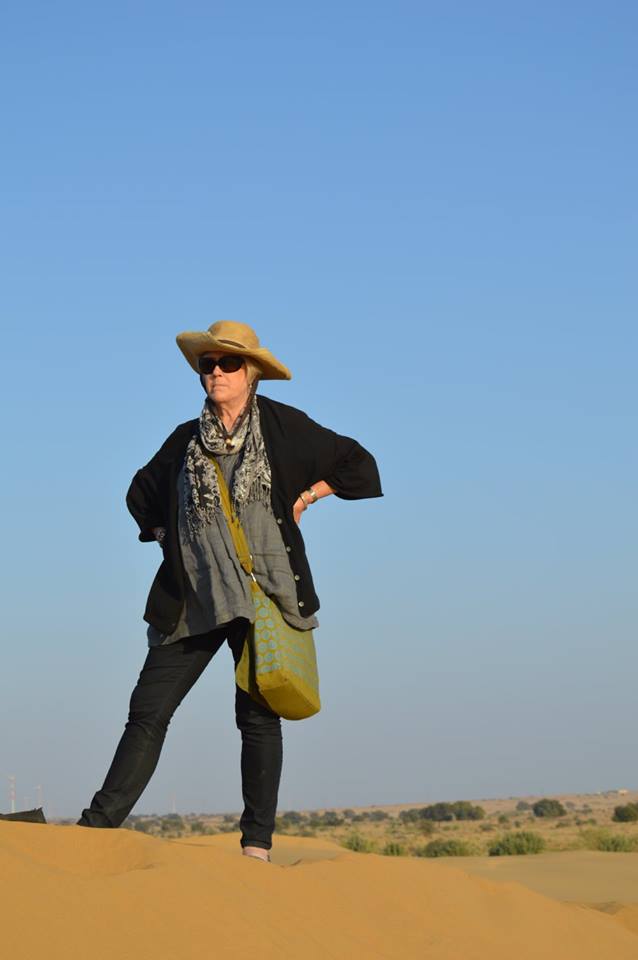
Well, this shot was taken just over a year ago in the desert near Jaisalmer in Rajasthan India.  What a wonderful trip !  Thanks Sarah for taking the picture and thanks Page for your wishes this morning, that  I really like !

70 is the new 50  !

Posted in Uncategorized, USA | Tagged , , , , , , | 14 Comments

Chrisitian Persecution in India

 Christian persecution by Hindus rises in India, say humanitarian groups

Christians in India want the government to speak out against religious persecution. (Reuters)

Christians in India want the government to speak out against religious persecution. (Reuters)

The latest extremist attacks against Christians in 2016 thus far have come from an unlikely source.

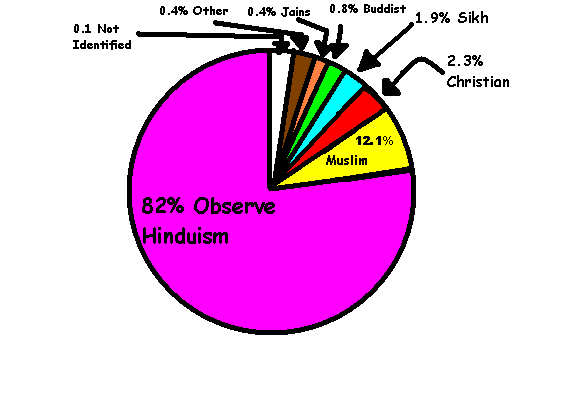
As Christianity has seemingly been under attack in places like Iraq, Syria, and Africa for over a decade from extremist groups like ISIS and Al Shabaab, the first six weeks of 2016 have seen a fresh outbreak of anti-Christian violence in India with nearly 30 incidents of religiously motivated violence against Christians reported in just over two months.

While it follows a global trend, it’s Hindu nationalists leading efforts of persecution.  
“His (Mr. Modi)  silence is tacit approval…He needs to come out again and reign in his party.”

– Jeff King, ICC

According to various news reports, there have been 26 documented incidents of religiously motivated violence against Christians spread across the subcontinent since Jan. 1. Incidents of violence against Christians have always existed in one form or another, but were usually limited to a particular region or issue.

However, the violence has begun to spread with Hindu radicals enjoying near complete impunity for their actions.

“They are wolves in sheep’s clothing,” Jeff King, president of the International Christian Concern, told FoxNews.com. “There has been an increase in attacks because these nationalists feel emboldened with [Prime Minister Narendra] Modi in power.


Local police officials took no action against the aggressors in many of the incidents. One such was Jan. 29 in the southeastern state of Tamil Nadu when a mob of over 30 radicals in the village of Ettimadai ruthlessly attacked, beat, and dragged a Catholic priest and three church officials from their car.

All four men tried to flee from the mob but were eventually caught. The mob then dragged and beat them for a mile and a half. Despite pleas for help during the incident, police stood idly by.

All four men were hospitalized as a result, with the priest requiring treatment in the intensive care unit of a nearby hospital.

The group was first approached by the mob while they were waiting in their car outside the police station to speak with authorities regarding the arrest of a priest and two others from an AIDS/HIV clinic run by the church.

Just two weeks earlier, in the Nizamabad District of Telangana State, a local pastor and members of his congregation were savagely beaten by a mob of 40 Hindu radicals after they falsely accused him of trying to convert Hindus to Christianity.

According to locals, the attack occurred during a Christian prayer gathering and resulted in the hospitalization of six, including a four-year-old girl whose leg was broken during the attack.

Map of Christian Persecution Worldwide

Source

“It was [a] very scary scene,” Pastor Nitin Kumar, recently recounted to humanitarian group International Christian Concern. “They tore my cassock and I received blows, punches, [and] kicks from all directions as I was their prime target. [Our] Bibles were snatched from us and were tore and trampled. [Other] believers ran to all directions as they were chased by the mob.”

And just last Sunday, a Pentecostal church in the Chhattisgarh state was attacked by a mob believed to have been a part of the militant Hindu Bajrang Dal organization. They were alleged to have entered the church during prayer services and broke chairs, fans and musical equipment, according to Christian Today. It was the fourth attack on churchgoers in the region over the last six weeks.

While attacks against Christians have occurred for quite some time, the problem has seemingly become widespread after the election of the Prime Minister Narendra Modi and the rise of the Bharatiya Janata Party or the Indian People’s Party. The BJP believes in what is known as Hindutva—a cultural nationalism which favors Indian culture over westernization.

“Since 2014 there has been a significant increase in attacks on Christians and Christian communities by radical Hindu forces in India,” David Curry, president and CEO of Open Doors USA told FoxNews.com. “The government, which came into power with the election of Prime Minister Narendra Modi of the Bharatiya Janata Party, has strong Hindu nationalist ties. As a result, radical Hinduism, which was already present under the previous government, has increased steadily.”

And while Modi and the BDP have not publicly praised the attacks, they aren’t publicly opposing them either.

“The central government has refused to speak out against the atrocities – thus further encouraging radical Hindus to step up their discrimination against Christians,” Curry added. “The government’s tolerance–if not promotion–of discrimination against Christians has led to a marked rise in the number of people within India openly pushing for a completely Hindu India.”

The rash of outbreaks led humanitarian groups like the ICC to campaign in Washington to put pressure on Modi and the BDP to stop the wave of extreme nationalism.

“His silence is tacit approval,” King of the ICC said. “Push came to shove once before and he [Modi] had to come out and say that India is tolerant and the nationalists backed down.

“And the most of the populace is very tolerant, but he needs to come out again and rein in his party.”

Late last month, a bipartisan letter was sent to Modi by eight U.S. senators and 26 members of Congress, requesting that he strongly and publicly condemn the acts of persecution.

But so far, there has been no response.

“The BJP will be silent unless there is political pressure,” King added. “With Congress coming out with this letter, with that rise in pressure, the party will have to address the issue.”

Perry Chiaramonte is a reporter for FoxNews.com. Follow him on Twitter at@perrych

Posted in India, Religions of the World, Travel, Uncategorized | Tagged , , , , , , , | 8 Comments

A NEW LOW! Cheating Our Vets!


It has been said over and over that Americans are so very generous helping those in need, here and around the world.  This charity has aired commercials that touch the heart with stories of our vets.  And the amount of donations is staggering as Americans dig deep.

Because of the improvement in medical care, there are so many who return home  after this war in comparison to wars past. My brother died in 1944 with  a wound to his hip, but there were no antibiotics available then to fight infection.

I have been thinking to make a donation to Wounded Warrior  Project , but had not.  I have been blessed and like to share what I can with worthwhile organizations as well as my church. I am thankful that CBS News uncovered this duplicity doing the work of a free press.  I just hope and pray that people will continue to support our vets by supporting the organizations that  are listed as honestly serving our heroes. Please do your own research before making donations sending your money not only where it is needed but where it will be used for the stated mission.


Veterans Charities Ratings

The American Institute of Philanthropy recently released a report rating various veterans charities on how well they support the causes they were created to support.

We were surprised at some of the ratings in this report; not at others. Before you donate your hard-earned dollars to any charitable organization, check it out to see how much of its revenues actually go to support its charitable purpose, and how much goes to administrative expenses, salaries, and fundraising. You may be surprised!

Letter grades were based largely on the charities’ fundraising costs and the percentage of money raised that was spent on its charitable activities.

The charities that received failing grades are in red type.

The charities that received grades of A or better are in bold blue type.

Here are the December 2007 veterans charities ratings, by the AIP:

Veterans Charities Ratings

Air Force Aid Society (A+)

American Ex-Prisoners of War Service Foundation (F)

American Veterans Coalition (F)

American Veterans Relief Foundation (F)

AMVETS National Service Foundation (F)

Armed Services YMCA of the USA (A-)

Army Emergency Relief (A+)

Blinded Veterans Association (D)

Coalition to Support America’s Heroes (F)

Disabled American Veterans (D)

Disabled Veterans Association (F)
Notice the similarity of the name to Disabled American Veterans

Fisher House Foundation (A+)

Freedom Alliance (F)

Help Hospitalized Veterans/Coalition to Salute America’s Heroes (F)

Intrepid Fallen Heroes Fund (A+)

Military Order of the Purple Heart Service Foundation (F)

National Military Family Association (A)

National Veterans Services Fund (F)

National Vietnam Veterans Committee (D)

Navy-Marine Corps Relief Society (A+)

NCOA National Defense Foundation (F)

Paralyzed Veterans of America (F)

Soldiers’ Angels (D)

United Spinal Association’s Wounded Warrior Project (D)*
* See update on Wounded Warrior Project

USO (United Service Organization) (C+)

Veterans of Foreign Wars and Foundation (C-)

Veterans of the Vietnam War & the Veterans Coalition (D)

Vietnam Veterans Memorial Fund (D)

VietNow National Headquarters (F)

World War II Veterans Committee (D

Posted in Uncategorized, USA | Tagged , , , , , | 6 Comments

Snuggling Baby Elephants

These Baby Elephants Think They’re Lap Dogs

Baby elephants don’t make good pets, but you’re going to wish they did.

03/10/2016 11:47 am ET | Updated 8 hours ago

This video from Huffington Post is all over the net, but I couldn’t resist. It makes me chuckle  and remember my hug with an elephant! Here I am making a first move to hug this gentle giant.  Of course the handler is there with his trusty stick, in case she  is not in the hugging mood!  I was glad it  turned out to be  a friendly hug!  I would have loved to had this interaction with baby elephants!

unnamed-72

This was a female elephant.  They live in groups with the babies and other females.  The bulls are very fierce and loners, only visiting the females during mating season.  I learned  this in Jaipur that there were only 3 bulls in this area where the elephants are a main draw for tourists.    They  had to be kept  away from each other.


Posted in Amdavad, Animals, India, Travel, Uncategorized | Tagged , , , , | 3 Comments

3.5 Million People? Well, It Is India !

Why India’s huge ‘spiritual’ festival has run into trouble

  • 3 hours ago
  • From the section India  bbc.com/news/world/ asia/india

An Indian labourer takes part in construction work on the banks of the River Yamuna in New Delhi on March 1, 2016.

Image copyrightAFP

A three-day cultural festival, expected to attract 3.5 million visitors and a host of local and international dignitaries, is due to begin in Delhi on Friday.

The massive event has been organised by influential spiritual leader Sri Sri Ravi Shankar to celebrate the 35th anniversary of his Art of Living Foundation.

But the decision to hold it on the floodplains of Delhi’s main river has angered environmentalists, and led to a large fine for the festival’s organisers.

The BBC’s Ayeshea Perera in Delhi explains more about the festival and what the controversy is all about.


What is the festival and who is organising it?

Workers erect a temporary platform to install sound and lights at the venue of World Culture Festival on the banks of the river Yamuna in New Delhi, India, March 8, 2016. IImage copyrightReuters

The World Culture Festival is a three-day event which will take place in Delhi from 11 March. It is being organised by the Art of Living Foundation, a global organisation claiming to offer a series of self development programmes, founded by Indian spiritual leader Sri Sri Ravi Shankar.

The festival, held to commemorate the 35th anniversary of the foundation, will feature music, dance and theatre performances from over 3,000 artists.

Several dignitaries including Prime Minister Narendra Modi and heads of state from several countries, are expected to attend.

Confirmed guests include Pakistan’s Prime Minister Yusuf Raza Gilani, President of Nepal Bidhya Devi Bhandari, President of Sri Lanka Maithripala Sirisena, US Congresswoman Nancy Pelosi and the Japanese and Norwegian culture ministers.

Organisers say they want the event to bring global cultures, music and arts together, to demonstrate the “power of peace”.

Events include yoga and meditation camps as well as the stage performances.


How will they manage 3.5 million people?

A worker carries chairs at the venue of World Culture Festival on the banks of the river Yamuna in New Delhi, India, March 8, 2016Image copyrightReuters
Image captionOrganisers say 3.5 million visitors are expected to attend from 150 countries

The cumulative total of 3.5 million people is expected over all three days of the festival, with numbers fluctuating through the day.

The Delhi police will help maintain law and order at the grounds, but organisers have told the BBC that they are deploying a volunteer force of close to 2,000 people who will help with crowd control and keep the venue clean.

Earlier, the Delhi police expressed fears of a potential stampede at the venue, prompting India’s defence minister to deploy the army to build several temporary bridges, media reports say.

There will also be 650 bio-portable toilets and 1,200 waste bins at the event venue, organisers say.


What is the controversy about?

Indian labourers take part in construction work on the banks of the River Yamuna in New Delhi on March 1, 2016.Image copyrightAFP

There has been concern about the environmental impact of the event, because it is being held in an ecologically sensitive area, on the floodplains of the river Yamuna. A floodplain is the area adjacent to a river, considered to be a part of the river bank.

Organisers have erected a 1,200ft (365m) stage for the performances, built separate structures for visiting dignitaries, and also constructed several large bridges, all of which have required the use of heavy machinery. They have cleared all the vegetation in the area, and the ground has been filled and levelled.

Environmentalists have alleged that all this construction, along with the fact that so many people are expected to attend, will cause irreversible damage to the ecology of the area.

They approached India’s environmental watchdog, the National Green Tribunal (NGT), and asked it to cancel the event.

One of the activists who filed the petition, told an Indian newspaper that the 1,000 acres (400 hectares) being used for the event was once marshland, and now does not even have a “single blade” of grass.


What were the findings of the National Green Tribunal?

Indian labourers take part in construction work on the banks of the River Yamuna in New Delhi on March 1, 2016.Image copyrightAFP

The NGT criticised the Art of Living Foundation as well as the various government departments that granted permission for the event without making the prerequisite environmental checks.

A team it had earlier sent to assess the damage said the construction had most likely left a “permanent footprint” on the area.

The court said all government authorities had failed in their duties in this regard and fined the Art of Living Foundation a preliminary amount of 50 million rupees ($744,262; £523,172).

However it has allowed the event to go ahead.

The Art of Living foundation has denied that their event has caused environmental damage.

Sri Sri Ravi Shankar has told Indian media that he would rather go to jail than pay the fine.

Stay tuned to see if Sri Sri Ravi Shankar is forced to jail !

Posted in Delhi, India, Religions of the World, Travel, Uncategorized | Tagged , , , , , , , , , , , | 2 Comments