‘How Evangelicals Won a Culture War and Lost a Generation’

RSS
How evangelicals won a culture war and lost a generation

Are church teachings on homosexuality driving millennials away from faith?
March 31st, 2014
02:18 PM ET

How evangelicals won a culture war and lost a generation

Opinion by Rachel Held Evans, special to CNN

(CNN) – On March 24, World Vision announced that the U.S. branch of the popular humanitarian organization would no longer discriminate against employees in same-sex marriages.

It was a decision that surprised many but one that made sense, given the organization’s ecumenical nature.

But on March 26, World Vision President Richard Stearns reversed the decision, stating, “our board acknowledged that the policy change we made was a mistake.”

Supporters helped the aid group “see that with more clarity,” Stearns added, “and we’re asking you to forgive us for that mistake.”

So what happened within those 48 hours to cause such a sudden reversal?

The Evangelical Machine kicked into gear.

Albert Mohler Jr., president of the Southern Baptist Theological Seminary, said the decision pointed to “disaster,” and the Assemblies of God denomination encouraged its members to pull their financial support from the organization.

Evangelicals took to Twitter and Facebook to threaten to stop sending money to their sponsored children unless World Vision reversed course.

Within a day of the initial announcement, more than 2,000 children sponsored by World Vision lost their financial support. And with more and more individuals, churches and organizations threatening to do the same, the charity stood to lose millions of dollars in aid that would otherwise reach the poor, sick, hungry and displaced people World Vision serves.

So World Vision reversed course.

Stearns told The New York Times that some people, satisfied with the reversal, have called World Vision headquarters to ask, “Can I have my child back?” as though needy children are expendable bargaining chips in the culture war against gay and lesbian people.

Many of us who grew up evangelical watched with horror as these events unfolded.

As a longtime supporter of World Vision, I encouraged readers of my blog to pick up some of the dropped sponsorships after the initial decision. I then felt betrayed when World Vision backtracked, though I urged my readers not to play the same game but to keep supporting their sponsored children, who are of course at no fault in any of this.

But most of all, the situation put into stark, unsettling relief just how misaligned evangelical priorities have become.

When Christians declare that they would rather withhold aid from people who need it than serve alongside gays and lesbians helping to provide that aid, something is wrong.

There is a disproportionate focus on homosexuality that consistently dehumanizes, stigmatizes and marginalizes gay and lesbian people and, at least in this case, prioritizes the culture war against them over and against the important work of caring for the poor.

Evangelicals insist that they are simply fighting to preserve “biblical marriage,” but if this were actually about “biblical marriage,” then we would also be discussing the charity’s policy around divorce.

But we’re not.

Furthermore, Scripture itself teaches that when we clothe and feed those in need, we clothe and feed Christ himself, and when we withhold care from those in need, we withhold it from Christ himself (Matthew 25:31-46).

Why are the few passages about homosexuality accepted uncritically, without regard to context or culture, but the many about poverty so easily discarded?

As I grieved with my (mostly 20- and 30-something) readers over this ugly and embarrassing situation, I heard a similar refrain over and over again: “I don’t think I’m an evangelical anymore. I want to follow Jesus, but I can’t be a part of this.”

I feel the same way.

Whether it’s over the denial of evolutionary science, continued opposition to gender equality in the church, an unhealthy alliance between religion and politics or the obsession with opposing gay marriage, evangelicalism is losing a generation to the culture wars.

A recent survey from Public Religion Research Institute revealed that nearly one-third of millennials who left their childhood faith did so because of “negative teachings” or “negative treatment” of gay and lesbian people.

Christians can disagree about what the Bible says (or doesn’t say) about same-sex marriage. This is not an issue of orthodoxy. But when we begin using child sponsorships as bargaining tools in our debates, we’ve lost the way of Jesus.

So my question for those evangelicals is this: Is it worth it?

Is a “victory” against gay marriage really worth leaving thousands of needy children without financial support?

Is a “victory” against gay marriage worth losing more young people to cynicism regarding the church?

Is a “victory” against gay marriage worth perpetuating the idea that evangelical Christians are at war with LGBT people?

And is a “victory” against gay marriage worth drowning out that quiet but persistent internal voice that asks, “what if we get this wrong?”

I, for one, am tired of arguing. I’m tired of trying to defend evangelicalism when its leaders behave indefensibly.

I’m going AWOL on evangelicalism’s culture wars so I can get back to following Jesus among its many refugees: LGBT people, women called to ministry, artists, science-lovers, misfits, sinners, doubters, thinkers and “the least of these.”

I’m ready to stop waging war and start washing feet.

From ATB:  Words, scriptures, situations, and ideas to think and pray about during Lent.


Posted in Uncategorized, USA | Tagged , , , , , , | 11 Comments

‘Kandahar’ Life in Afghanistan Under the Taliban, A Film

download


This was the film I saw last Sunday.  A film by an Iranian director, Mohsen Makhmalbaf, who tells the story of life under the Taliban in the neighboring country of Afghanistan. It is based on the true story of  an Afghan  journalist  who had immigrated to Canada with her family. kandahar The story tells of her desperate journey to get to Kandahar to find her sister who has threatened  suicide on the day of the last solar eclipse in the 20th Century in Kandahar.  This city is a familiar  name from the terrible assaults by the US Marines there. The story is told by a narrator  in the third person.kandahar_2011_03_06_04_14_57  The  audience is an observer  and not a participant  emotionally connected to the characters unlike the way  I felt in ‘Departures.’ The beautiful shots of the hostile , merciless desert  landscape adds to the totally negative picture of life in Afghanistan under the Taliban.  There is constant  fear of death by bullets or nature, robbery, arrest, famine and for the women, the prison of their burkas. The results of Russian landmines keft after that war,  has a major part in the movie with many people either on crutches or poorly made prosthesis  which took a year to get. kandahar2 The film is a PG and would be a good film to share cultures with school age children. I haven’t checked, but this is probably  available on Netflix.

This Is Kandahar, the Film!


Posted in film, Uncategorized | Tagged , , , , , , , | 13 Comments

‘Kandahar’ Life in Afghanistan Under the Taliban, a Film


download This was the film I saw last Sunday.  A film by an Iranian director, Mohsen Makhmalbaf, who tells the story of life under the Taliban in the neighboring country of Afghanistan. It is based on the true story of  an Afghan  journalist  who had immigrated to Canada with her family. kandahar

The story tells of her desperate journey to get to Kandahar to find her sister who has threatened  suicide on the day of the last solar eclipse in the 20th Century in Kandahar.  This city is a familiar  name from the terrible assaults by the US Marines there. The story is told by a narrator  in the third person.kandahar_2011_03_06_04_14_57  The  audience is an observer  and not a participant  emotionally connected to the characters unlike the way  I felt in ‘Departures.’ The beautiful shots of the hostile , merciless desert  landscape adds to the totally negative picture of life in Afghanistan under the Taliban.  There is constant  fear of death by bullets or nature, robbery, arrest, famine and for the women, the prison of their burkas. The results of Russian landmines keft after that war,  has a major part in the movie with many people either on crutches or poorly made prosthesis  which took a year to get. kandahar2 The film is a PG and would be a good film to share cultures with school age children. I haven’t checked, but this is probably available on Netflix.

Posted in film, Uncategorized | Tagged , , , , , , , , , , | 1 Comment

Versatile Blogger Award

versatile_blogger   My friend  Angie   nominated me for this award. I thank her very much for this honor.  Do visit her blog.  I always feel that I am sitting at her kitchen table having a cup of coffee….oops chai for me!   She is so natural, kind , long suffering with many physical challenges, but it  is miraculous how Angie keeps her good humor throughout it all.  She writes, just as she speaks. . . .a born storyteller!  Thank you Angie.

Rules: 

1.  Display the award on your blog.

2.  Thank the person who nominated you .

3. Notify your nominees individually.

4.  Nominate blogs you feel are worthy of this award.

Nominees:  

1. arlenshah.qordpress.com

2. sowayfarer.wordpress.com

3. 363photos.wordpress.com

4.http://piyushpujara.wordpress.com/

5. abozdar.wordpress.com

6. benjaminprewitt.com

7. ksfinblog.wordpress.com

8. culturemonk.com

9. bishoptatro.wordpress.com

10. kkesslersite.wordpress.com

Happy blogging my friends!

Posted in awards, Uncategorized | Tagged , , , , , , | 28 Comments

BBC Partition of India ‘How the Hatred Began’. . . . . .

My blogger friend Sudharsan  at viruvasan.wordpress.com  sent me this amazing BBC video yesterday in response to my post on Wagah Border . The BBC always does such a wonderful job telling historical events and using  primary source film. In this case it is showing  India in  the 1940s before, during and after Independence  from Britannia.  In fact, due to the images, and its  emphasis on the people , Muslim , Hindu, and Sikhs  and their  personal stories, history  comes alive.  The book I read ‘Indian Summer’ is very good revealing the personalities and personal histories of Nehru, Jinnah, and Gandhi and their parts in shaping history and that is important, too. Much of the film takes place in Lahore which used to be in India but is now in Pakistan.  You will meet real people, now quite elderly telling their stories of the partition.

Fifteen million people were forced to move, based solely on their religion. Hindus in what is now Pakistan had to move to India, and Muslims in India had to move to Pakistan.  This forced relocation is a horrible example of human’s suffering and man’s inhumanity to man. One million people died along the way and there are stories of  desperate mothers leaving their infants along the side of the road. Old roads were filled with trudging people , one on  each side of the road.

There was a smaller but similar act of horror forced  on  five Native American tribes in the United States in the 1800s.  There was a mass forced relocation of these indigenous people from the south eastern United States to the eastern part of Oklahoma. It is known as the Trail of Tears. Millions started the march and many died.   There is lots of information on the web if you want to learn more.

Cherokee_Heritage_Center_-_Trail_of_Tears_Schild_2

The mapmaker from England,  Radcliffe, drew the lines of partisan without ever visiting Lahore. He never witnessed the elegant liberal city where Muslims, Hindus, and Sikhs lived and worked peacefully side by side.  You will hear primary sources of the tragedy of  the event.  The BBC video is long . . . .  .one and a half hours. Many of you don’t have time to commit to this historical event. Please watch it if you do and also have the interest. My hope is that some of my Indian friends will and their history will come alive through years of old  questions being answered.  It was 60 + years  ago and I still hope the peace of the Wagah border will become the norm between all of India and Pakistan.  They were all Indians at one time,  but had different faith systems.  They used to live peacefully side by side, and I pray that peace will  again rule in their hears and lives.

This Is the Sad Story of Indian Partition !


Posted in India, Uncategorized, USA | Tagged , , , , , , , , , , , , , , , , , | 13 Comments

Wagah

100_3085


Namaste!

Darn, just when I thought today’s post would be a short, fun description of the famous nightly border closing ceremony at Wagah, we went to see Attacks of 26/11. Though it was in Hindi, the message was very clear in actions and in facial expressions. Terror, hatred, pain….Now I see those faces along with other memories,  pictures, and thoughts of friends both Indian and Pakistani.  It is not a simple picture.

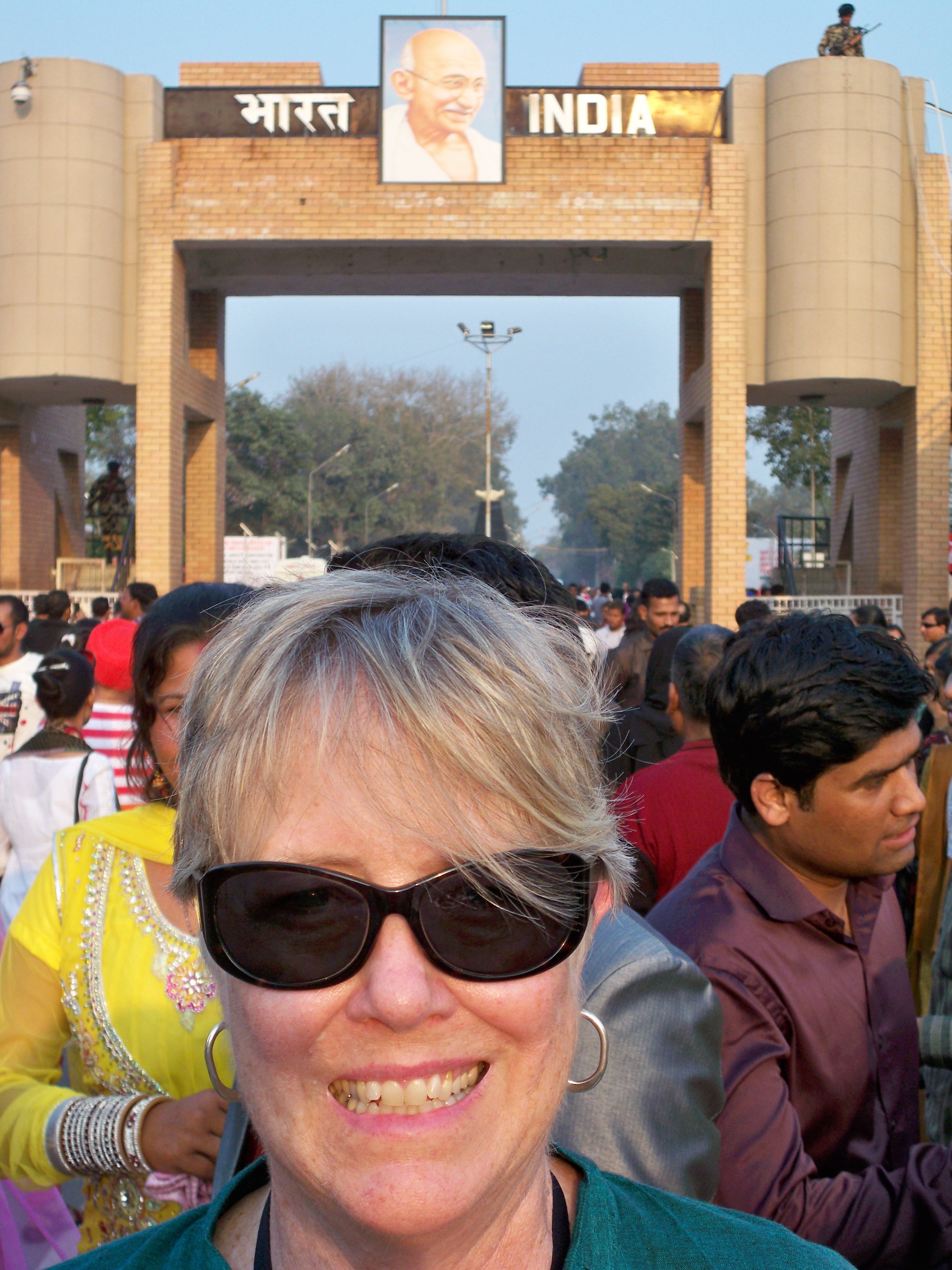
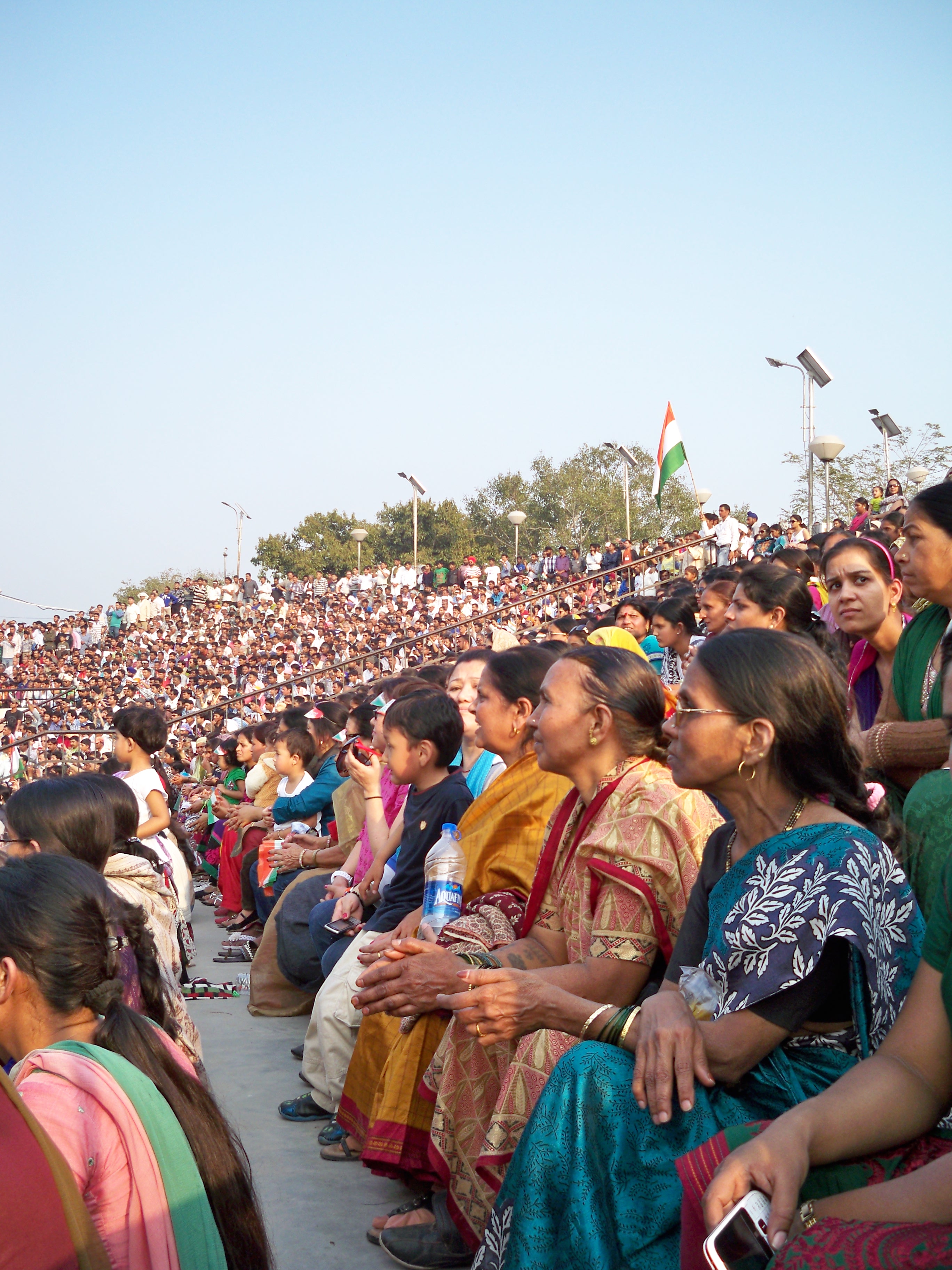
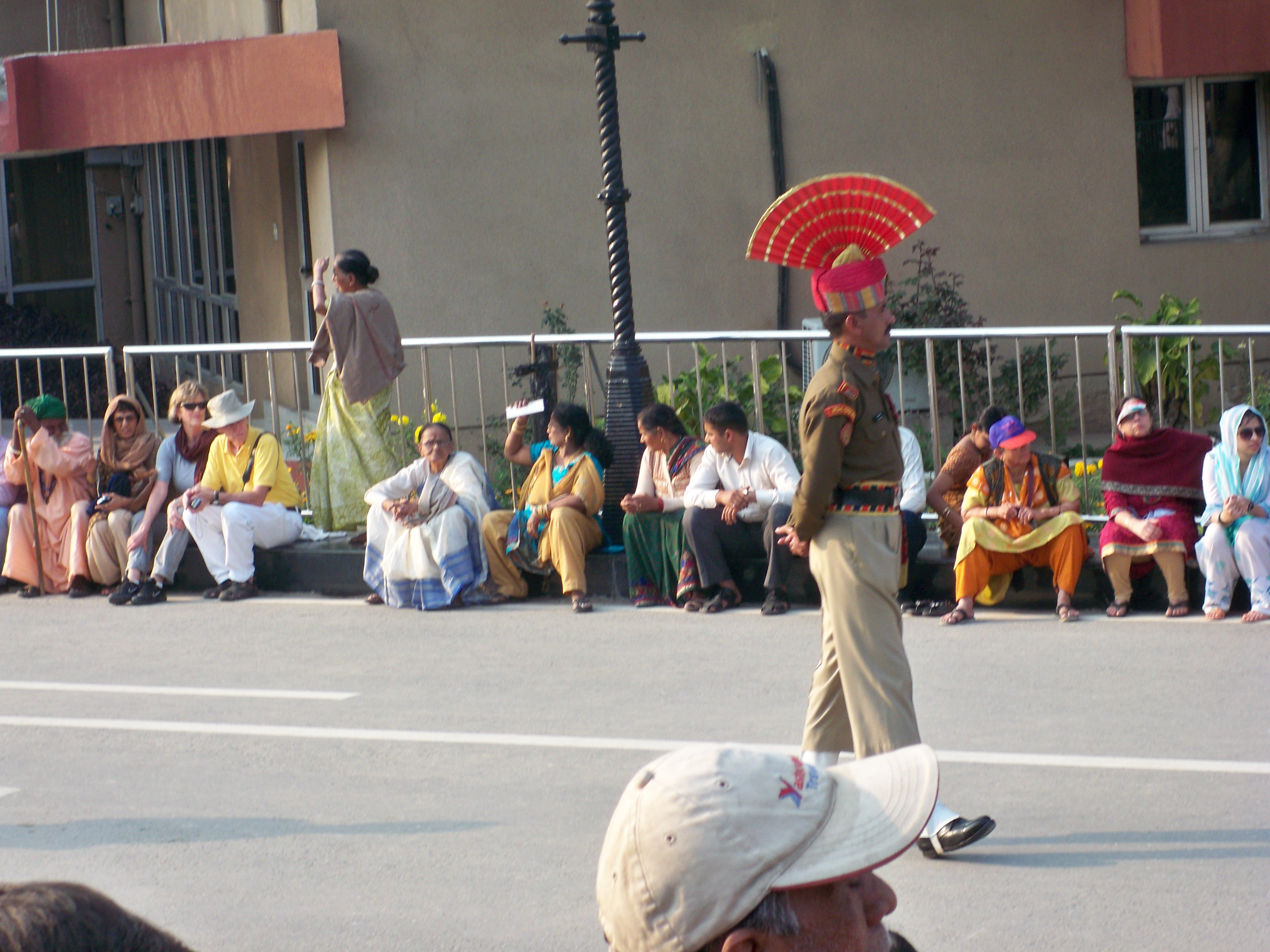
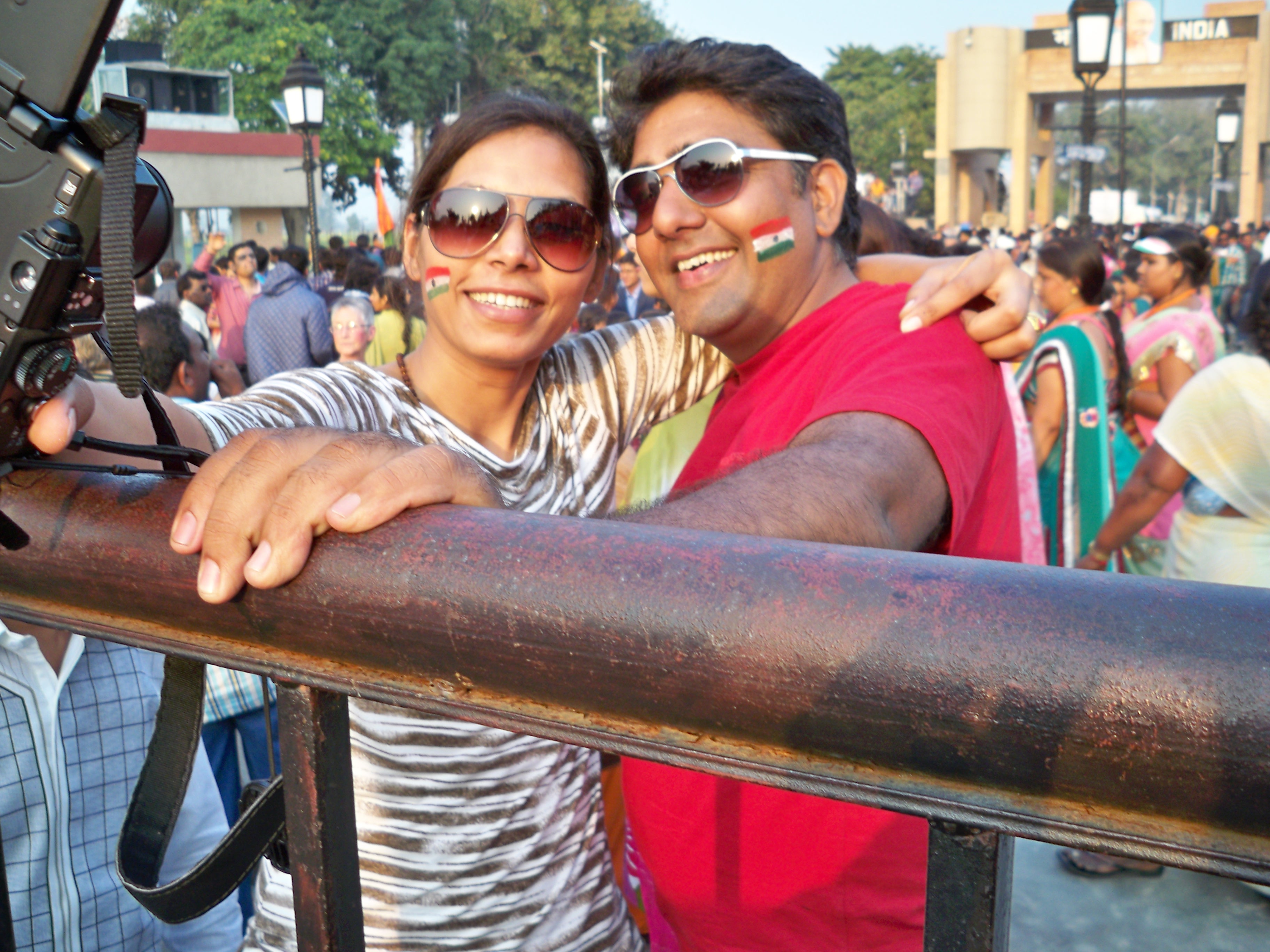
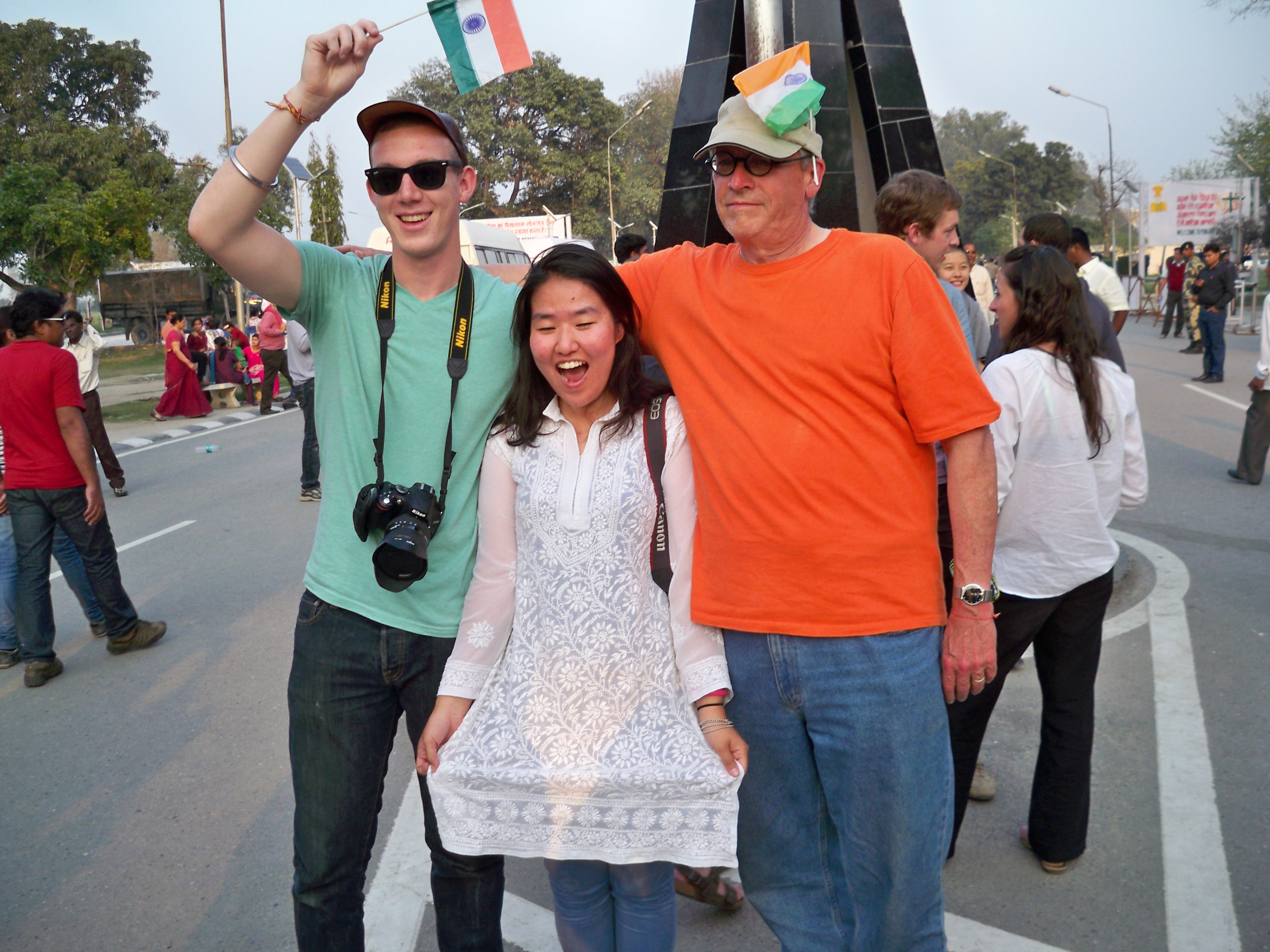
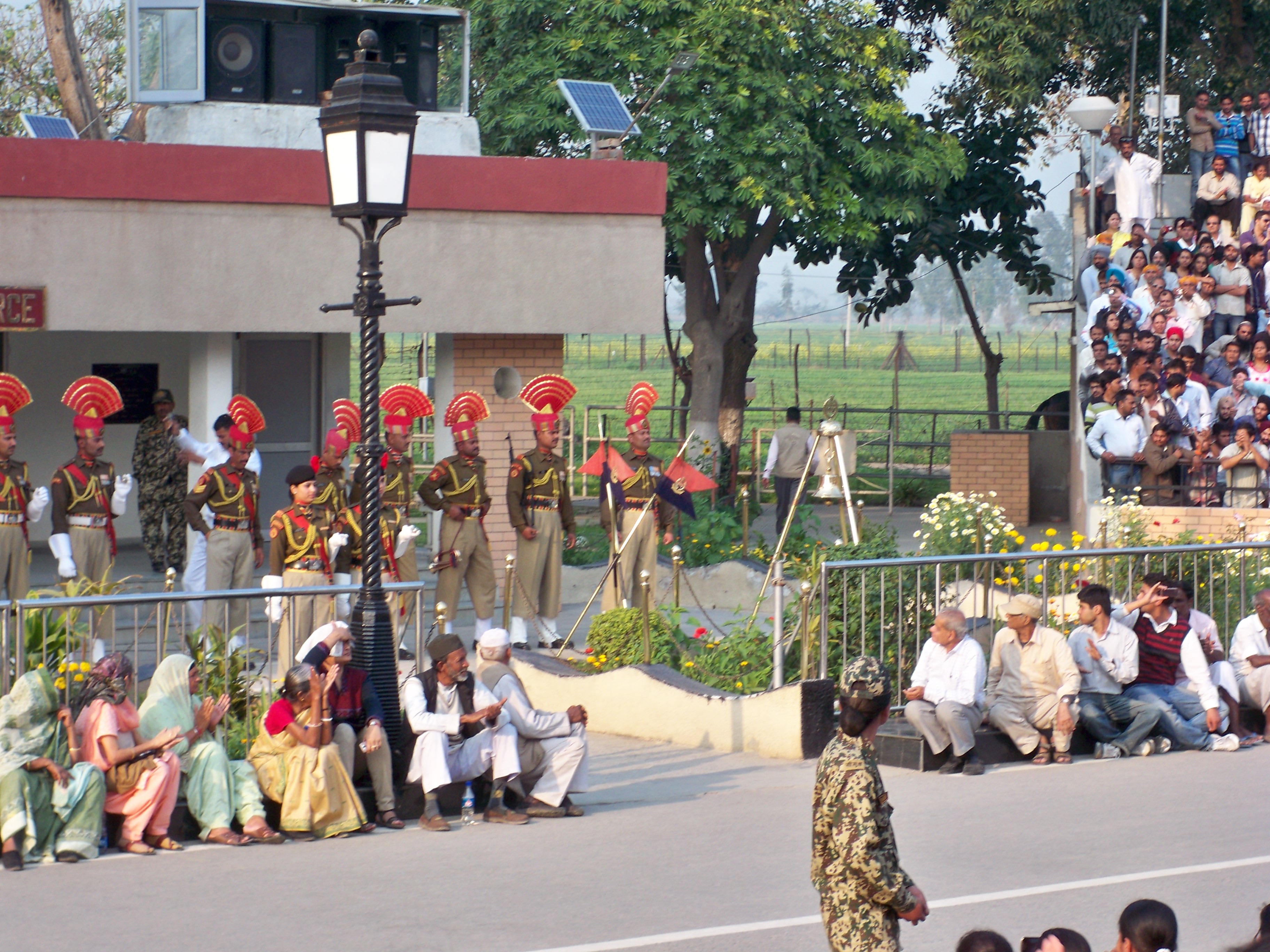
First, let me tell you about the border closing. It is nightly at Wagah, the last border check-point on the Pakistani Indian border about 18 miles from Amritsar in the Punjab. All along the road there were large tractor trailers filled to capacity but parked. The guide said it can take up to 3 days for the trucks to be cleared to cross the border. Security is extremely tight.  I had been told that no bags either backpacks or purses are allowed, and we would have to show our passports.  Traffic was heavy and as we pulled into the parking lot, venders were hawking their wares. Our security was faster in the “foreigners’’ line, but we still had the physical pat down which some of the girls object to. No one likes it and it is uncomfortable but it seems to be a necessary invasion of privacy, these days, in order to insure as much safety as possible.  We had bought small Indian flags to wave and got settled in our bleacher seats.ImageThe atmosphere was one of a sporting event  with chants and cheers from both sides and much flag waving. It could have been a cricket or football match between friendly rivals.ImageA soldier from each country in finest dress uniform, goose stepped toward the other with wild cheering all around.  Their steps perfectly mirrored the other. The flags were lowered, taps blown, and it was over.Image  The crowd dispersed, and we were requested to be photographed. Everyone was in good spirits. 100_3086ImageThere seemed no anger or animosity towards Pakistan. It is easy to forget that the two were once one country and it was here in the Punjab in 1947 where the division into two countries took place.  Even during a period of all-out war, when the two governments thought this nightly ritual was inappropriate, loud cries of “No” were heard from both sides and the ceremony continued.

Now, here are my humble opinions on these matters. The attack in Mumbai movie was told by the Indians showing horrible slaughter of men, women, and children in a hotel, hospital, café, and cab. Of course, we couldn’t understand the dialogue, but no particular reason for the attack was presented  or was clear to me.  The men from Pakistan made a political statement loudly and clearly. The Indian police were caught unprepared, armed  only with  stones and sticks. There is much tighter security now all over India. My opinion is that religious differences are not the root of this hatred. My life experiences have shown me that people of different faiths often have a bond and respect for each other even while disagreeing over theology.  There is a kinship of being “faithful” people. I think governments “gin” up the people by accentuating the religious differences which turns to passionate hatred. The real purpose for war is often power, disputes over land, or votes. I saw that in Northern Ireland, where the British were afraid to allow the Irish to vote because their sheer numbers would overthrow them  in an election.

Before moving to Phoenix, I was a real law and order person about the illegal immigration questions prominent in the news in 2005. But after seeing men wait to work for hourly wages, some working 10-12 hours to send money home to their families in Mexico, I witnessed the “faces” of illegal immigration.  At night, the men would stay in crowded flop houses filled to capacity just for a place to sleep before going back on the streets. These men are real, the problems are real here and in Mexico, but something needs to be solved, and while we need to be a nation of laws, we also need to care about “the least among us.”

I have dear friends, both Indian and Pakistani ,whom I cannot imagine hating and killing the others. But this hatred and killing is happening here, often according to the news along with severe atrocities. There are angry, hate-filled people in all cultures and religions, but there are loving, peaceful ones as well. I have no knowledge about past or present wrongs on either side, but I do know that violence often makes  change for only a short time. There needs to be heart changes on both sides that move toward mutual respect. I hope and pray this largest of the world’s democracies, birthplace of Gandhi, can reach a prosperous and powerful peace with her neighbor, Pakistan. Change for all of us can be slow, arduous work, but it is worth the effort.

This Is the Nightly Border Crossing Between India and Pakistan!

Posted on by annetbell | 14 Comments

Music Monday, Josh Groban and the African Children’s Choir sing ‘You Raise Me UP’


To me, this song has a universal theme and could be song to a lover, a family member, or friend . It is could be song as a inspirational spiritual song of devotion.  I love the choir as part of the presentation.

This Is Music for Monday!

Posted in Uncategorized, USA | Tagged , , , , , | 10 Comments

Driving Tanks and Crushing Cars

Every child’s dream, no matter the age!

What a country !

Posted in Uncategorized, USA | Tagged , , , , | 1 Comment

Marketplace Handwork of India

1399231_10150407737339959_307307844_o http://www.marketplaceindia.com     800.726.8905

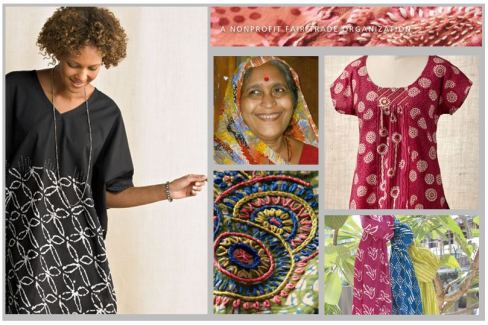
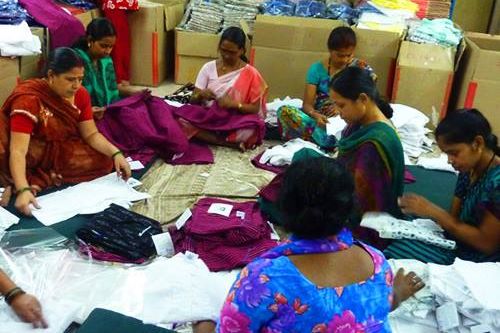
My friend Judy shared this catalog with me when I admired a jacket she was wearing.  We had laughingly discussed how the Indian clothes are  not designed for the Western figure. Indian women wear their tops tightly fitted over their boyish chests!  Even when I was measured by a tailor and I had tried to indicate I like loser fitting bodices, he nodded but  it was tight when it was finished.  This catalog with authentic Indian designs and manufacture takes that into consideration as you can see by the sizes. Most Indian women are small or possibly medium.ftf-member-logo-compressed

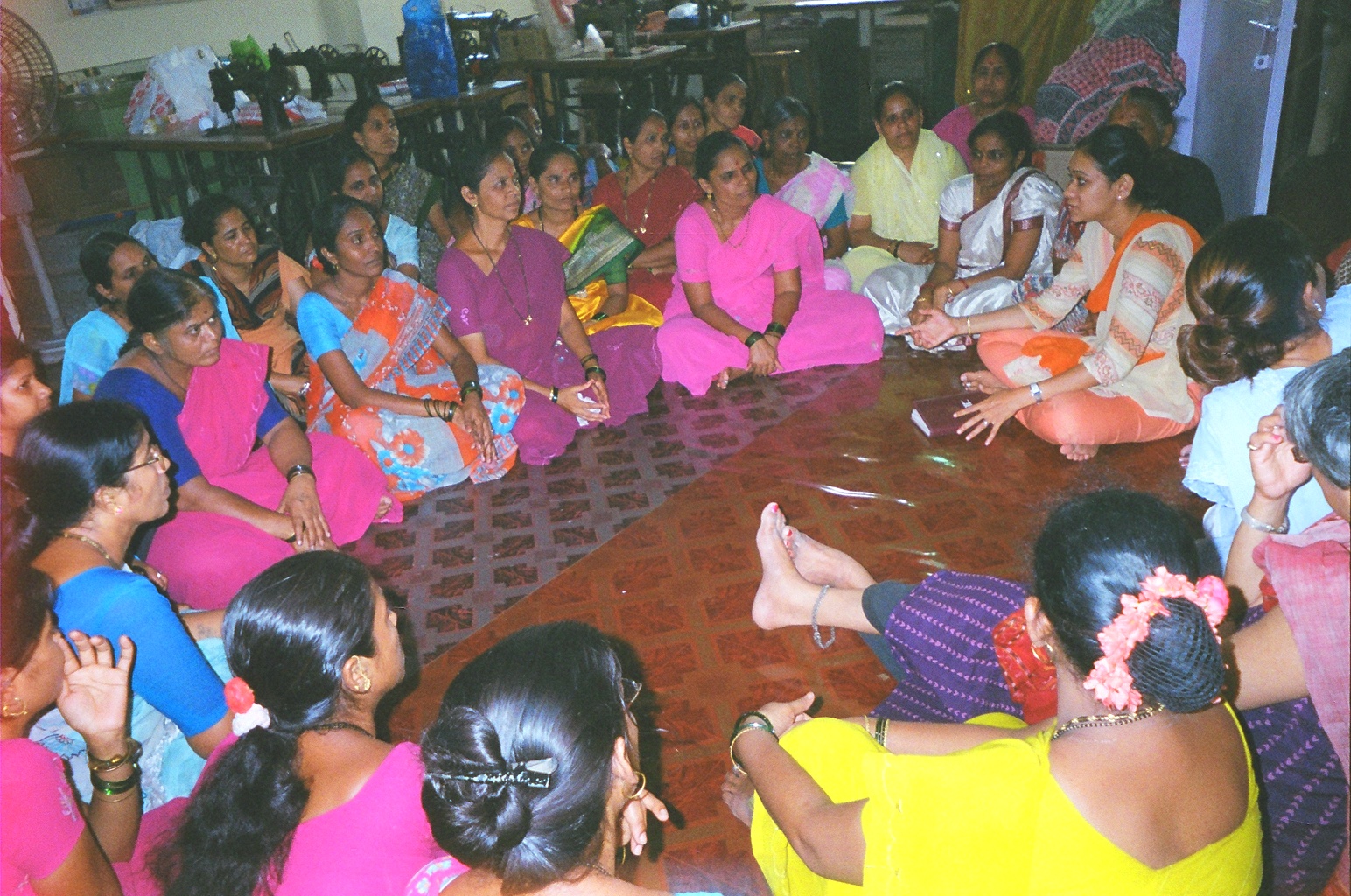
Marketplace Handwork of India is accredited by Fair Trade Federation and is a World Fair Trade Organization. The artisans receive fair wages for their daily work. 00050025 The women involved are leaning about the laws already in place in India against domestic violence and the steps they can take to insure  their rights. This is an example of an organization discussed in yesterday’s post.

They are also instructed about the laws that insure fair prices for food. Many shop keepers charge the poor more than their richer customers. If you like Marketplace on FB you will get authentic Indian recipes that these women use daily, and much more such as signing up to receive the catalog and get news about the artisans , as well as  sale notices and promotions.market-place

1621681_10150413870404959_2137881351_n

GiftsthatEmpowerInspire-Market-Place


There are some lovely pillows, curtains and table linen available , too.

images

mission_mid01_0 (1)

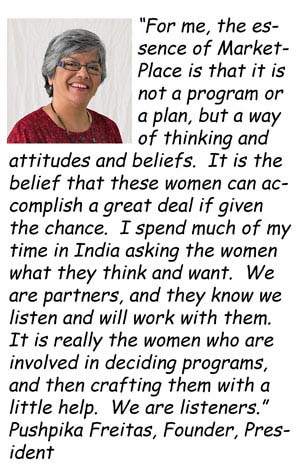
“The power in the best sense of the word, power to reach one’s potential, and  power to bring about change. And all this comes from making unique, beautiful clothes.”

Post Script:  I looked in the catalog and couldn’t find if there is shipping out of the US, so I am thinking not.  I just checked fabindia and they are now shipping to Italy and other countries but not Canada or US , yet.

MarketPlace. . . .Another Shopping Opportunity  As Well As Helping  Indian Families!


Posted in India, Uncategorized | Tagged , , , , , , , , , | 6 Comments
 From International New York Times  Thanks to Adrienne Middlemay at middlemaybooks.com

Social Gains for Women Linked to Domestic Violence

NEW DELHI — Indian women who experience economic and social gains in the form of employment and education are often at a greater risk for domestic violence, according to a study released on Tuesday.

The study, published in the peer-reviewed Population and Development Review, analyzed responses from more than 60,000 married women in the National Family Health Survey of India conducted from 2005 to 2006 in 29 states.

Abigail Weitzman, a doctoral candidate in sociology at New York University, wrote in her study that compared with women who do not work, women who are the only employed members of their households face more than twice the risk of frequent domestic violence and 1.51 times the risk of severe domestic violence, which includes beating, choking, burning or attack with a weapon.

Women with more education than their husbands had 1.4 times the risk of domestic violence and 1.54 times the risk of frequent violence compared with women with less education than their husbands.

“For lots of families, money is a source of power, at least implicitly,” Ms. Weitzman said in a telephone interview.  “If you’re starting to change the balance of power, it changes the equation.”

The idea of empowering women through development programs is almost as old as the idea of developmental aid itself.  The United Nations Development Program considers women’s empowerment as one of eight millennium development goals.

In India, the idea of women’s empowerment has received more public attention since the gang rape of a woman on a bus in New Delhi in December 2012 received widespread international attention.

Ms. Weitzman, whose findings are echoed in similar studies in India released recently, said that attempts to empower women through government programs like micro-financing were far more complicated than they seem.

“Scientific evidence of the unintended consequences suggests that programs that are designed to empower women are much more complicated than simply providing women with resources to achieve complete autonomy,” she said in a telephone interview.

“Change is often very turbulent,” she said.  “I think that’s perhaps what India is witnessing right now, and I don’t think India is alone in experiencing this turbulence.”

Blogger’s note:   We arrived just a few weeks after the horrible group rape of a young woman on a bus in Delhi that is mentioned in the article.  It led to speeches and demonstrations all over the country.  The leaders in India do seem to be awake now on this horrible problem.  The other side of the coin of women’s empowerment and economic gains causing domestic violence  is out in the light now, too.  It reminds me of years ago in the US when women started having jobs outside the home. It was argued that families would suffer and men would lose their jobs due to women working. There was an adjustment for families and the workforce.  As Ms. Weitzman said in the above article, “Change is turbulent and India is not alone in experiencing this turbulence. ”  There are examples of this upheaval for women in other parts of the world, especially  in the Muslim world as they, too, strive for equality with the men.  Patience and understanding of the psychology of change is important, but   progress forward is the goal and that should never be forgotten.  Finding and naming  the challenges are the first step of overcoming the problems.

Challenges for Women in India!

Posted on by annetbell | 11 Comments