
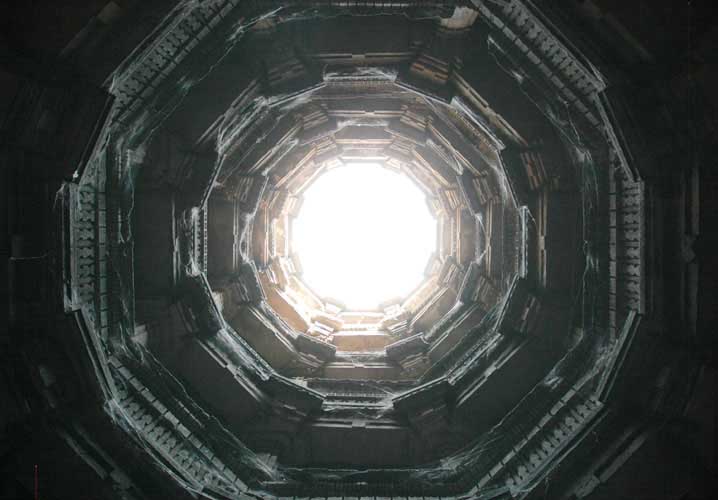
Dada Hari, was the chief attendant of Sultan Muhmud Begada’s royal harem at the turn of the 16 century. She commissioned the building of this step well as well as a garden, mosque, and her own tomb. The ancient rulers had chosen aristocrats to build their own burial tombs while they were still alive. Dada Hari was a very powerful and influential woman in a time where that was not usual. A story goes is that she wanted the step well to be built as a cool, peaceful spot for the women in the area to rest and visit with their friends while collecting water for their families. She was an early feminist helping other women. She created one of the coolest places, literally, for a man or a woman to spend a hot afternoon in Ahmedabad.
View down into the nearly dry well. It will be replenished during monsoon.
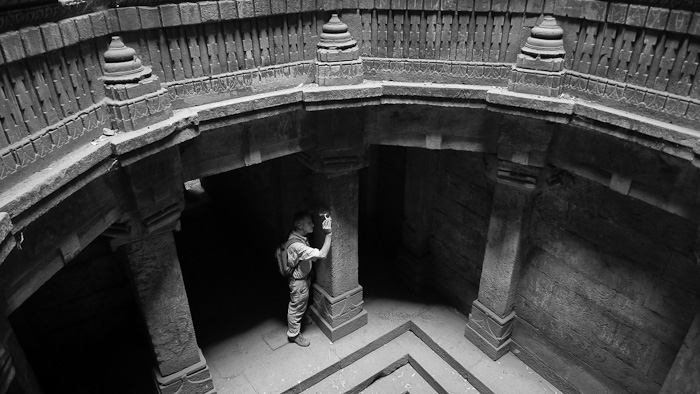
A raised platform covered with a dome supported by twelve pillars mark the entrance of the vav. From there. there are 95 steps descending 5 levels to the octagonal base to the water storage. The walls are covered with both Hindu and Islamic influenced images , but no human or animal figures were used in respect of the Islamic observances. The floor was dry during all the year except during monsoon season.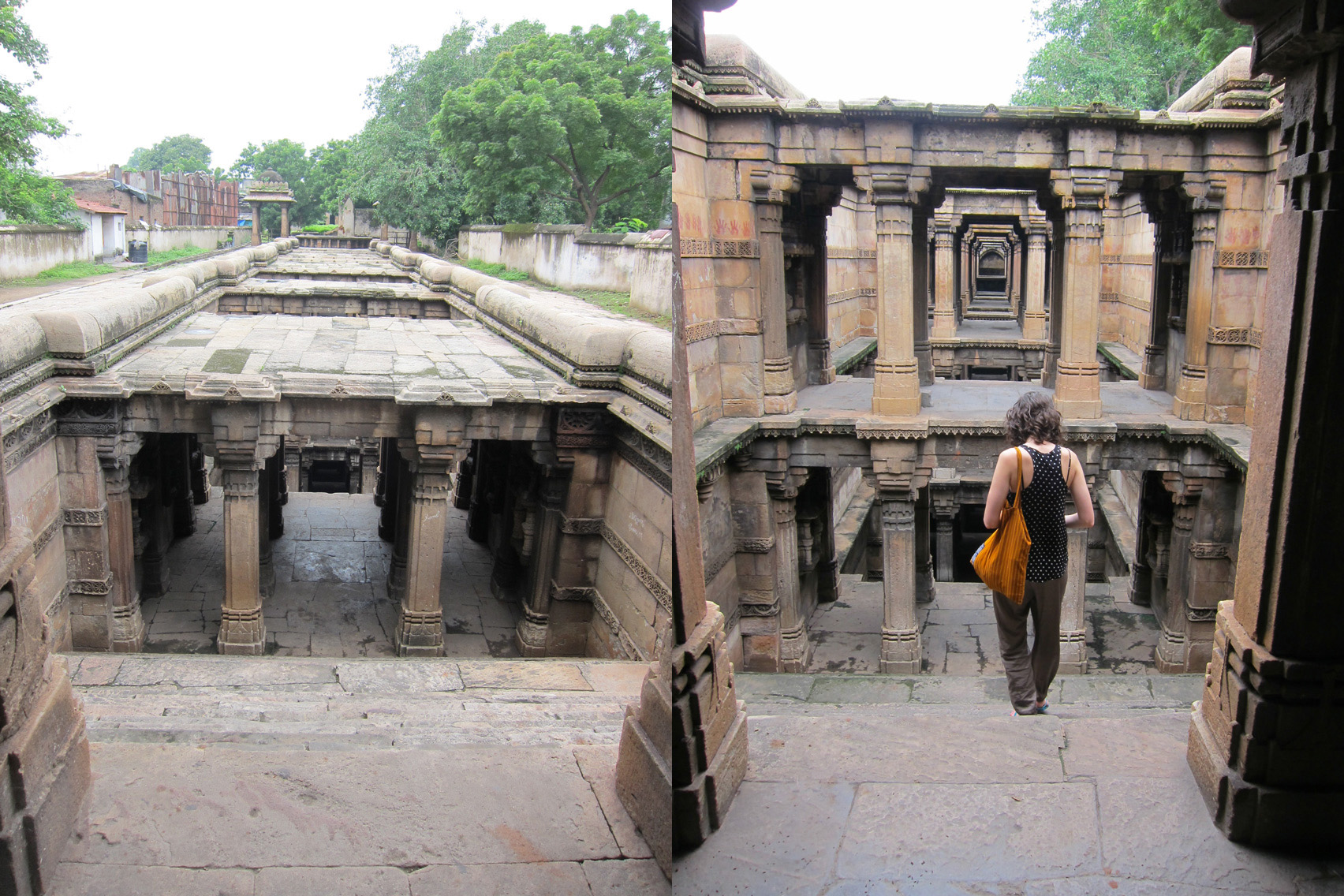


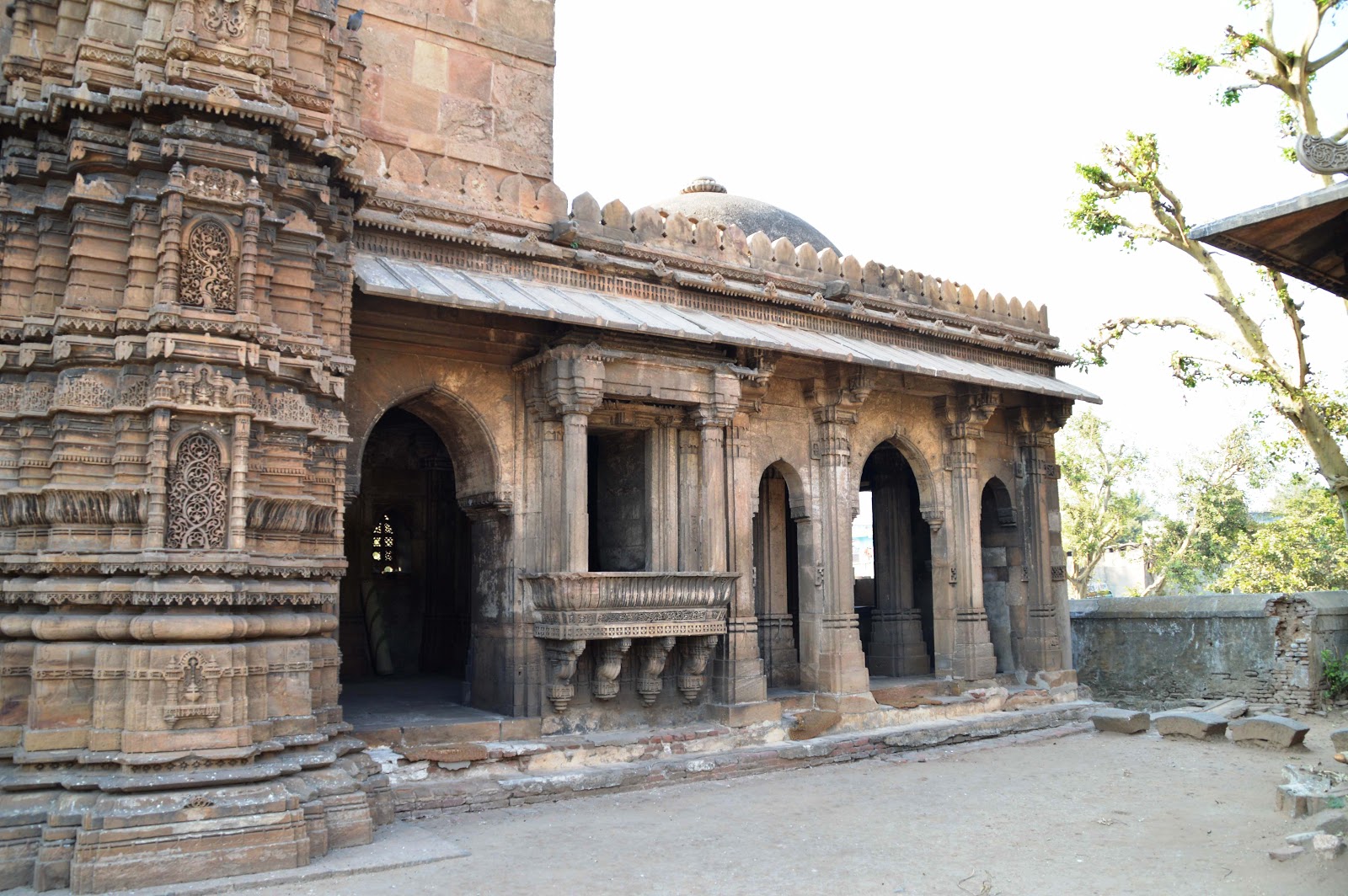

Behind the step well is the small mosque and neighboring tomb. Locals especially from the coal warehouse still come to the mosque for daily prayers. Stones from the broken minaret are scattered in disarray in the courtyard. Another minaret stands and is accessible by windy stairs. There is a story that the cave in the courtyard leads to a secret tunnel that ends in Kalupur, several kilometers away. You can see the descending stairs into darkness, but locals use the tunnel as a dumping ground. We visited on a Sunday and people were sitting in the shade and visiting as they must have done for over 500 years.
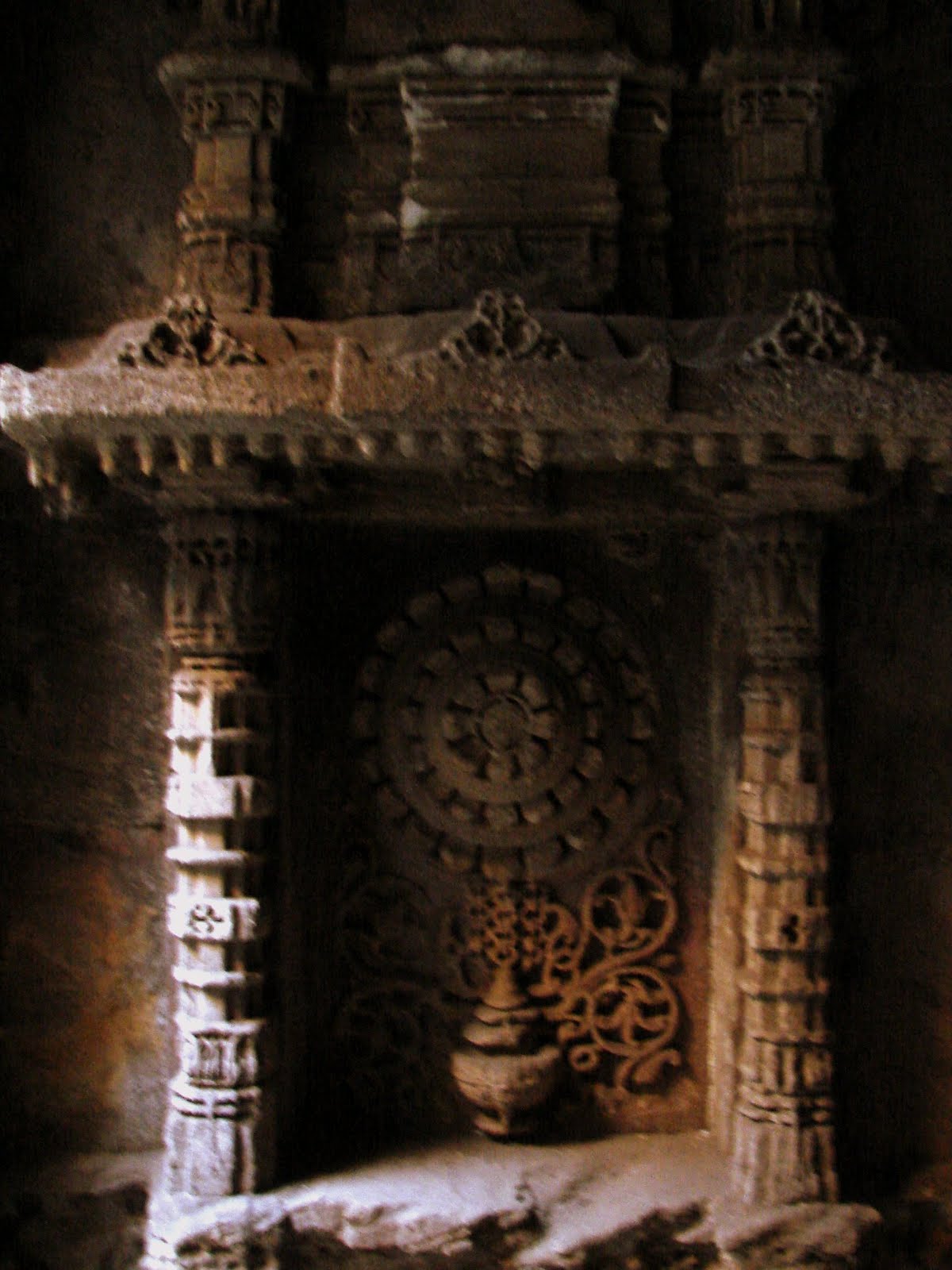
This inscription is carved in one of the niches in both Sanskrit and Arabic on the first floor of the step well:
“As long as the Sun and the Moon endure, so long shall this well continue steadily to nourish all beings , whether born from sweat or eggs, whether from soil or from the womb. ”
Dada Hari wanted this water to be for all no matter the culture or religion. All were to be treated equally.
From 101 Ways to Experience Ahmedabad
Namaste. . . . .This Is Incredible India

 TalesAlongTheWay
Beautiful documentation and pictures 🙂
LikeLike
Buildings are beautiful and amazing, thank you for sharing knowledge
friendly greetings, calligraphy archipelago
LikeLike
Very nice picture, which is in accordance to the evening with friends
Wish you a nice Abend.Sei blessed
Sincerely Andrea
LikeLike
Great blog and what a drama in their culture to buried alive the wife because the husband died, I wonder if they still doing it….
LikeLike
I haven’t heard of that ancient practice still going on.
LikeLike
Amazing Anne 🙂
LikeLike
Reblogged this on Oyia Brown.
LikeLike
Reblogged this on David Hencke and commented:
This is an absolutely fascinating travel blog written by a retired American grandmother on a four month trip to India. Not only does it explore places off the tourist track, it has great pictures and a feeling for people as well as places. I put up this particular blog as an example of a whole series she has put together on an Indian journey for those who enjoy travel writing.
LikeLike
Wow, David, I am first touched that you re-blogged and at you also wrote such a glowing introduction. It is much appreciated and I hope deserved! Namaste. . .
LikeLike
Hey, i have visited Dada hari vav a couple of times and on my last visit in 2016 January i met this uncle at mosque (3rd last picture) i had a long talk with him. I just want to know is he still there? I am planning to come again in January and i want to meet him.
LikeLiked by 1 person
Hey Sarah, I have not visited since 2015 so you are more current than I . The people all over India are so warm and willing to share. Have a glorious visit! I would love to hear!
LikeLike
That’s a great photo.
LikeLike