“A Road to Nowhere” by HS Pabla

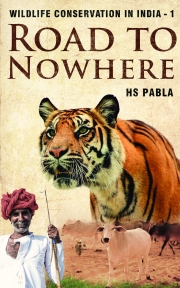
Road To Nowhere

Road To Nowhere

Wildlife Conservation in India – 1

by HS Pabla (write a review)

Type: Print Book
Genre: Politics & Society
Language: English
Price: Rs.369.00 + shipping

This book is about a question that bothers no one in India: Why preserve wild animals despite the danger they pose to human life and property? While the whole world is conserving wildlife as a natural resource to support national economies, India preserves dangerous animals just for the heck of it. While the world feeds millions and makes billions from wildlife, an impoverished India says we want none of it. As a result, both, the animals and people, are just struggling to survive.
HS Pabla, of the Indian Forest Service, spent 35 years trying to preserve India’s wildlife, wondering: why? When he found an answer, that wildlife can be the backbone of the rural economy, rather than just being a menace, he found himself pitted against his own Government and peers. Here he bares his heart about how the Indian conservation paradigm is, surprisingly, neither rooted in its cultural and religious traditions, nor has any vision for the future. India will be poorer if she is able to save wild animals which have no use either for the tourist or for the hunter, he argues.
Millions of acres of wilderness have been saved worldwide because the public wants to see or hunt wild animals on those lands. Wildlife tourism works both for people and for animals. This book, the first in a trilogy, shows how and where.

Incredible India!

Your thoughts?

Posted in Animals, India, Travel, Uncategorized | Tagged , , , , , , , , , | 2 Comments

For Anyone Who Has Loved a Dog


mexican-gray-wolf_don-burkett-800I was trying to find the commercial by Subaru that is a reenactment of this story, but I found this real  human and pet interest story instead. It has been seventeen years since my Thelma died.  A vet told me once she looked like a grey wolf, 75 pounds with the markings and color.  She loved to ride in the front seat with me, driving all around town and lie on the floor at my feet as I dried my hair with her paw in my foot. . . . holding feet!  She was my dog and I was her person.


Have you had the love of a good dog? 

Posted in Animals, Uncategorized, USA | Tagged , , , , , | 8 Comments

Do You? Do I? Ouch!

This certainly steps on my Evangelical toes. . . . .well actually  my whole foot!

About Us

Jesus

Who represents Jesus? It may not be who you think!

Who best represents Jesus? Those who profess Jesus as Savior, but side with the elite, the powerful, the rich, the oppressors? Or those who stand up for and stand with the little ones?

Who is actually for Jesus and who is actually against Jesus? It may not be the persons we think.

An episode in the Synoptic Gospels of Luke and Mark bear this out. Luke’s version reads:

John answered, “Master, we saw someone casting out demons in your name, and we tried to stop him, because he does not follow with us.” But Jesus said to him, “Do not stop him; for whoever is not against you is for you” (Luke 9:49-50).

The key word here is “us.” The disciples are offended that the one engaging in works of healing and liberation in the name of Christ was not sanctioned or credentialed by their group. Their interest seems to be one of control, gatekeeping, and promoting group exceptionalism. Jesus challenges them (and us) to think in terms of a larger story and in broader patterns.

There are hints in Mark’s version of the story that Mark was concerned with conflicting Christian groups within his church context (Mark 9:38-41). Luke’s context is less specific and more inclusive. If we follow Luke’s lead then by extension we can apply this to any group, Christian or some other religious faith or no religious faith at all.

In both Mark’s and Luke’s narrative, just prior to this interchange the disciples had been arguing about who is the greatest in God’s realm. In response Jesus embraces a little child and according to Luke’s version says, “Whoever welcomes this child in my name welcomes me, and whoever welcomes me welcomes the one who sent me; for the least among all of you is the greatest” (Luke 9:48).

In that culture a child represented not only someone of low status, but one of society’s most vulnerable members. There were no laws protecting children’s rights.

Clearly, mercy and justice extended to the little ones, work done to bring healing and liberation to the most vulnerable in society is work done in the “name” of Jesus – that is, it is work that reflects Jesus’ character and values, his love, compassion, and justice.

Let’s suppose I have a friend who does not claim to be a Christian. Nevertheless, he stands up for a coworker who is being treated badly and discriminated against. Such courageous action will probably cost him advancement within the company or maybe even his job. My friend is acting in the “name” of Jesus whether he recognizes it or not. He is reflecting the compassion and justice of Christ, even though he may not claim to know Christ at all. This is similar to what the writer of 1 John says about love, “God is love, and those who abide in love abide in God, and God abides in them” (1 John 4:16b). Whenever a person acts in love, God is present in that person, whether he or she professes to know God or not.

Our response to the little ones – our actions and inactions, what we do or fail to do reveals at any given moment whether we stand “for” Jesus or “against” him.

Recently Vermont senator and presidential candidate Bernie Sanders gave a speech at Liberty University, the school founded by the late Baptist minister Jerry Falwell. Bernie Sanders is not a Christian. He is Jewish, though he does not claim to be a deeply religious person. He expounded a vision taught by Jesus in the golden rule: “In everything do to others as you would have them to do to you; for this is the law and the prophets” (Matt. 7:12). He quoted that text and he quoted Amos: “But let justice roll on like a river, righteousness like a never-failing stream” (5:24).

He said that it would be a hard case to make that we are a just society, a society that lives by the golden rule. He pointed out the massive injustice in terms of income and wealth inequality. He said there is no justice “when so few have so much and so many have so little.” He noted that our country has the highest rate of childhood poverty of any major country on earth.

He said, “there is no justice when low income and working class mothers are forced to separate from their babies one or two weeks after birth and go back to work because they need the money that their jobs provide.” Again, he pointed out that we are the “only major country on earth that does not provide paid family and medical leave.”

One evangelical Christian, a twice graduate of Liberty University posted on the internet a sermon he preached based on Sanders speech. The sermon went viral. In the sermon he compared Bernie Sanders to John the Baptist confronting the hypocrisy and inauthenticity of the religious establishment of his day. This evangelical Christian graduate of Liberty University said:

“As I heard Bernie Sanders crying out to the religious leaders at Liberty University, in his hoarse voice, with his wild hair, this Jew, and he proclaimed justice over us. He called us to account for being complicit with those who are wealthy and those who are powerful and for abandoning the poor, ‘the least of these’ who Jesus said he had come to bring good news to. . . .

And lightning hit my heart in that moment. And I realized that we are evangelical Christians, that we believe the Bible. . . . And yet somehow, we commit to the mental gymnastics necessary [in interpreting scripture] that allows us to abandon ‘the least of these,’ to abandon the poor, to abandon the immigrants, to abandon those who are in prison.”

He said that when he heard Sanders he heard Jesus saying in the Gospel of Matthew that when you care for the most vulnerable, when you care for the little ones, you care for Jesus, for Jesus said, “When you have done it for the ‘least of these’, you have done it for me” (Matt. 25:40).

In contrast consider presidential candidate Mike Huckabee, professing Christian and former Southern Baptist minister. By all appearances Huckabee doesn’t seem to care for the little ones much at all, or for that matter any non-Christian minority, whereas the non-religious Jew Bernie Sanders seems to care a great deal.

So who best represents Jesus? Who best reflects the “name” (character, values, and work) of Jesus? Who is “for” what Jesus is for and who is “against” what Jesus is against? And what can we learn from this?


Chuck Queen

Chuck Queen

Chuck Queen is a Baptist minister and the author of “Being a Progressive Christian (is not) for Dummies (nor for know-it-alls): An Evolution of Faith”. Chuck blogs at A Fresh Perspective (www.afreshperspective-chuck.blogspot.com).

Read more posts by

Your thoughts? 


Posted in Religions of the World, Uncategorized, USA | Tagged , , , , , | 2 Comments

“India’s Attack on Free Speech”

04faleiro-master675

Democracy is fragile and fleeting in idea and implementation. . . . freedom and justice for all of the 1.3 billion Indians in the world’s largest democracy? Is it possible with over 300 languages and a diversity of religions?    The world is watching. The prejudice and extremism of right-wing Hindus has been discussed and feared before Mr. Modi’s historic election and now the  ugly accusations are in the news again after these tragic assassinations. In the United States, we have taken our  rights too much for grated and become lazy. .  .and look at us now! 

 Mr. Modi get your house in order. . . . the world is watching!


  India’s Attack on Free Speech

New York Times

OCT. 2, 2015

London — In today’s India, secular liberals face a challenge: how to stay alive.

In August, 77-year-old scholar M. M. Kalburgi, an outspoken critic of Hindu idol worship, was gunned down on his own doorstep. In February, the communist leader Govind Pansare was killed near Mumbai. And in 2013, the activist Narendra Dabholkar was murdered for campaigning against religious superstitions.

These killings should be seen as the canary in the coal mine: Secular voices are being censored and others will follow.

While there have always been episodic attacks on free speech in India, this time feels different. The harassment is front-page news, but the government refuses to acknowledge it. Indeed, Prime Minister Narendra Modi’s silence is being interpreted by many people as tacit approval, given that the attacks have gained momentum since he took office in 2014 and are linked to Hindutva groups whose far-right ideology he shares.

Indian Scholar Who Criticized Worship of Idols Is Killed AUG. 30, 2015
Veteran Communist Leader Is Shot in IndiaFEB. 16, 2015
Narendra Dabholkar’s supporters at a memorial in Pune.Battling Superstition, Indian Paid With His LifeAUG. 24, 2013
Earlier this month, a leader of the Sri Ram Sene, a Hindu extremist group with a history of violence including raiding pubs and beating women they find inside, ratcheted up the tensions. He warned that writers who insulted Hindu gods were in danger of having their tongues sliced off. For those who don’t support the ultimate goal of these extremists — a Hindu nation — Mr. Modi’s silence is ominous.

This is a turning point for India, a country that has taken pride in being a liberal democracy and that often adopts a high-minded tone when neighbors fall short of the same standards.

When the liberal Pakistani politician Salman Taseer was assassinated in 2011, the Indian journalist M. J. Akbar, now the national spokesman for the Bharatiya Janata Party, or B.J.P., chided, “If Salman Taseer had been an Indian Muslim, he would still have been alive.” In the run-up to the 2014 general elections in Bangladesh, India expressed concern over the future of the country’s democratic institutions.

We should be worrying instead about what’s happening in India, and recognize that it could go the way of the very neighbors it criticizes. As Nikhil Wagle, a prominent liberal journalist based in Mumbai, told me, “Without secularism, India is a Hindu Pakistan.”

The murders in India share striking similarities with the killings of four Bangladeshi bloggers this year. But while there was a global outcry over what happened in Bangladesh, India is hiding behind its patina of legitimacy granted by being the world’s largest democracy.

Like the murdered bloggers, the Indian victims held liberal views but were not famous or powerful. Mr. Kalburgi had publicly expressed skepticism toward idol worship in Hinduism, but he didn’t pose a threat to anyone.

While the authorities are pursuing the culprits on a case-by-case basis, the overarching attack on free speech has not been addressed. The threats and killings have created an atmosphere of self-censorship and fear.

Some of the killers are still on the loose, and while in one hand they wield a gun, in the other they wave a list. On Sept. 20, Mr. Wagle, the journalist, learned from a source that intercepted phone calls had revealed that members of yet another right-wing Hindu group, Sanatan Sanstha, had marked him as their next victim. The extremists who celebrated the August murder of Mr. Kalburgi were more direct: They used Twitter to warn K. S. Bhagwan, a retired university professor who is critical of the Hindu caste system, that he would be next.

The goal of transforming India from a secular state to a Hindu nation, which seems to be behind the murders, is abetted not just by the silence of politicians, but also by the Hindu nationalist policies of the ruling B.J.P.

Over the past few months, the government has purged secular voices from high-profile institutions including the National Book Trust and the independent board of Nalanda University. The government is not replacing mediocre individuals: The chancellor of Nalanda was the Nobel laureate Amartya Sen. It is replacing luminaries with people whose greatest qualification is faith in Hindutva ideology. The new appointees are rejecting scientific thought in favor of religious ideas that have no place in secular institutions.

In addition to erasing the contributions of long-dead liberals, B.J.P. leaders are busy promoting violent Hindu nationalists. Sakshi Maharaj, a B.J.P. member of Parliament, described Nathuram Godse, the man who assassinated Mahatma Gandhi, as a “patriot.” Although Mr. Maharaj later retracted his statement, his opinion is shared by many of his party colleagues. Gandhi’s assassin was a former member of the Rashtriya Swayamsevak Sangh, an armed Hindu group, with which Mr. Modi has been associated since he was 8 years old.

THE B.J.P.’s efforts to reshape institutions that embody secular values — values they dismiss as “Western” — was certainly anticipated. It came as no surprise when the culture and tourism minister, Mahesh Sharma, recently promised to “cleanse every area of public discourse that had been westernized.” Mr. Sharma is well aware of the connotations of the word he used.

It’s also not surprising that Hindu fundamentalists would feel empowered in the shadow of a Hindu nationalist government. Still, few expected that freedom of speech would become a contestable commodity and that some who exercised it would lose their lives.

The realization has made for decisions that were once unthinkable.

Last December, the acclaimed author Perumal Murugan informed the police that he’d received threats from Hindu groups angered by a novel he wrote in 2010. Extremists staged burnings of his book and demanded a public apology from him. The police suggested he go into exile. Realizing he was on his own, in January Mr. Murugan announced the withdrawal of his entire literary canon. On Facebook, he swore to give up writing, in essence apologizing for his life’s work out of fear for his family’s safety.

It’s hard to accept what is happening in India. It is easier to ignore or dismiss the attacks and the threats as a liberal persecution complex or a phase that will last only as long as the B.J.P. is in power. But the country is undergoing a tectonic shift that will have long-term repercussions.

The attacks in India should not be seen as a problem limited to secular writers or liberal thinkers. They should be recognized as an attack on the heart of what constitutes a democracy — and that concerns everyone who values the idea of India as it was conceived and as it is beloved, rather than an India imagined through the eyes of religious zealots. Indians must protest these attacks and demand accountability from people in power. We must call for all voices to be protected, before we lose our own.

ghbmn

Mr. Modi, please remember and follow through on this promise! 

Please share your comments! 


Posted in India, Religions of the World, Uncategorized | Tagged , , , , , | Leave a comment

Firearm Legislation According to Thomas Jefferson


Laws that forbid the carrying of arms…(Quotation).  http://www.monticello.org/site/jefferson/laws-forbid-carrying-armsquotation

The following quotation is sometimes attributed to Thomas Jefferson:

“Laws that forbid the carrying of arms…disarm only those who are neither inclined nor determined to commit crimes. Such laws make things worse for the assaulted and better for the assailants; they serve rather to encourage than prevent homicides, for an unarmed man may be attacked with greater confidence than an armed one.”

This is not something Jefferson wrote, but rather comes from a passage he included in his “Legal Commonplace Book.” The passage is from Cesare Beccaria’s Essay on Crimes and Punishments.[1] It appears in Jefferson’s commonplace book as follows:

Falsa idea di utilità è quella, che sacrifica mille vantaggi reali, per un inconveniente o immaginario, o di poca conseguenza, che toglierebbe agli uomini il fuoco perchè incendia, e l’acqua perchè annega; che non ripara ai mali, che col distruggere. Le leggi, che proibiscono di portar le armi, sono leggi di tal natura; esse non disarmano che i non inclinati, nè determinati ai delitti, mentre coloro che hanno il coraggio di poter violare le leggi più sacre della umanità è le più importanti del codice, come rispetteranno le minori, e le puramente arbitrarie? Queste peggiorano la condizione degli assaliti migliorando quella degli assalitori, non iscemano gli omicidi, ma gli accrescono, perchè è maggiore la confidenza nell’assalire i disarmati, che gli armati. Queste si chiaman leggi, non preventrici, ma paurose dei delitti, che nascono dalla tumultuosa impressione di alcuni fatti particolari, non dalla ragionata meditazione degl’inconvenienti, ed avvantaggi di un decreto universale.[2]

 Jefferson’s only notation on this passage was, “False idee di utilità.”[3]

The English translation of this passage which appeared in the 1809 edition Jefferson later owned is as follows:

“A principal source of errors and injustice are false ideas of utility. For example: that legislator has false ideas of utility who considers particular more than general conveniencies, who had rather command the sentiments of mankind than excite them, who dares say to reason, ‘Be thou a slave;’ who would sacrifice a thousand real advantages to the fear of an imaginary or trifling inconvenience; who would deprive men of the use of fire for fear of their being burnt, and of water for fear of their being drowned; and who knows of no means of preventing evil but by destroying it.

The laws of this nature are those which forbid to wear arms, disarming those only who are not disposed to commit the crime which the laws mean to prevent. Can it be supposed, that those who have the courage to violate the most sacred laws of humanity, and the most important of the code, will respect the less considerable and arbitrary injunctions, the violation of which is so easy, and of so little comparative importance? Does not the execution of this law deprive the subject of that personal liberty, so dear to mankind and to the wise legislator? and does it not subject the innocent to all the disagreeable circumstances that should only fall on the guilty? It certainly makes the situation of the assaulted worse, and of the assailants better, and rather encourages than prevents murder, as it requires less courage to attack unarmed than armed persons.”[4]

The English translation of this passage originally quoted above, and the one most often seen on other Internet sites, is most likely a later translation; it may be taken from a 1963 translation by Henry Palolucci.[5]

Footnotes

    1. Jefferson owned a copy of this work in the original Italian; he later purchased an English translation, published in London in 1809, which was sold to the Library of Congress (Sowerby, Entry 2349, 3:21).
    2. Thomas Jefferson, The Commonplace Book of Thomas Jefferson: A Repertory of His Ideas on Government, ed. Gilbert Chinard (Baltimore: Johns Hopkins Press, 1926), 314.
    3. Ibid.
    4. Cesare Beccaria, An Essay on Crimes & Punishments, translated from the Italian with a commentary, attributed to M. de Voltaire, translated from the French (New York: Stephen Gould, 1809), 124-125.


  1. Cesare Beccaria, On Crimes and Punishments, trans. by Henry Palolucci (Indianapolis: Bobbs-Merrill, 1963), 87-88.

PARTICIPATE

Login or register to participate in our online community.
Posted in Uncategorized | 4 Comments

Pictures of Animals being Animals in Incredible India!

dog_040112-1

Love this image from Daijiworld!  Poor little monkey can’t find its mom !  I have not seen this in my time in India as dogs usually chase monkeys, but I love the image.

unnamed (3)

Poor tired Mama dog!   She started with 8 puppies but by the time they were grown, there were only 2 left.  We saw one get hit by a car and the driver stop and carry the injured puppy to the sidewalk.   It died over night. We thought this is the fate for many feral puppies in India!

unnamed (15)

It is very hot in the sunshine, every day. Many dogs lie under parked cars which is hot too.. But what is this dog thinking lying on the roof of the car and panting in the heat?

unnamed (13)

This dog is smarter and he is lying out of the sun on the cool stone steps we used every day entering CEPT University.

11055254_886815748037114_6485474408195358680_n (1)

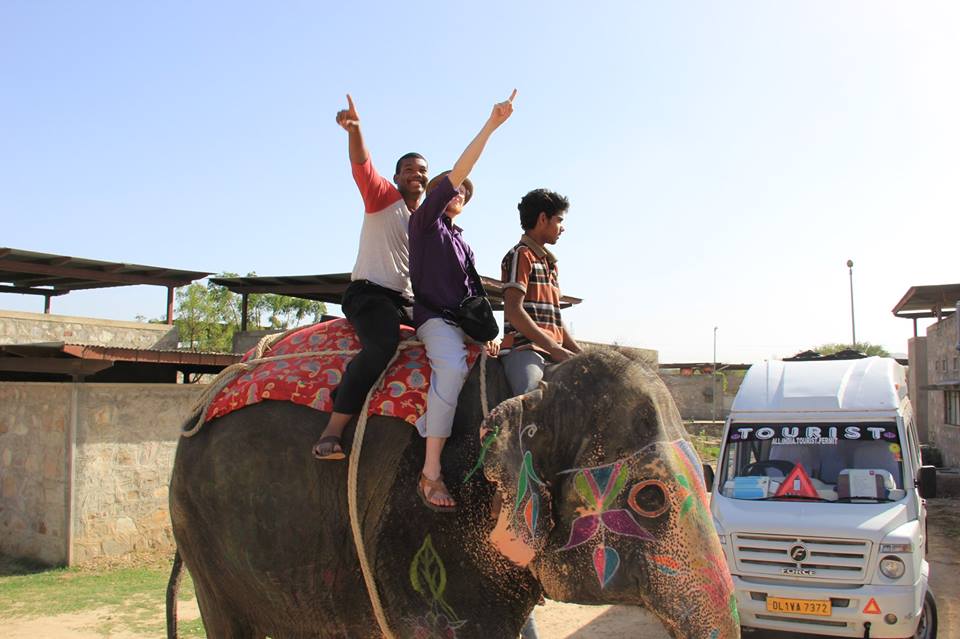
Matt and Jhoan riding an elephant at the elephant ranch in Jaipur, the pink city, after our visit to the Amber Fort.

unnamed (40)

Jennifer and me on Mr. Rock in the desert between Jalsalmer and Pakistan. Notice Mr. Rocket’s necklace. He also had bells on his front ankles!

download (6)

On reason there is such a monkey problem with these aggressive cuties.  People feed them  in honor of Hanuman the Hindu Monkey god.

unnamed (65)

Beast of burden. . . a scene  from the past that is still the present.

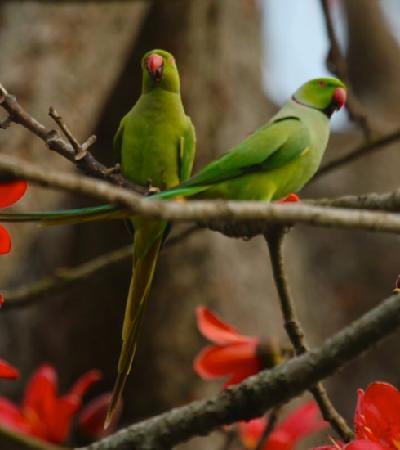
rose-ringed-parakeets

These are Indian parrots that add even more color to vibrant India!


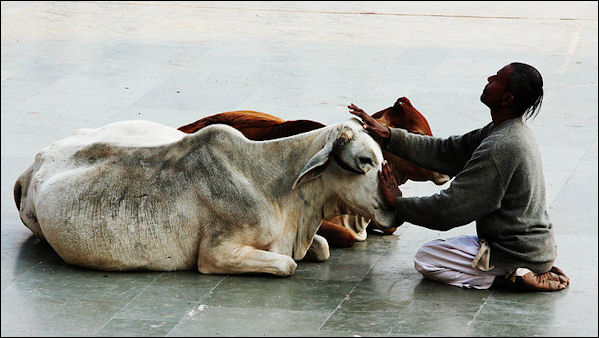
20120502-Cow_stroker

Cows walk in the streets, gather at the intersection, do as they please. They are holy to Hindus.  Here a man is blessing the cow. The legend is that if you bless a cow , you will be blessed.


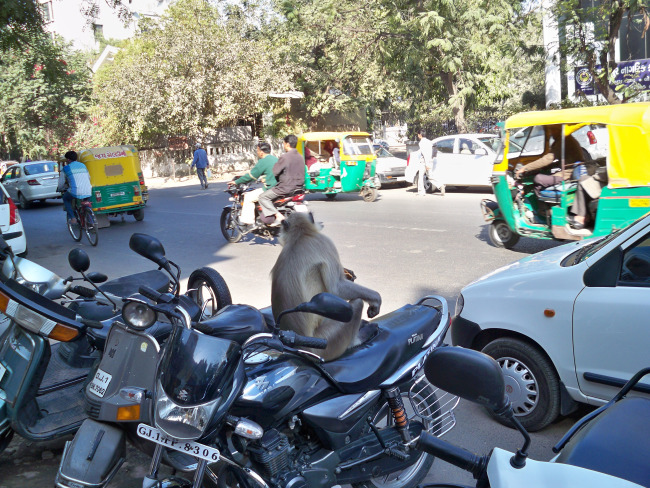
Image

I took this picture!   This huge male monkey was resting on the motorcycle just outside the neighborhood Jain Temple . I have no idea what happened when the human returned but monkeys are treated with great respect!

100_3277

A man and his faithful dog. This was a picture from 2013 at CEPT. . . guards on duty.   They both were gone when we returned in 2015.  My hope is a long and happy retirement!

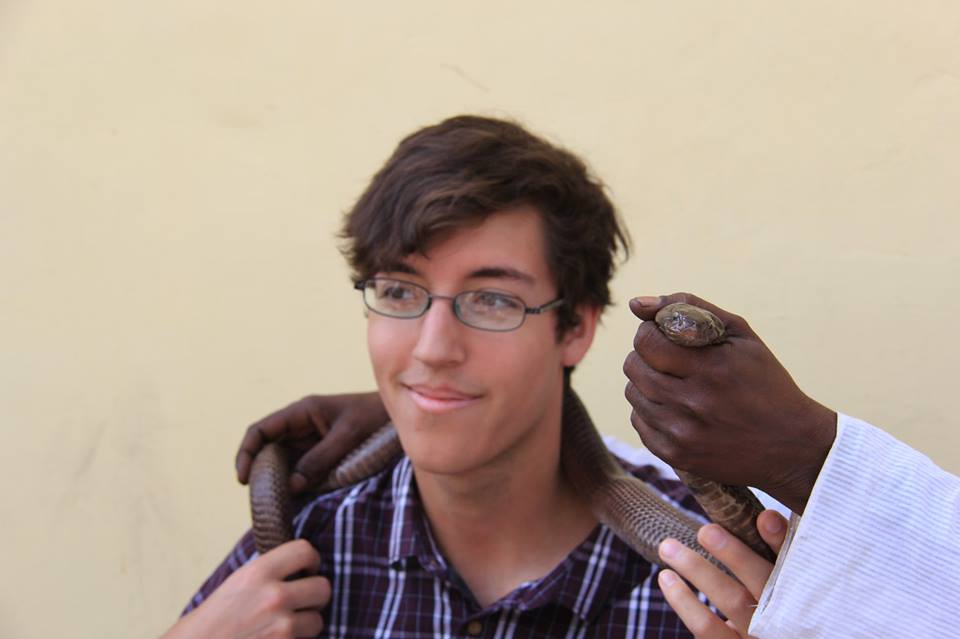
11076195_886815508037138_6241503358753824607_n

This is Jesse. . . brave guy from our group.  This cobra was in a basket to be removed for pictures, at a price of course.  The Amber Fort in Jaipur was the only  place to see the famous cobras.  We were told that the highly poisonous venom sacks are removed before  the snakes  are put on display. Nonetheless, Jesse is a brave guy!   No way, I was going to do that !

Few of the images from Google Public Domain.

Can you see why I loved Incredible India so much?   This is just some of the animals and the people were the most amazing!   Your thoughts, please. . .  . 


Posted in Animals, India, Religions of the World, Uncategorized | Tagged , , , , , , , | 14 Comments

Music Monday “Home” with Usher and Blake

This image released by NBC Universal shows country singer Blake Shelton, right, and Usher during the Healing in the Heartland: Relief Benefit Concert at the Chesapeake Energy Arena in Oklahoma City, Okla., Wednesday, May 29,2013. Funds raised by the benefit will go to the United Way of Central Oklahoma, for recovery efforts for those affected by the May 20 tornado. (AP Photo/NBC, Brett Deering)

This image released by NBC Universal shows country singer Blake Shelton, right, and Usher during the Healing in the Heartland: Relief Benefit Concert at the Chesapeake Energy Arena in Oklahoma City, Okla., Wednesday, May 29,2013. Funds raised by the benefit will go to the United Way of Central Oklahoma, for recovery efforts for those affected by the May 20 tornado. (AP Photo/NBC, Brett Deering)

Well, Blake Shelton is a unapologetic southern boy. . . not sure about Usher but I love this song and the blending of their voices!


Posted in Uncategorized, USA | Tagged , , , , , , | Leave a comment

St Francis’ Peace Prayer

St. francis Prayer-card

Yesterday was  the Feast Day of St. Francis of Assisi.  I have always loved this prayer and thought though I am a day late, that we all could use some of  this  peace which St. Francis so fervently prayer for.

I remember when I was teaching at Sacred Heart School that on October 4, Father Vaughan would encourage the students to come in the morning with their pets. . . cats, dogs, birds, bearded dragons, rabbits  and even fish  for an early  morning blessing. Afterward, the pets went home.  It was a day of joyful faith for the children and adults alike.  St Francis  was the patron saint of animals and the environment.  Pope John Paul II  named St. Francis the “Saint of Ecology!”

Your thoughts? 

Posted in Animals, Religions of the World, Uncategorized | Tagged , , , , , | 4 Comments

Unapologetic Southern !

hqdefault (1)

I am neither from Georgia nor Texas, but proud to be a southern bell from Virginia. This is funny, though pointed,but always polite.  That is the southern way, y’all!

Tell me your thoughts!  Please! 

Posted in Uncategorized, USA | Tagged , , , , , | 6 Comments

Persecution Continues Around the World. . . . . . .

images (30)

Not all the main street media is reporting that the shooter was targeting Christians. The president didn’t mention it. But primary sources who survived ,did tell.  This incident can be added to the beheadings in the Middle East and  imprisonment of Christians. The worldwide persecution is in full force !  I am going to add my post from India, when we were asked, “Are you a Christian?”  

https://talesalongtheway.com/2015/08/06/are-you-a-christian/

Hmm. . . . the videos have been removed from my post and not by me! You can read the post though if you are interested. 


New York Post

NEWS

Oregon gunman singled out Christians during rampage
By Chris Perez, Danika Fears and Natalie MusumeciOctober 1, 2015 | 7:04pm

A gunman singled out Christians, telling them they would see God in “one second,” during a rampage at an Oregon college Thursday that left at least nine innocent people dead and several more wounded, survivors and authorities said.
“[He started] asking people one by one what their religion was. ‘Are you a Christian?’ he would ask them, and if you’re a Christian, stand up. And they would stand up and he said, ‘Good, because you’re a Christian, you are going to see God in just about one second.’ And then he shot and killed them,” Stacy Boylen, whose daughter was wounded at Umpqua Community College in Roseburg, Ore., told CNN.

A Twitter user named @bodhilooney, who said her grandmother was at the scene of the carnage, tweeted that if victims said they were Christian, “then they were shot in the head. If they said no, or didn’t answer, they were shot in the legs.”

Gunman’s   disdain for religion was evident in an online profile, in which he became a member of a “doesn’t like organized religion” group on an Internet dating site.

Kort­ney Moore, 18, said she saw the teacher of her Writing 115 class get shot in the head at the college’s Snyder Hall before the gunman started asking people to state their religion and opening fire, the city’s News-Review newspaper reported.
the gunman, 26, was killed in a shootout with police outside one of the classrooms, said Douglas County Sheriff John Hanlin.
“There was an exchange of gunfire,” he said. “The shooter threat was neutralized.”
Although police put the death toll at 10 — including the shooter — with seven people injured, Oregon Attorney General Ellen Rosenblum had said 13 people died.

In other developments:
The killer was carrying four guns — three pistols and a rifle — a source told CNN.
An anonymous user wrote in an ominous post on the online bulletin board 4chan Wednesday night: “Some of you guys are alright. Don’t go to school tomorrow if you are in the northwest. happening thread will be posted tomorrow morning. so long space robots.”
Online profiles linked to  to the shooter showed that he had a fascination with the terror tactics of the Irish Republican Army, and bought Nazi memorabilia. He also wrote a blog post that mentioned Vester Lee Flanagan, who murdered a Virginia newswoman and cameraman live on air, according to CBS News. “Seems like the more people you kill, the more you’re in the limelight,” he wrote.

A former president of the college said that it has only one unarmed security officer and that the community decided against armed guards last year. “I suspect this is going to start a discussion across the country about how community colleges prepare themselves for events like this,” Joe Olson told CBS.
President Obama issued a plea for greater gun control and bemoaned that America is “the only advanced country on Earth [that] sees these kind of mass shooting every few months.”
The attack brought the number of mass shootings in the nation this year to 294, according to the Mass Shooting Tracker. The website defines mass shootings as incidents in which four or more people are killed or injured by gunfire.
Witnesses described a chaotic scene inside Snyder Hall.

People were scrambling “like ants” when the gunman opened fire around 10:38 a.m., according to Brady Winder, a 23-year-old student from Portland.
“People [were] screaming, ‘Get out!’ ” he told The News-Review, adding he saw a girl frantically swimming across a creek to escape.
Student Hannah Miles was sitting in a classroom next door when she heard a pop that sounded like a yardstick slapping on a chalkboard, she said.
Everyone in her classroom fled as more gunfire erupted.
Student Brandy Winter posted on Facebook, “I ran to the edge of the campus, down a hill and waited. From talking with a student in the classroom where it happened, almost every person in the room was shot by a man with four guns.”

Another student, Luke Rogers, said he saw blood in a classroom as he was evacuated from the building.
“As we passed by the classroom, on the ground there were drops of blood,” the first-year Umpqua student told CNN. “We didn’t see any bodies. We saw books on the ground.”

One witness told The New York Times that she heard gunshots outside her classroom.
She said a middle-aged woman then tried to close the door and prevent the shooter from getting inside, but she was shot several times in the stomach.
The gunman “was just out there, hanging outside the door,” Cassandra Welding told the Times “and she slumped over and I knew something wasn’t right. And they’re like, ‘She got shot, she got shot.’ And everyone is panicking.”

Two women wait outside the Umpqua Community College campus after the shooting.

Douglas County Fire Marshal Ray Shoulfer said victims were found in “multiple classrooms,” according to CNN.
The sheriff said the shooter was taken down by two officers who rushed to the scene without backup minutes into the shooting.
In a national address, Obama lamented that mass shootings have become routine in America.

“I hope and pray that I don’t have to come out again during my tenure as president to offer my condolences to families in these circumstances,” he said. “But based on my experience as president, I can’t guarantee that, and that’s terrible to say, and it can change.”

Image from Google Public Domain

I am most interested in my bloggers’ comments, please!

Posted in India, Religions of the World, Travel, Uncategorized, USA | Tagged , , , , , , , | 5 Comments