To Live A Good Life. . . . .

Smile drown in the sand next to the foamy wave

Smile drown in the sand next to the foamy wave

image from Google Public domain

1. Your shoes are the first thing people subconsciously notice about you. Wear nice shoes.

2. If you sit for more than 11 hours a day, there’s a 50% chance you’ll die within the next 3 years.

3. There are at least 6 people in the world who look exactly like you. There’s a 9% chance that you’ll meet one of them in your lifetime.

4. Sleeping without a pillow reduces back pain and keeps your spine stronger.

5. A person’s height is determined by their father, and their weight is determined by their       mother.

6. If a part of your body “falls asleep,” You can almost always “wake it up” by shaking your head.

7. There are three things the human brain cannot resist noticing, food, attractive people and danger.

8. Right-handed people tend to chew food on their right side.

9. Putting dry tea bags in gym bags or smelly shoes will absorb the unpleasant odor.

10. According to Albert Einstein, if honey bees were to disappear from earth, humans would be dead within 4 years.

11. There are so many kinds of apples, that if you ate a new one everyday, it would take over 20 years to try them all.

12. You can survive without eating for weeks, but you will only live 11 days without sleeping.

13. People who laugh a lot are healthier than those who don’t.

14. Laziness and inactivity kills just as many people as smoking.

15. A human brain has a capacity to store 5 times as much information as Wikipedia

16. Our brain uses the same amount of power as a 10-watt light bulb!!

17. Our body gives enough heat in 30 mins. to boil 1.5 liters of water!!

18. The Ovum egg is the largest cell and the sperm is the smallest cell !!

19. Stomach acid (conc. HCL) is strong enough to dissolve razor blades!!

20. Take a 10-30 minute walk every day & while you walk, SMILE. It is the ultimate antidepressant.

21. Sit in silence for at least 10 minutes each day.

22. When you wake up in the morning, pray to ask God’s guidance for your purpose today.

23. Eat more foods that grow on trees and plants and eat less food that is manufactured in plants.

24. Drink green tea and plenty of water. Eat blueberries, broccoli, and almonds.

25. Try to make at least three people smile each day.

26. Don’t waste your precious energy on gossip, energy vampires, issues of the past, negative thoughts or things you cannot control. Instead invest your energy in the positive present moment.

27. Eat breakfast like a king, lunch like a prince and dinner like a college kid with a maxed out charge card.

28. Life isn’t fair, but it’s still good.

29. Life is too short to waste time hating anyone. Forgive them for everything.

30. Don’t take yourself so seriously. No one else does.

31. You don’t have to win every argument. Agree to disagree.

32. Make peace with your past so it won’t spoil the present.

33. Don’t compare your life to others. You have no idea what their journey is all about.

34. No one is in charge of your happiness except you.

35. Frame every so-called disaster with these words: ‘In five years, will this matter?’

36. Help the needy, Be generous! Be a ‘Giver’ not a ‘Taker’.

37. What other people think of you is none of your business.

38. Time heals everything.

39. However good or bad a situation is, it will change.

40. Your job won’t take care of you when you are sick. Your friends will. Stay in touch.

41. Envy is a waste of time. You already have all you need.

42. Each night before you go to bed, pray to God and be thankful for what you’ve accomplished today.

43. Remember that you are too blessed to be stressed.

Thanks to my friend Donna Marie Johnson! 
Posted in Uncategorized, USA | Tagged , , , , , | 5 Comments

Vive la France !

images (28)

This is great news from France!  I hope they will lead the way for food pantries and soup kitchens in the United States to receive food from the markets here instead of throwing   it away.

At ConSERNS-U, we do get produce that we pass on to our clients.  A volunteer goes to the Regional Food Bank, selects the best available produce, loads  his van and brings it to our site.   We try to encourage the clients to take what they can use of the produce because of the nutritional value, but many of them walk on by with a “No, thank you..”  Often it is all about convenience and/or they have   no access to a stove and or a microwave limiting or eliminating cooking. Many of the Monday volunteers are great cooks and  as they shop with their  client, they share simple recipes and ideas.  This “second harvest” or gleaning in the fields after the first harvest  is an ancient idea to help the poor.  Good for France for helping the hungry!


Posted in Religions of the World, Uncategorized, USA | Tagged , , , , , , | 2 Comments

The 20th Century’s First Genocide

Armenian-Genocide

Sunday, I attended the Centennial Memorial Concert, in remembrance of the 100th  anniversary of the Armenian genocide of 1,500,000 souls.  The concert fittingly began with a local Ne’Jewish Community Choir , followed by Italian Community, Armenian Churches, Greek Orthodox choir and Armenian Choral Members who sang both church music and traditional Armenian music.

Here are some fascinating quotes about this horrible story included in the program:

“The Armenian massacre was the greatest crime of the war, and failure to act against Turkey is to condone it. . . . .”    Theodore Roosevelt  1918

“The great massacres and persecutions of the past seem almost insignificant when compared to the sufferings of the Armenian Race in 1915.’ Henry  Morgenthau Sr., US Ambassador to the Ottoman Empire, 1919 

“Who, after all, speaks today of the annihilation of the Armenians?”  Adolf Hitler 1936

“It was not war. It was most certainly massacre and genocide, something the world must remember. . . ”  Yossi Beilin, Isreali Foreign Minister, 1994

I have to admit to being  only marginally aware  of this history.  I hope you will have time to watch the 13 minute video story of a little girl who survived to tell her story.  We must know and work to prevent this from happening again.   Hard to think about with the massacre and possible genocide of  Christian people in the Middle East!


Posted in Religions of the World, Travel, Uncategorized | Tagged , , , , , , | 2 Comments

Nagaland, Are You Sure This is India?

India never ceases to amaze me. But one thing is  for sure, if I went there, I wouldn’t be eating in Nagaland! Check out the video at the end! Inspire Me


NAGALAND: 15 PICTURES OF INDIA’S MOST FASCINATING TRIBES

Avatar Image

ByDIANA JARVISJanuary 22nd, 2015

VIEW COMMENTS

PinterestGoogle+

Nagaland is secluded and in many ways different

from the rest of India.  The landscape is surrounded

by mountains and inhabited by unique  wildlife.

The people, though, are welcoming and love to be

photographed  like people all over the India.

These are images from the  colorful  Horn-bill Festival.

A MAN FROM THE KONYAK TRIBE IN BATTLE MODE

A man from the Konyak tribe in battle mode, Nagaland, India

 LADIES OF THE KONYAK TRIBE FIX AN EARRING

Ladies of the Konyak tribe, Nagaland, India

GREASED BAMBOO POLE CLIMBING COMPETITION AT THE HORNBILL FESTIVAL

Greased bamboo pole climbing competition at the Hornbill Festival, Nagaland, India

 A GUN-TOTING TRIBE LINE UP FOR ACTION

Gun-toting tribe, Nagaland, India

STONE THROWING GETS UNDERWAY

Stone throwing game demo at the Hornbil Festival, Nagaland, India

TRIBAL MEN DISPLAY FEATHERS AND WEAPONS

Tribal men in Nagaland, India

HORNBILL FESTIVAL DANCING BEGINS

Festival, Nagaland, India

AN ANGAMI TRIBESMAN

Angami tribesman, Nagaland, India

 A KONYAK TRIBESMAN

Man from Konyak tribe, Nagaland, India

A SMILE AS TRIBES GET TOGETHER

Traditional tribes in Nagaland, India

 KONYAK TRIBE MEMBER CAPTURES THE MOMENT

Konyak tribe member taking photos on mobile, Nagaland, India

STONE PULLING UNDERWAY AT VISWEMA VILLAGE

Men at stone pulling ceremony at Viswema village, Nagaland

CROWDS GATHER

Stone pulling ceremony at Viswema village, Nagaland, India

ALL HANDS ON DECK

Stone pulling ceremony at Viswema village, Nagaland, India

A CEREMONIAL START

Stone pulling ceremony at Viswema village, Nagaland


This is Incredible India? 

Posted in Animals, India, Uncategorized | Tagged , , , , , , , | 4 Comments

Music Monday Desert Dwellers “Bodi Tree Dub”

artworks-000029616056-8qp0l4-t500x500


I am missing Incredible India! 

Posted in India, Travel, Uncategorized | Tagged , , , , | 2 Comments

Red, Orange, Yellow Against the Canvas of Blue

unnamed (70)

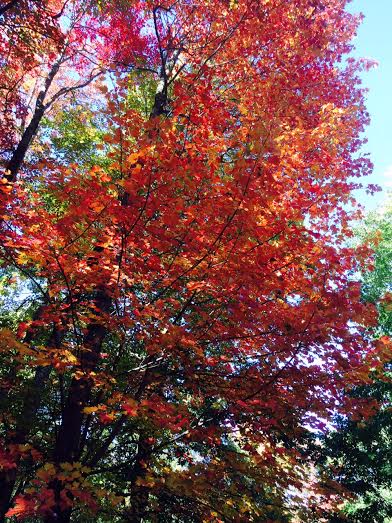
I went to pick-up my granddaughter Grace to take her to see Malala, the film . (More about the film later. )   The trees in her front yard we breathtaking in the clear sunshine against the blue, almost clear sky.

unnamed (71)

Scott, her dad   has been making maple syrup in the early spring , catching the sap from these Maple trees.  The most colorful trees each fall, the red and orange are Maples.

unnamed (72)

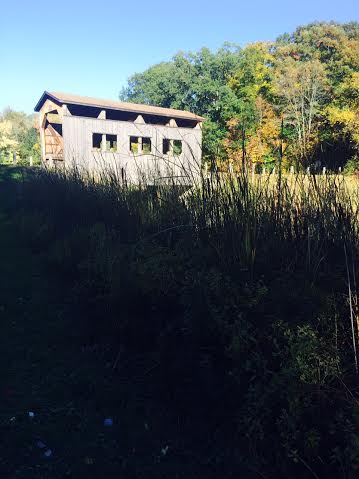
Later in the afternoon, David and I went for a drive to “leaf peeping” as he calls it.  We went to the Colony Town Park which is a lovely nearby park.  The picturesque wooden bridge is not as quaint as the very old ones but still lovely.  We were walking down by the pond looking for the heron, to no avail.  The foreground is  imposing  pussy willows.

unnamed (73)

Oh the warmth of the color  warms the heart and a blessing it is,  this last gasp of summer   before the on slot of the cold, windy, snowy, and icy winter arrives!

Posted in Travel, Uncategorized, USA | Tagged , , , , , | 8 Comments

“He Named Me Malala” An Film of Courage and Inspiration

malala-yousafzai


This is PG13 because of the violence but I think that it is a most important film for young teens both girls and boys.  You will be inspired, too. There were many places  where tears came to my eyes, always a good indicator of my heart being touched.  Beautiful film of courage and love of a young girl and her father.

Posted in film, Religions of the World, Uncategorized | Tagged , , , , , , , , , , , , | 6 Comments

Oldest Synagogue

New York State’s oldest continually occupied synagogue not in the city you’d expect

Posted on October 23, 2012 and filed under Features, Travel.

TROY, NY—The city of Troy, NY (population 50,129), is just a few miles upriver from the state capital of Albany and is known as the birthplace of Sam Wilson, a meatpacker on whom the iconic image of “Uncle Sam” is based, as well as home of the prestigious Rensselaer Polytechnic Institute (RPI).

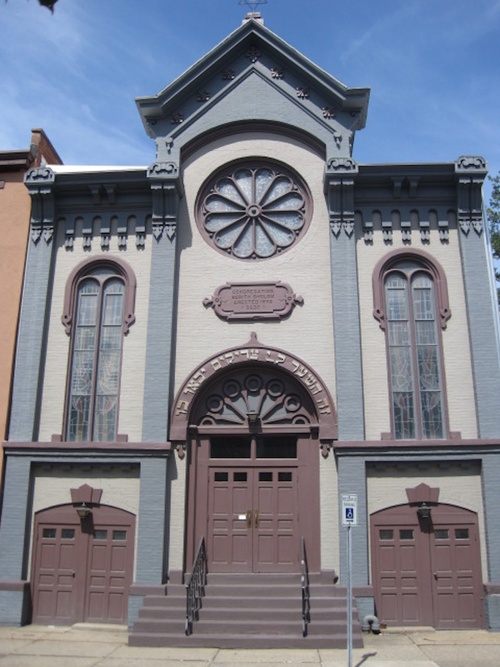
However, you might not recognize the Reform Temple known as Berith Sholom when approaching it from the outside on the quiet corner of Third and Division Street. You’ll see a red brick building with steps leading up to large double wooden doors topped by stained glass windows. There is a small black sign with white lettering. It could be an old church but it soon becomes evident that this is not a church at all, but an old and still very active synagogue.

The building dates back to 1870, and in some respects this house of worship reflects changes in the Jewish community from that time. In 1866, just one year after the Civil War ended, residents of Troy met to incorporate themselves as the “Religious Society and Congregation of Baris Shalom in the City of Troy.” Previously they had met to conduct services and burials, but in June 1870 the cornerstone was laid, and the synagogue opened for services for the High Holidays a few months later. It joined the Union of American Hebrew Congregations, now the Union of Reform Judaism, in 1920. Today, the congregation’s 160 or so member families come from as far away as Saratoga and the Massachusetts/Vermont border.

Click photo to download. Caption: Inside Congregation Berith Sholom of Troy, NY. Credit: Paul Foer.

Samuel Rezneck, professor of history at RPI, wrote that the first Jew to settle in Troy was Barnet Levy, a tailor, in 1837. Emanuel Marks and others followed him in 1842, and there were perhaps 30 Jewish families by 1864, when Troy’s population was thought to be around 40,000. The commandant of the military arsenal across the river at the start of the Civil War was a Jew named Major Alfred Mordecai.

According to its website, Berith Sholom was liberal from its inception, allowing men and women to sit together and sing together in the choir, which was accompanied by an organ. At a public event in 1869, the temple’s Rev A.N. Coleman described “the Israelites” as falling into “two classes, the strictly orthodox or rabbinical and the progressists. The Berith Sholom synagogue belongs, I am happy to say, to the progressist class.”

Whether one calls the congregation liberal, reform, assimilationist or progressive, the architecture of the 142-year-old building has a number of unusual features. Its ark is reminiscent of a boat, designed to memorialize a congregant and college student who had drowned in a boating accident on the nearby Hudson River soon after the synagogue was built. The ner tamid, or eternal light, remains fueled by gas rather than electricity. The synagogue’s stained glass windows with images of the prophets were completed in 1965.

Two women serve as co-presidents, the incoming co-presidents are both women, and the synagogue has a 30-year history of female rabbis that includes its current religious leader, Rabbi Debora Gordon. Gordon, known by many as RebDeb is an openly identified lesbian who lives on a producing farm with her partner and four adopted children. She joined Berith Sholom in 1997 as her first pulpit after rabbinical school at Hebrew Union College’s Jewish Institute of Religion. The 49-year-oldrabbi expressed her hope that Berith Sholom would be her first and last pulpit.

The synagogue holds an average of nine bar or bat mitzvahs a year, for both youth and adults. A soloist is hired to play the organ for the High Holidays, and Rabbi Gordon also sings and plays guitar. The synagogue holds Hebrew and Sunday school as well as conversion classes, and it is starting daytime Torah study.

While there are older congregations nearby in Albany, they have moved from their original locations. “I really have the benefit of longevity, stability…I think that with any organization that’s been around a long time, some of the kinks have been worked out,” said Gordon.

“There is a real affection for the building. We have one extended family whose children celebrated bar and bat mitzvahs with me. They are cousins and the fifth generation in this building. There is a sense of both ownership and responsibility,” said the rabbi, adding that “other people as they come here sort of absorb it.”

A few years ago, a long-range planning process asked the congregation if its members should look for a different location. “Even with no parking lot and little nearby parking, there was an almost unanimous sentiment that this is where we belonged,” Gordon said.

Gordon’s farm is a 13-minute drive away in Brunswick, just to the east of Troy, where her goats produce milk and cheese and chickens produce eggs. In the morning, the rabbi raises her flock of animals, as well as her four children between ages 7 and 14, who were adopted through foster care. In the afternoons and evening, she tends to her flock at Berith Sholom.

Of all the things going on, one that most excited Gordon is her congregation’s involvement with the annual “Victorian Stroll,” a December holiday tradition that attracts 20,000 to downtown for festivities. Berith Sholom opens its doors for a choir performance drawing between 75 and 125 people.

Although the “Stroll” appears to be very much a Christmas as well as shopping event on the surface, the participation of the synagogue, which is a bit off the beaten path, cements the congregation’s longstanding position as an important member of the greater community.

Download this story in Microsoft Word format here.

Posted in Architecture, Religions of the World, USA | Tagged , , | 2 Comments

Antibiotics. . . .. .. .When Good Turns to Bad

Why India Is A Hotbed Of Antibiotic Resistance And Sweden Is Not

SEPTEMBER 17, 2015 2:40 PM ET
Penicillin became a wonder drug for fighting infections in the 1940s. Jean-Claude Fide was an early adapter, injected in 1948 in the French town of Mont-pres-Chambord.

Penicillin became a wonder drug for fighting infections in the 1940s. Jean-Claude Fide was an early adapter, injected in 1948 in the French town of Mont-pres-Chambord.

Bert Hardy/Picture Post/Getty Images

It’s our own fault.

In the U.S., Japan, Korea and elsewhere, we use antibiotics too much. We use them to treat coughs and colds — for which they’re ineffective. We’ve used them in animal feed in an attempt to prevent disease and to fatten cows and chickens. And the more we use antibiotics, the greater the likelihood that clever bacteria will evolve in ways that resist the attack of antibiotics. So once-treatable infections become difficult or impossible to cure.

Now we’re learning that antibiotic resistance isn’t just a rich-country issue. A new report by the Center for Disease Dynamics, Economics and Policy shows that antibiotic overuse and resistant bacteria are alarming global problems, even in developing nations like India, Kenya and Vietnam.

“What this report makes clear is that even though antibiotic consumption in the developing world is not yet at the same level as the developed world, resistance is getting to be very high,” says Dr. Ramanan Laxminarayan, director of the center and author of the report. “Resistance is a problem everywhere. It’s truly a global problem and requires an urgent response.”

The report maps antibiotic use in 69 countries and antibiotic resistance in 39 countries.

E. coli from contaminated water or food, for example, is resistant to many drug types in regions around the world. But India has the highest rates of resistance to nearly every drug available to treat it. Strains of E. coli tested in labs there were more than 80 percent resistant to three classes of drugs, and treatment options there are increasingly limited, the report found.

And MRSA, a dangerous staph infection often contracted in hospitals that does not respond to many antibiotics, is found at high rates in the United States, Romania, Portugal, Vietnam and India — rich, middle-income and poor countries alike.

Antibiotic resistant strains of bacteria, hitching on trains, planes and ships, have made their way from wealthy countries to poor countries, and back again. “It’s like climate change,” says Laxminarayan. “We’re all at risk.”

So why not just keep seeking and developing new antibiotics? In the race between new drug development and bacteria that evolve to outsmart even the latest last-resort drug, the bacteria will eventually win, says Laxminarayan. That’s because the bugs evolve to develop resistance to new drugs faster than science can make them.

And new drugs are increasingly expensive. Low-income countries will not be able to afford them.

The report includes what it calls a ResistanceMap with graphs and charts for both antibiotic use and resistance, comparing rates over time for countries. Some countries, like Denmark and Sweden, stand out with quite low rates of antibiotic use and resistance — hovering near zero. These countries educate their citizens about the dangers of antibiotic overuse. So it has become unheard of for a Swede or a Dane to go into a doctor’s office and demand treatment with an antibiotic. “It’s a question of social norms,” says Laxminarayan.

It will take country-by-country education of patients, physicians and hospitals to bring down levels of inappropriate use around the world. Reducing the use of antibiotics can help the problem of resistance. “In the absence of antibiotics, resistant bacteria more easily die out,” he says. “In many cases, if we stop overusing antibiotics, resistance will go substantially down.”

But it’s difficult for people to slow down their use of medications that, rightfully, have been considered wonder drugs. A 2012 survey by the Pew Health Group, for example, found that 36 percent of people surveyed in the United States mistakenly believed that antibiotics were effective in treating colds. And 41 percent of those surveyed said they had heard only a little, or nothing at all, about antibiotic resistance.

But inappropriate use of antibiotics allows greater and greater numbers of bacteria to inherit genes resistant to particular antibiotics — and some bacteria are resistant to every such drug in the medical arsenal. “We wipe out the bacteria that aren’t resistant, and we’re left with the ones that survive,” says Laxminarayan.

“There’s a long way to go, a lot of work to be done,” says Laxminarayan, “but if we lose antibiotics, there really isn’t very much else.”

Whenever I got a sore throat or sinus infection,  the doctor would say, ” Here is the antibiotic!”  Granted, being a teacher is stressful and hard work.  Kids are forever sick and passing germs around in school.  Teacher get run down  and tried.But  it is the BEST vocation  in the world, and actually not a job but an avocation.  It  is plain that we need to restrict the antibiotic use to the most severe bacterial infections, and give our immune systems a chance to fight off the viruses. 

Posted in India, Uncategorized, USA | Tagged , , , , , , | 2 Comments

Wise Words

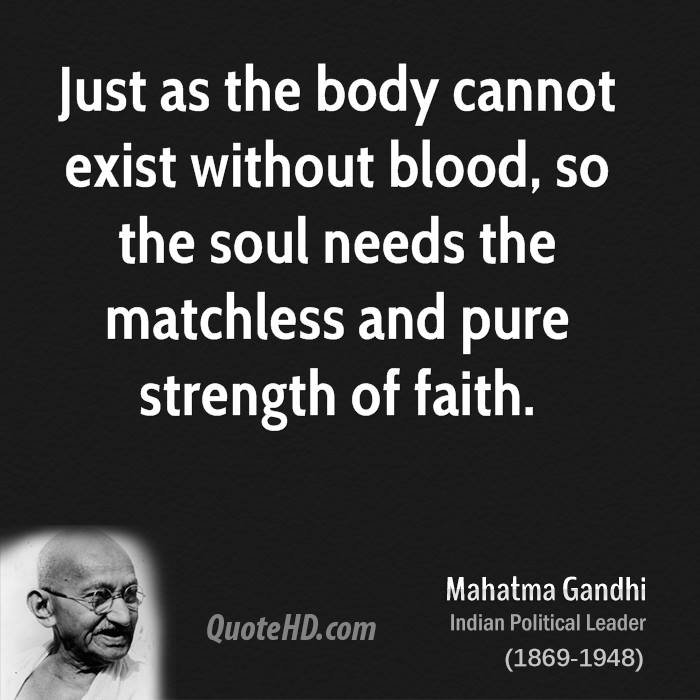
mahatma-gandhi-quote-just-as-the-body-cannot-exist-without-blood-so:

Sometimes it is easy to forget this in the dark word of hate.

“Now faith is confidence in what we hope for and assurance about what we do not see.” Hebrews 11:1

“For since the creation of the world God’s invisible qualities–his eternal power and divine nature–have been clearly seen, being understood from what has been made, so that people are without excuse.” Romans 1:20 

It is important to take care of our soul! 


Posted in India, Religions of the World, Uncategorized | Tagged , , , , , , , , , | Leave a comment