Meet WW II Veterans Registered for D-Day Reenactment 2016

 
Eric P. Montgomery added 36 new photos to the album: D-Day Conneaut 2016 WWII Veterans.

14 hrs ·

Let’s meet some of the veterans of WWII registered to attend D-Day Conneaut 2016

 
'Hershel Woody Williams... then'
'Hershel Woody WIlliams Web Photo'
'Al Klugiewicz .... Then'
'Al Klugiewicz'
'Buzzy Wagner... then'
+31
LikeShow more reactions

Comment

Comments
Shell Elson

Shell Elson Great to see the WWII Veterans faces, which kind of closes the circle for people like me. God Bless them all. Thank You Eric, your a good man.


Julene Skalos-Edwards

Julene Skalos-Edwards Thank you for sharing these wonderful pictures! Some of these men I have had the honor to meet, along with their lovely wives!


Cathy Cass Delaney Garcia

Cathy Cass Delaney Garcia God bless them all!


Dale Dahlke

Dale Dahlke Looking forward to being there.

Like · Reply ·
Posted in Travel, Uncategorized, USA | Tagged , , , , , , , , , , , , | 4 Comments

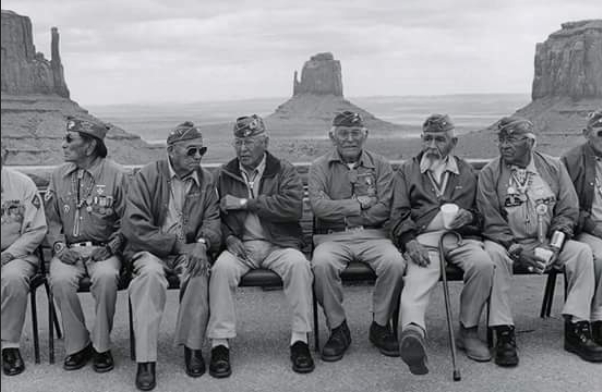
National Navajo Code Talkers’ Day

These brave Navajo Marines sitting before the landscape of Monument Valley!  Your heart will be touched by their story of the invaluable contribution they made to the United States during WW II .


Posted in service, Uncategorized, USA | Tagged , , , , , , , | 3 Comments

The Orchard Tea Garden

This is The Orchard, just across the road and down the way from the Cambridge American Cemetery where my brother, George Bowler Tullidge III is buried.  There is a small restaurtant but sitting in lawn chairs under the apple trees and  having tea is very popular. The traditional fare is  a scone and tea, cake and tea , or the full High Tea.  When I first was there in the 90s, it was not so popular in the United States for afternoon tea and  this was really an English treat for me. 

High tea or Cream Tea is a light supper to tide you over until dinner with crust-less sandwiches, scones with preserves and clotted cream, and sweets.

This is the proper way to eat the scones, a type of biscuit, jam and clotted cream which is similar to whipped cream.

Back to the story about The Orchard. The beginning of the story of this unusual tea room was in 1897 when students asked the landlady in a boarding house in the orchard, if they could be served tea in the orchard instead of on the front lawn of the house. This was the beginning of the  tradition of tea in the orchard.

In 1909, Rupert Brooke, a graduate  student of English at the college and quite popular brought some of his gang, the Grantchester Group to  The Orchard. Included in this group were some well know people today: John Keynes, E. M. Forster, Bertrand Russell, Augustus John, Ludwig Wittgenstein, and Virginia Wolf.

Students could walk to the Orchard for tea or the popular punting on the Cam directly from the university to refreshment.

Boats are available complete with a punter who stands and rows.  Along the way, you  hear stories of  the college, the students, and historical events and gossip!

The indoor tea  room can be used on days with poor weather.
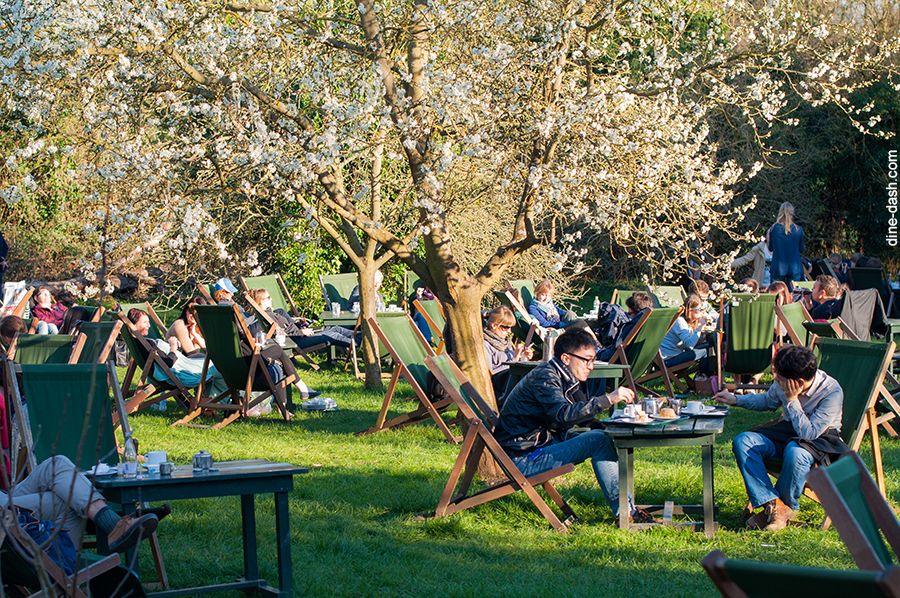
Now, I need to make a caveat to The Orchard. . . . . It is very popular mostly with tourists and has been the two times I visited for tea, but I thoroughly enjoyed it.  You might have to wait to be seated, but that doesn’t bother me and you serve yourself and take your food outside.  You are not hurried unless you , like I hate to hold other people in line.   David always says there is a reason why lovely places are crowded. . . . “because they are lovely!”

Posted in Travel, Uncategorized | Tagged , , , , , , , , , , , | 4 Comments

More Than One Hundred Years Ago. . . . .

Dean Herger's photo.

Dean Herger

“You cannot help the poor by destroying the rich. You cannot strengthen the weak by weakening the strong. You cannot bring about prosperity by discouraging thrift. You cannot lift the wage earner up by pulling the wage payer down. You cannot further the brotherhood of man by inciting class hatred. You cannot build character and courage by taking away people’s initiative and independence. You cannot help people permanently by doing for them, what they could and should do for themselves.”

Reads as if it was written today. . . . .  .universal truth?

Posted in Uncategorized, USA | Tagged , , , , , , , | 4 Comments

Dazz from The Best of Brick

Dazz” is a hit song by R&B/funk band Brick. “Dazz” is a combination of disco, funk and jazz. Released in 1976 from theirGood High album, it would become their biggest hit, spending four weeks at the top of the R&B singles chart and reaching number three on the Billboard Hot 100 singles chart.[1] This song has been heavily sampled by hip-hop artists including MC Lyte in her “Cold Rock A Party” single, Ice Cube‘s “No Vaseline“, Dana Dane “Cinderfella Dana Dane” (1987) and Snoop Dogg in his song “Snoopafella” (1999).

This is the long version making it one of the longest jams” ever.  It just keeps being current.  Isn’t it amazing that it was released in the 70s?


Posted in Uncategorized, USA | Tagged , , , , , | Leave a comment

Rosalie Mansion , Natchez

Most people know the years of the 1860s  in the United States as the Civil War, but did you know there are two other names of this war?  The War Between the States, and lastly The War of Northern Aggression  were  used in the South.  The title of the  Civil War implies wrong thinking and doing  by the southern states.

This beauty  of antebellum mansion is Rosalie in Natchez. It was built in the 1820s by Peter Little, a cotton baron.  It is rumored that he made $50,000,000 on one harvest.

It seems that this elegant home had caught the eye of the Yankee General Grant during his time at or after  Vicksburg  A week after that battle not too many miles away, General Grant came to Natchez  and claimed Roalie as the new headquarters for the Federal Army. Soon tents were crowded on the immaculate grounds with the officers happily housed in the mansion . The location was excellent as the mighty Mississippi River is just over the bluff  on the right side of the image above.

Today, Rosalie is open for tours, the gift shop and special events.  It is  a popular mansion on the many tours of the city.

Images from Google

I am pretty sure that the preferred whispered title for this time in Natchez  was “War of Northern Aggression!”

Posted in Architecture, Travel, Uncategorized, USA | Tagged , , , , , , | Leave a comment

Longwood, An Unfinished Dream

An Oriental Villa for Natchez

Longwood was designed by Philadelphia architect Samuel Sloan for Haller and Julia Nutt, Mississippi natives and members of Natchez’s cotton  planter elite. Construction of the grand, octagonal edifice began in 1860 but was halted in 1861 by rising tensions over the Civil War. While the exterior of Sloan’s Oriental Villa was largely complete, the home’s interior was left unfinished except for the lowest level. The Nutt family lived in this finely furnished basement until the twentieth century. Colloquially known as “Nutt’s Folly,” the property was deeded to the Pilgrimage Garden Club in 1970 by the McAdams Foundation and designated a National Historic Landmark.

This oriental mansion published in a book in 1851 was the inspiration for  Longwood.  It is most well known  in the octagonal plan, onion dome, and for the fact it was never finished.  David was looking forward to  seeing the upstairs skeleton and partial construction.  The architect cares little for the portraits, furniture, and family stories usually highlighted on house tours.


David especially enjoyed looking up into the cupola that dominated the space below.


Among this most unusual home, I really liked liked the oil portrait of the African American who was in charge of the house slaves. Cameras were not used until later during the Civill  War.  The wealthy had portraits painted as a try to be remembered in the future.  Slaves rarely were painted in this way.  I saw the portrait on the tour and have spent almost an hour trying to find it on the internet, but can’t.  It is a memorial to his man’s love and loyalty to   the Nutt  family and a testimony that they loved and cared for him, in spite of the horrible condition of slavery.

The following description was in another blog describing the docent’s description:

“She pointed out a rare commissioned portrait of the loyal head of the household slaves and personal servant of Dr. Nutt. He remained with the family through and after the war and is buried in the family cemetery.”


Posted in Architecture, Travel, Uncategorized, USA | Tagged , , , , , , | 15 Comments

The Gardens of Monmouth Inn

The breathtaking gardens of the Inn merge into 26 acres of land. The summit is tiers of Italian gardens.  It is formal in design, with several fountains for the water element. There is a formal pathway  with private spaces with green being the predominate color.  There is also a Roman Revival Temple, not shown in this picture, where weddings are held.

The English garden elements meander into the Italian garden.  There are perennials, colorful annuals, the all important herb or kitchen garden, low manicured hedges and the roses. If you have visited the United Kingdom, I am sure you have noticed that no matter how simple the home, there are fragrant blooming roses either in the front or back garden.

And in the garden, there is even a Monet -Giverny bridge perfect for wedding pictures.


Pergola

Sanctuary

Neo-Roman temple used for wedding ceremonies.

Monmouth Historic Inn Courtyard

One morning as  we were strolling through the landscape, we came across one of the gardeners. I asked how many there are to keep the grounds so well manicured.  He said that there are three full-time  gardeners who must have very specific areas and duties.

Here is a spring picture framed with prolific azaleas  and Spanish Moss on t he right. It is so wispy and mysterious and  a good metaphor for the “Old South!”

Posted in Architecture, Travel, Uncategorized, USA | Tagged , , , , , , , , , , | 2 Comments

Monmouth Historic Inn

Monmouth Inn was built in 1818.  Through the passing years this stately home has seen military officers, the sweat and toil of slaves,  gentle ladies, births, and deaths within her walls.  Today it is a small elegant hotel with furnishings of the Victorian period and surrounded by  26 acres of exquisite gardens.  The house is restored to the 1830 period with antiques or reproductions.  Monmouth is available for a visit tour along with many other antebellum mansions in Natchez.

bedroom

This is the room we stayed in for two nights. David was happy that there was a 2016 year  TV with cable along with the  canopy bed.  It  was so high, I had to climb into it.

sitting room

This was the entry hall.

Here is an intimate sitting area. Lots of sitting by the people in the big house in 1800’s!

This is an image of the dining room where we ate, set for a party.  The nights we ate there , the room was set with small individual tables.  The food was very good  with a menu that was a combination of traditional choices such as   Southern fried chicken as well as  traditional American recipes.

Monmouth Historic Inn Courtyard

This is the courtyard in the back of the house where we had a glass of wine before dinner and some special appetizer whipped up by the chef.

To give an idea about this unique experience, Monmouth Historical Inn has been featured  in none other than Southern Living!

A most enjoyable experience!

Posted in Architecture, Travel, Uncategorized, USA | Tagged , , , , , , | Leave a comment

Natchez, Mississippi

If any place embodied the “moonlight and magnolias” mythology of the Old South, it was Natchez, Mississippi. Perched on a bluff over looking the Mississippi River, Natchez’s small size (only 4, 680 inhabitants in 1850) belied its economic importance, In 1838 Natchez-area growers sent forty thousand bales of cotton doenriver to New Orleans. Moreover, the city’s forty most prominent families, referred to as the “nabobs” included the largest and wealthiest cotton planters in the entire South and some of the biggest slave owners in the world.

No one could accuse the Natchez nabobs of hiding their wealth. At least forty large mansions graced the streets of the town or the wooded lanes of adams Country. Their names slid smoothly off the tongue—“Concordia” and “Melrose” In conscious imitation of the English landed gentry, families like the Duncans, Surges, and Quitmans furnished their homes with the best furniture, drapes, and marbles, and then used these stages to play out their self-appointed roles as patriarchs of the Cotton Kingdom. Gracious entertainment was the order of the day, as evidenced by John Quitman’ Journal entry recording a visit to a friend’s plantation: “Mint-juleps in the morning are sent to our rooms, and then follows a delightful breakfast in the open veranda… we hunt, ride, fish… read or lounge until dinner” followed by a siesta and then more of the same until the evening meal. “In fine weather,” Quitman continued, “the tea-table is always set before sun set, and then, until bed-time, we stroll, sing, play whist, or croquet. It is an indolent yet charming life, and one quits thining and takes to dreaming”

Source: Louisiana  State University 

This begins a series of posts about our two days in Natchez, Mississippi , a place we visited with mixed feelings.  Having visited  Dachau, the concentration camp near Munich and  the old slave forts in Ghana where slaves were held before boarding the Portuguese slave ships , we have  experienced  the heaviness of spirit that  still remains in  these places of great suffering.  Natchez was the same, but it is a part of our history and should not be denied.  We both wanted to see the antebellum plantations and decided to go.

We stayed in this  beautiful Monmouth Historic Inn.  Our two nights were in celebration of  big milestone birthdays and anniversary and the experience was most memorable.


Posted in Architecture, Travel, Uncategorized, USA | Tagged , , , , , | Leave a comment